An international court has rejected Argentina's request for provisional measures to halt British-authorised oil drilling near the Falkland Islands.
The ruling by the International Tribunal for the Law of the Sea (ITLOS) on Saturday is a setback to Buenos Aires' latest effort to challenge economic activity around the disputed territory.
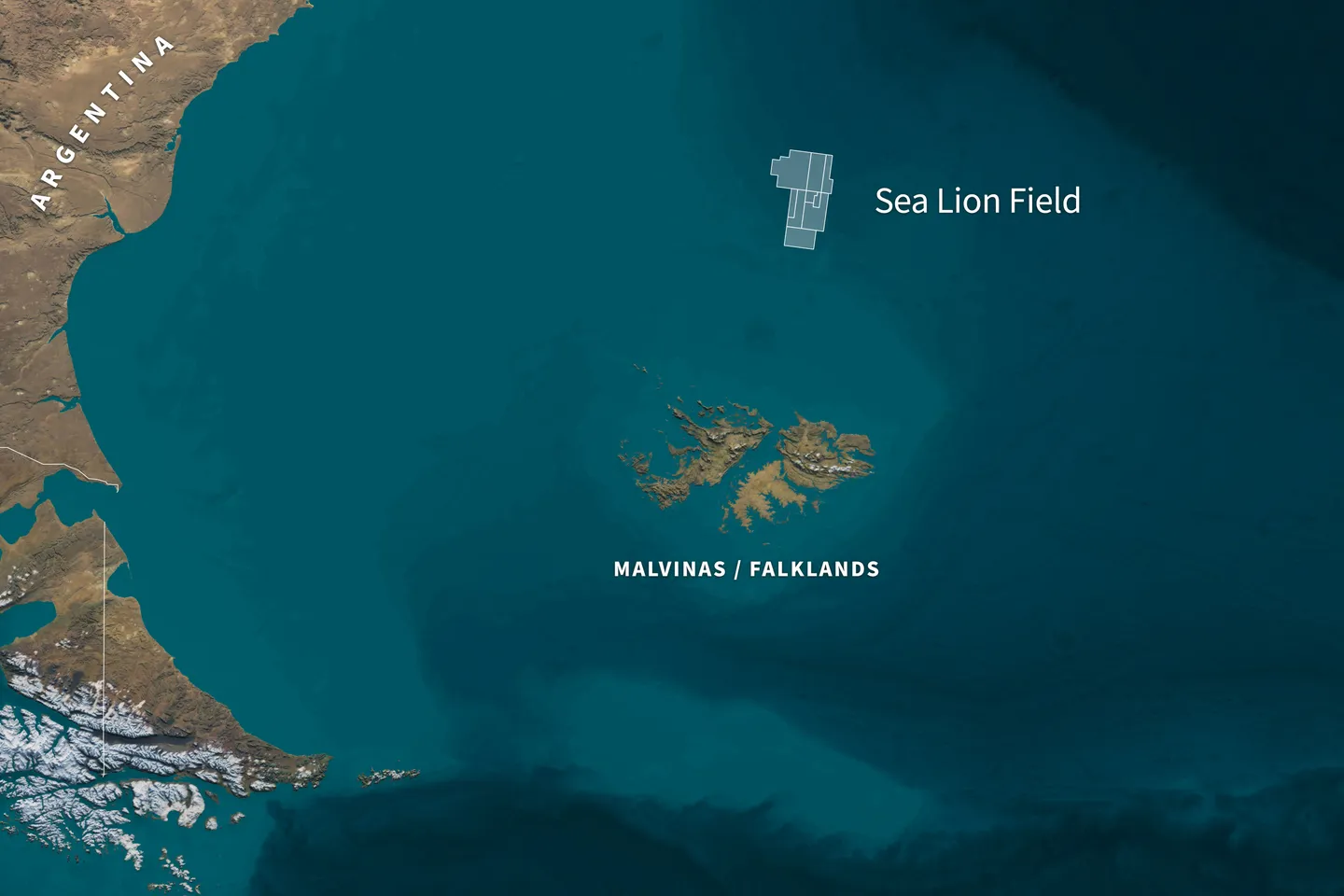
Argentina had asked the tribunal on October 13 to order a suspension of the Sea Lion oil drilling project north of the Falklands, which are controlled by Britain but claimed by Argentina as the Malvinas.
The Hamburg-based ITLOS, an independent court set up under UN auspices, rejected Argentina's claims by 18 votes to three.
In a decision read out by ITLOS president Maurice Kamga, the judges ruled there did not appear to be any basis for believing Argentina had jurisdiction, as the tribunal is unable to make decisions based on questions of sovereignty.
Buenos Aires had argued the plan violates a UN resolution calling for both sides to desist from unilateral actions until their dispute over the sovereignty of the islands is resolved.
Buenos Aires also sought to prevent Britain from granting new authorisations for the exploitation of maritime resources around the islands while arbitration proceedings continue.
Britain argued that granting the request would prevent Falkland Islanders from developing their natural resources and would have "devastating consequences" for the territory's economy.

Britain welcomes decision
British foreign minister Ed Miliband and Attorney General Ellie Reeves welcomed the decision.
"We welcome the decision by the International Tribunal for the Law of the Sea not to prescribe provisional measures," UK Foreign Secretary Ed Miliband and the government's chief legal adviser, Ellie Reeves, said in a joint statement.
"We now call on Argentina to respect the right of the Falkland Islanders to determine their own future and urge Argentina to end its wider economic pressure against the Falkland Islands," they added.
Argentina, on the other hand, vowed to continue efforts to halt a British-Israeli oil project near the Falkland Islands.
"This decision is not the final word," President Javier Milei said in a statement, noting that Argentina will continue to "assert its rights through all diplomatic, legal and administrative channels at its disposal."
The case
The case was the latest spat between Britain and Argentina, which fought a bitter 10-week war in 1982 over the UK-administered islands in the South Atlantic.
In September, Argentina launched an arbitration process against London over the Sea Lion project off the Falklands, which is led by Britain's Rockhopper company and Israel's Navitas.
Britain urged the court to reject the case, saying it was rooted in Argentina's claims to sovereignty.
London argued the sovereignty claim falls outside the UN Convention on the Law of the Sea's arbitration process aimed at settling maritime disputes, which the judges ultimately accepted.

Argentina’s claim
President Milei has doubled down on his country's claim over the Falklands, since US President Donald Trump said he was open to reviewing Washington's stance on the territory.
The Falkland Islanders themselves voted overwhelmingly in 2013 to remain British.
But Argentina rejects that outcome, arguing the principle of self-determination does not apply to a population it considers implanted by Britain after 1833.
The Sea Lion oil field is located around 220 kilometres from the Falklands, which lie 600 kilometres off Argentina's Patagonian coast and almost 13,000 kilometres from Britain.
The tribunal was set up under the United Nations Convention on the Law of the Sea (UNCLOS), which entered into force in 1994 and sets out a "regime of law and order in the world's oceans and seas, establishing rules governing all uses of the oceans and their resources".