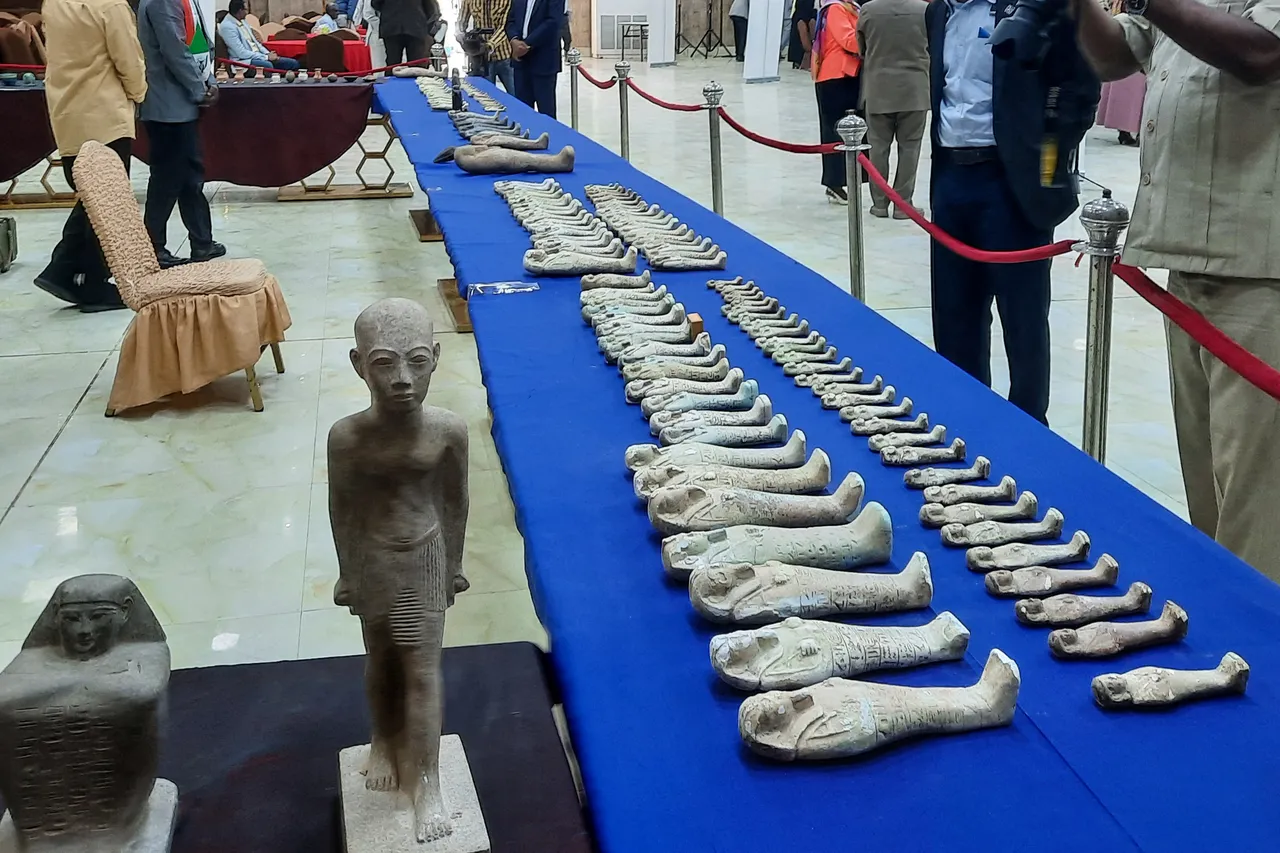
Sudanese authorities have displayed ancient figurines, ornate vases, and scarab-shaped amulets at a ceremony in Port Sudan celebrating the recovery of more than 570 antiquities stolen from the national museum during the country's long-running war.
The artefacts, arranged on large tables under heavy security on Tuesday, were recovered after months of investigation and brought to the wartime capital.
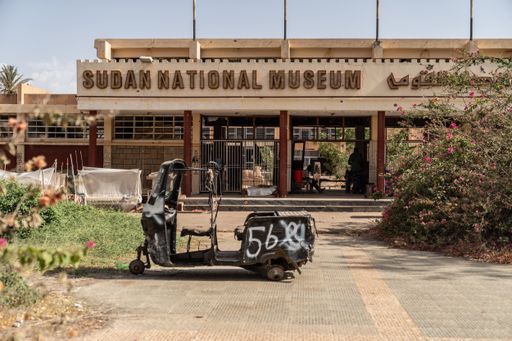
The National Museum in Khartoum, which housed some of Sudan's most important archaeological collections, was looted and badly damaged after the paramilitary Rapid Support Forces (RSF) seized the capital in the early days of its war with the army, its former ally.
At the time, satellite images showed trucks carrying artefacts west, towards the vast region of Darfur - now completely under RSF control.
Since then, Sudanese authorities have worked with UNESCO and Interpol to track down the stolen items.
Authorities did not detail on Tuesday exactly how the artefacts were recovered.
‘Financial reward’ for returning antiquities
"Sudan heritage is not only of national importance, it is a treasure of humanity," said UNESCO's representative in Sudan, Ahmed Junaid, referring to international efforts to combat illicit trafficking of cultural property.
"Many people do not know the value of the objects displayed on the tables, but they reflect the identity of the nation and its history," said Sudan's finance minister Gibril Ibrahim.
"Those who stole our antiquities sought to erase our identity," he added.
Khalid Aleisir, minister of information and culture, announced a "financial reward" for anyone returning antiquities to the authorities, without specifying an amount.




Most valuable collection still missing
Officials estimate that the recovered items account for about 30 percent of the objects looted from the museum.
Still missing are the contents of the so-called "gold room", the museum's most valuable collection, which included ancient jewellery and 24-carat gold pieces, some nearly 8,000 years old.
Little remains at the Khartoum museum, which was built in the 1950s.
Looters took most of the portable items, leaving behind only the heaviest objects, such as the towering black granite statue of Pharaoh Taharqa who ruled the kingdom of Kush and Egypt from 690 to 664 BC.
In March, after the army retook Khartoum from the RSF, archaeologists were able to enter the museum for the first time in two years to assess the damage.
Most of Sudan's museums have been looted since the war began, including the Palace of Sultan Ali Dina, who ruled Darfur between 1891 and 1916.
The palace is located in El Fasher, the capital of North Darfur, which fell to the RSF in October.
Sudan's national antiquities authority has estimated the total losses at around $110 million.