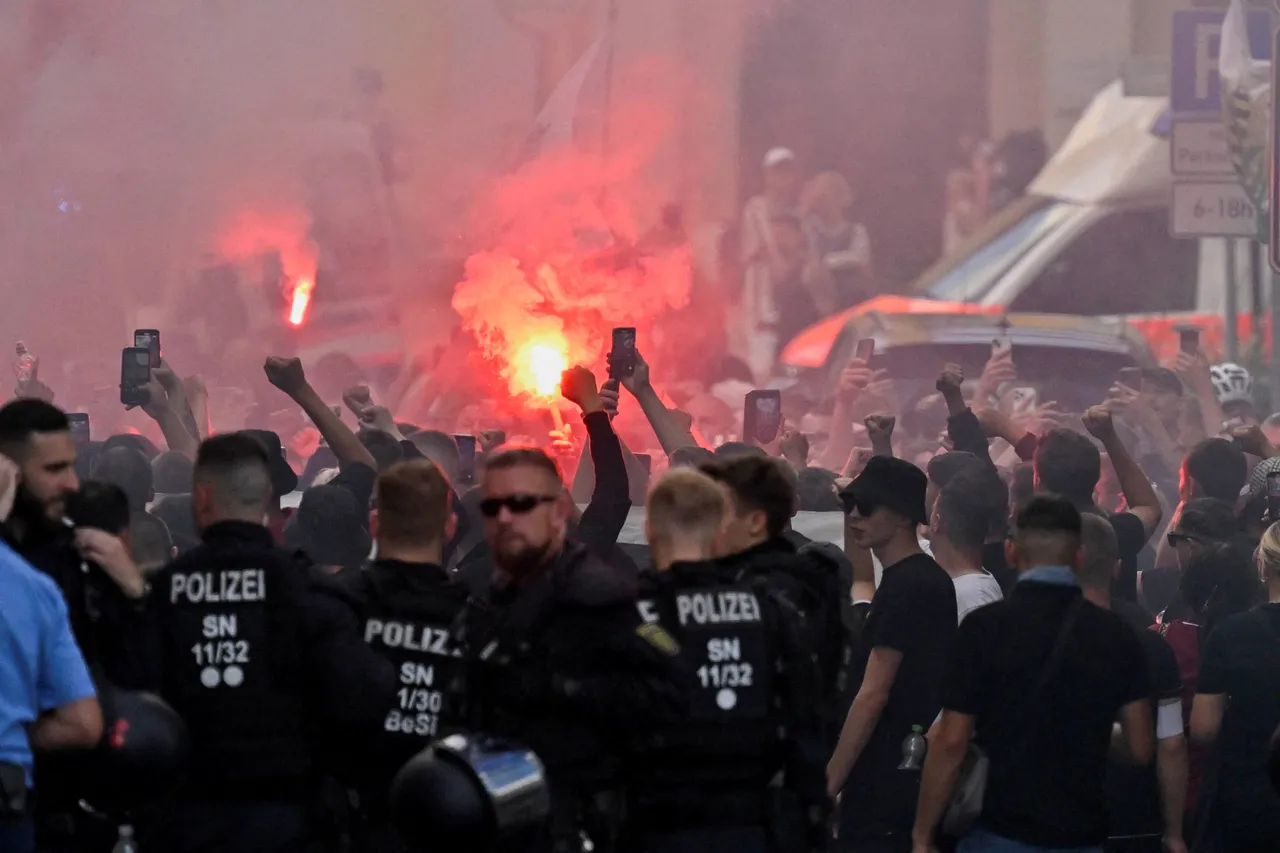
Hundreds of young people in Germany are being drawn into far-right extremism through online networks that glorify terrorist attacks and openly promote violence, according to a study released on Tuesday by German prosecutors and police authorities.
The report, compiled by public prosecutor’s offices in Stuttgart and Munich together with Baden-Wurttemberg’s Criminal Police Office, highlights the rapid growth of the so-called “Terrorgram” scene—loosely organised far-right communities operating mainly on messaging platforms such as Telegram.
Investigators found that these networks function as echo chambers where attack fantasies, extremist propaganda and explicit calls for violence are routinely shared.
Authorities described the scene as “youth-oriented, violence-prone, neo-fascist and far-right extremist,” warning that it has expanded significantly in recent years.
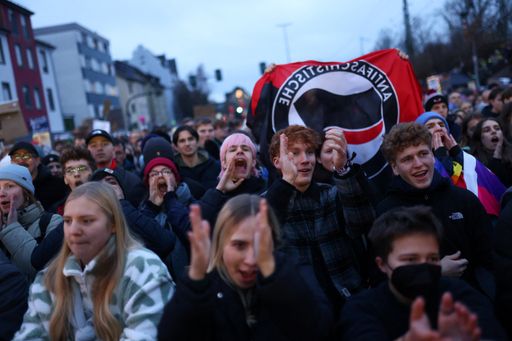
‘Youth ready to engage in violence or terrorism’




The average age of those identified in the study was just over 16, with some participants younger than 14.
Experts said the group’s extreme youth makes it especially susceptible to radical narratives, as members often lack stable values and are still forming their worldviews.
The networks are almost exclusively male and, according to the report, show a striking readiness to engage in violence or terrorism.
The study also found that many of those drawn into the scene are socially isolated or neglected by their families. Some had been diagnosed with mental illnesses, while others showed signs of psychological distress—factors that researchers say increase vulnerability to extremist recruitment.
Authorities stressed that families, schools and social services play a critical role in early detection and prevention, warning that online radicalisation is increasingly blurring the line between extremist rhetoric and real-world attacks.