The prime minister of the Turkish Republic of Northern Cyprus (TRNC) has criticised a trilateral summit between Israel, Greece, and the Greek Cypriot Administration, warning that emerging military cooperation risks escalating tensions in the Eastern Mediterranean.
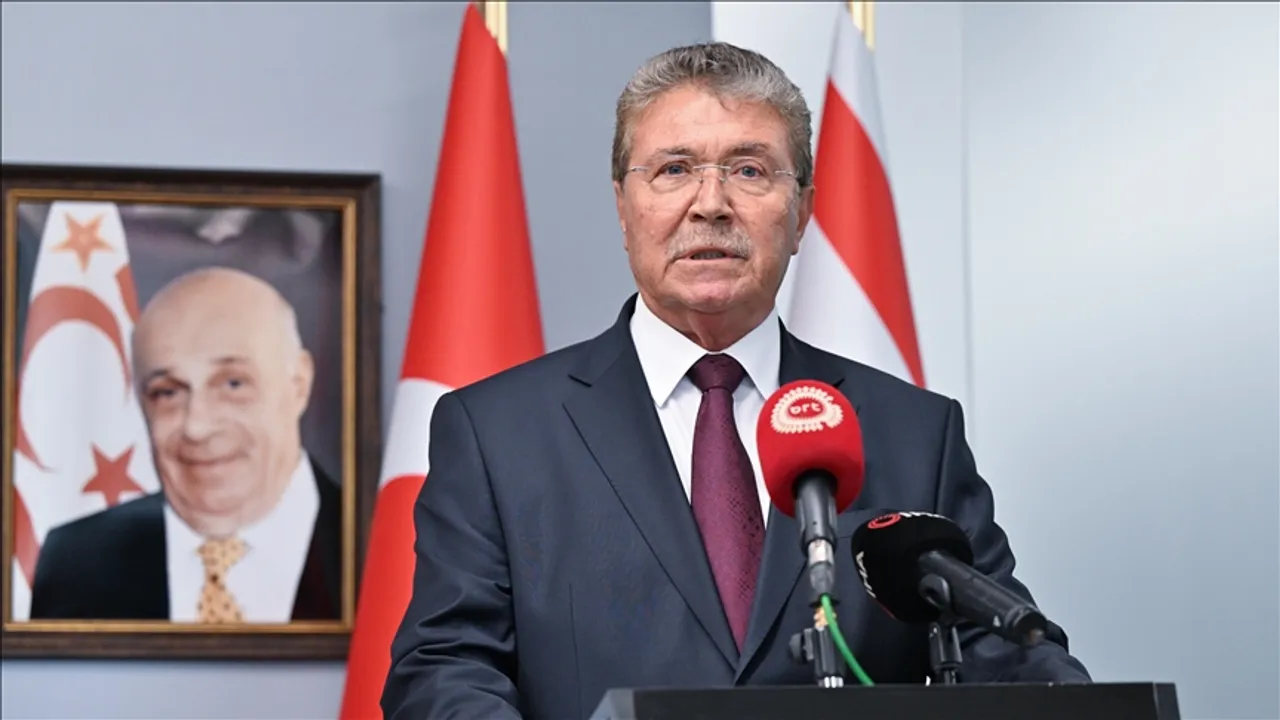
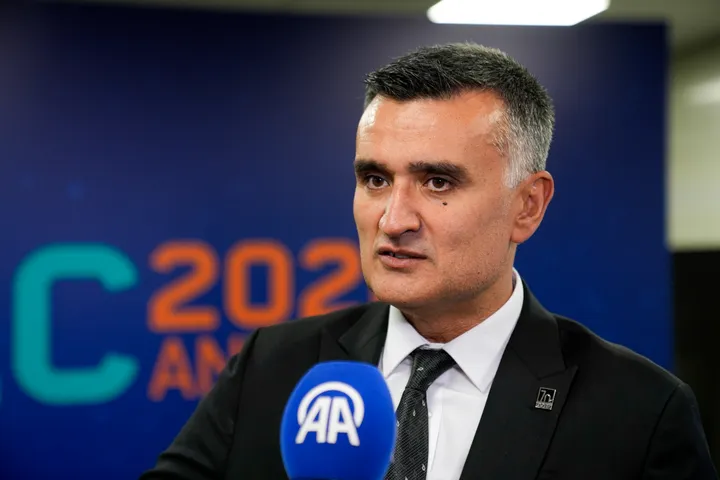
In a written statement on the summit held on Monday in Jerusalem, Unal Ustel said the meeting signalled a move toward confrontation rather than peace, stability, and cooperation in the region.
The TRNC is closely monitoring the “summit held by Israel, Greece and the Greek Cypriot Administration, as well as reports regarding plans to establish a joint military force,” he said on Tuesday.
Ustel said proposals to form a 2,500-strong “rapid intervention force,” which he said was presented as a deterrent against Türkiye and Turkish Cypriots, amounted to “a new and dangerous threat” to peace in the Eastern Mediterranean.
‘Israel is seeking to carry instability into Eastern Mediterranean’
“Israel, which tramples on humanitarian values through its aggressive policies in the Middle East, is now seeking to carry this instability into the Eastern Mediterranean,” Ustel said.
“Efforts to transform the region from a zone of peace into an arena of conflict threaten not only the island of Cyprus but the entire Mediterranean basin.”
He described the involvement of Greece and the Greek Cypriot Administration in what he called a “dangerous game” as a historic miscalculation.
Ustel also accused the Greek Cypriot leadership of presenting itself internationally as supportive of a settlement while simultaneously pursuing military alliances aimed at Türkiye.
“This hypocritical approach clearly demonstrates how detached they are from the realities on the island,” he said.
The TRNC premier said such actions undermine the basis for negotiations and make any potential compromise impossible.

‘Greek Cypriot leadership continues to revive same aggressive mindset’
Marking the anniversary of events known as “Bloody Christmas,” which refer to attacks on Turkish Cypriots in 1963, Ustel said it was unacceptable that the Greek Cypriot leadership was reviving what he described as the same aggressive mentality through current military plans instead of learning from history.
“The mentality that plunged the Republic of Cyprus into bloodshed in 1963 is the same mentality that today seeks to establish an anti-Türkiye military force in the Eastern Mediterranean,” he said, referring to the Cypriot state that existed before the TRNC was declared in 1983.
“It is impossible to conduct a healthy negotiation process with such an understanding.”
Ustel stressed that the TRNC and Türkiye are inseparable, warning that any military plan, pipeline project, or political alliance that ignores the rights of Türkiye and Turkish Cypriots, or seeks to exclude them from the Eastern Mediterranean, the “Blue Homeland,” or TRNC sovereign areas, is “doomed to fail from the outset.”
Decades-long Cyprus problem
Cyprus has remained divided for decades between Greek Cypriots and Turkish Cypriots despite repeated UN-led efforts to reach a comprehensive settlement.
Intercommunal violence in the early 1960s forced Turkish Cypriots into enclaves for their safety.
In 1974, a Greek Cypriot coup aimed at uniting the island with Greece prompted Türkiye’s military intervention as a guarantor power. The TRNC was later declared in 1983.
Peace efforts have continued intermittently, including a failed round of talks in Switzerland in 2017 under the auspices of guarantor powers Türkiye, Greece, and the UK.
The Greek Cypriot Administration joined the European Union in 2004, the same year Greek Cypriots rejected a UN-backed reunification plan in a referendum.