 Yusef Jalali
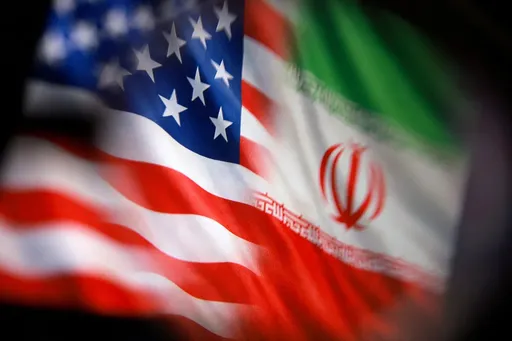
Iran’s latest bid to escape the terror-financing blacklist has collapsed after a global watchdog rejected Tehran’s conditional approval of its anti-terror conventions, crushing reformist hopes for economic relief just as UN sanctions snap back into force.
On October 22, President Masoud Pezeshkian formally promulgated Iran’s long-delayed ratification of the UN Convention for the Suppression of the Financing of Terrorism (CFT) – one of the key benchmarks of the Financial Action Task Force (FATF) for delisting countries accused of funding terror.
But just a day later, FATF’s plenary session in Paris ruled that Iran’s ratification came with unacceptable caveats – most notably, Tehran’s insistence on redefining “terrorism” according to its own domestic laws.
That definition seeks to shield Iran-aligned groups like Hezbollah and Houthis from FATF’s radar, defying Western classification of the groups as terrorists.
As Iran’s economy buckles under an ever-growing wave of Western pressure, Tehran is now facing an impossible fork: either relax ideological rigidity towards its ‘resistance network’ or brace for deeper isolation that may even disrupt its eastern partnerships.
Terrorist or not terrorist, that’s the question
Iran has been on the FATF blacklist since 2020 for what the watchdog calls “strategic deficiencies” in countering money laundering and terror financing.
To be removed, Tehran must fully implement two UN conventions: The Palermo Convention on transnational organised crime and the CFT – both in line with FATF standards.
The FATF, a G7-backed body, sets global rules to curb illicit financial flows. Blacklisted countries face sweeping countermeasures, including limited banking access, stifled trade, and deeper isolation.
For Iran’s sanctions-strangled economy, delisting would have offered an aperture to breathe.
Iran’s parliament passed the CFT back in 2018, but the bill stalled for years amid hardline fears that it would constrain Tehran’s backing of ‘resistance’ groups – the backbone of its regional influence and a tool to defy Israel’s Western allies in the Middle East.
In early October, Iran’s Expediency Council, a top body tasked with arbitrating disputes over controversial bills, finally approved the CFT, after greenlighting the Palermo Convention in May.
But Iran’s ratification came with seven binding conditions placing domestic law above FATF standards whenever they conflict.
At the heart of it lies Iran’s refusal to recognise Israel. But the main holdout is Iran’s demand to define “terrorism” on its own terms – distinguishing between terror groups like Daesh or al Qaeda and “resistance movements that fight for freedom”.
That proved the dealbreaker.
In its October 23 statement, FATF said Iran had “failed to implement the Palermo and CFT conventions in line with FATF standards,” keeping Tehran on the blacklist and urging global countermeasures to mitigate financial risks.
Tehran dismissed the decision as politically motivated.
“Our laws align with international norms against groups like al Qaeda and ISIS (Daesh) while respecting legitimate resistance movements recognised under the UN Charter,” Foreign Ministry spokesperson Esmail Baghaei said, calling the rejection a result of US pressure and Western selective approach.
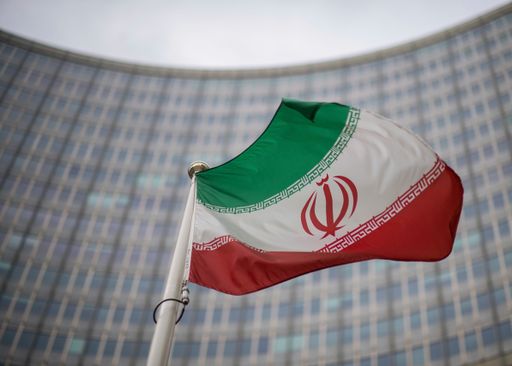
Economic woes as the main drive
The FATF decision comes just days after the 2015 nuclear deal’s snapback mechanism resurrected UN sanctions, reinstating arms embargoes and asset freezes targeting Tehran.
For President Pezeshkian’s government, FATF compliance was a chance to open limited trade channels and signal pragmatism to global markets to partly offset the impacts of UN bans.
“After the snapback, Iran resorted to the CFT to prevent escalation and send a positive signal to global markets,” Hadi Mohammadi, journalist and Iran affairs expert, tells TRT World.
President Pezeshkian’s failed attempt to secure FATF clearance has reignited a political firestorm in Tehran, mirroring the rancour that surrounded the collapse of the Iran nuclear accord, known as the JCPOA.
Reformists see FATF compliance as essential to breaking isolation and reviving trade ties. Hardliners, however, view it as deja vu – another bitter lesson in “trusting the West,” after April’s failed nuclear talks with Washington and the subsequent US and Israeli strikes in June, plus the recent JCPOA collapse.
Tasnim, the Revolutionary Guards-affiliated news agency, slammed President Pezeshkian’s Western outreach: “After the humiliating failure of the JCPOA, Iran’s pro-Western camp repeated the same logic and promises with FATF. Trusting the West has never solved anything; it is, in fact, part of the crisis itself.”
Anger has now turned towards the officials who led Iran’s FATF outreach. Deputy Finance Minister Hadi Khani, who represented Iran at the FATF plenary in Paris, has faced calls to resign for what hardliners call “misleading promises”.


“Mr Khani, you claimed accepting the CFT would solve our problems. Today, the country is stuck in a CFT quagmire. You should resign for your flawed analyses,” hardline Tehran lawmaker Amir-Hossein Sabeti declared on Sunday.
Khani, however, remains defiant. “Tehran will keep pushing,” he said, noting that FATF had already accepted most of Iran’s Palermo-related reservations. “Only one unresolved clause remains, and it can be solved through further dialogue.”
Mohammadi echoes this optimism. “Iran already complies with 39 out of 41 standards,” he said.
“During the early years of JCPOA, FATF’s easing of countermeasures helped our economy, leading to single-digit inflation, double-digit growth and billions added to reserves. That experience proves FATF membership is worth pursuing.”
But economist Ruhollah Modabber dismisses such hopes. “The government’s talks with the West lacked credibility from the start,” he tells TRT World.
“The idea of delisting Iran while it maintains ties with the ‘Resistance Axis’ was never going to happen. Iran can never exit the FATF blacklist as long as the West’s issue with the country is ideological, not technical.”
Between ‘resistance’ and economic relief
Iran now faces a stark dilemma. For the reformist Pezeshkian government, sorting out differences with the West is the central hope. On the other hand, as far as the FATF is concerned, this path only opens if Iran labels its ‘resistance’ allies as terrorists.
Hardline voices say Iran cannot abandon its “Axis of Resistance” to satisfy Western standards.
Modabber explains: “The Western demand for Iran to sever ties with its ‘Axis of Resistance’ allies, including Hezbollah, is unrealistic.
“Any shift in this policy would contradict Iran’s national interests.”
However, Mohammadi, the Iran affairs expert, counters that Iran can join FATF without abandoning the ‘resistance’.
“CFT won’t hinder Iran’s backing for these groups; All funds to ‘resistance’ forces move in cash and suitcases, not through formal bank transfers. That’s been the case for the past 40 years.”
Yet, FATF’s anti-terror financing standards, specifically Recommendation 6, target cash and informal transfers, risking exposure of Iran’s financial ties to ‘resistance’ networks.
The West-East loop
For Iran, the FATF standoff is a survival test, balancing revolutionary identity with economic reality.
While there are Iranians who argue domestic welfare shouldn’t be sacrificed for ideology, reformists and hardliners both agree that support for the “Axis of Resistance” will continue. The divide lies only in how to sustain it under FATF’s rejection of Tehran’s reservations.
Hardliners push for defiance, urging closer ties with Russia, China, and blocs like BRICS and the Shanghai Cooperation Organisation to bypass Western systems entirely.
“Our government wasted time hoping for breakthroughs with the West. We should have strengthened our Eastern partnerships instead,” says Modabber.
Reformists counter that leaning eastwards won’t circumvent FATF’s strict rules.
“The whole world is in compliance with FATF. Even China and Russia have urged us to comply with FATF to do business seamlessly. So our friends are not willing to bear the costs of our ideology,” notes Mohammadi.
Deputy Finance Minister Hadi Khani also admitted that at the latest FATF session, “even China and our BRICS and SCO partners did not support our [reservations associated with the CFT] action,” calling for full compliance.
It appears that even the Eastern off-ramp loops Iran back to FATF.