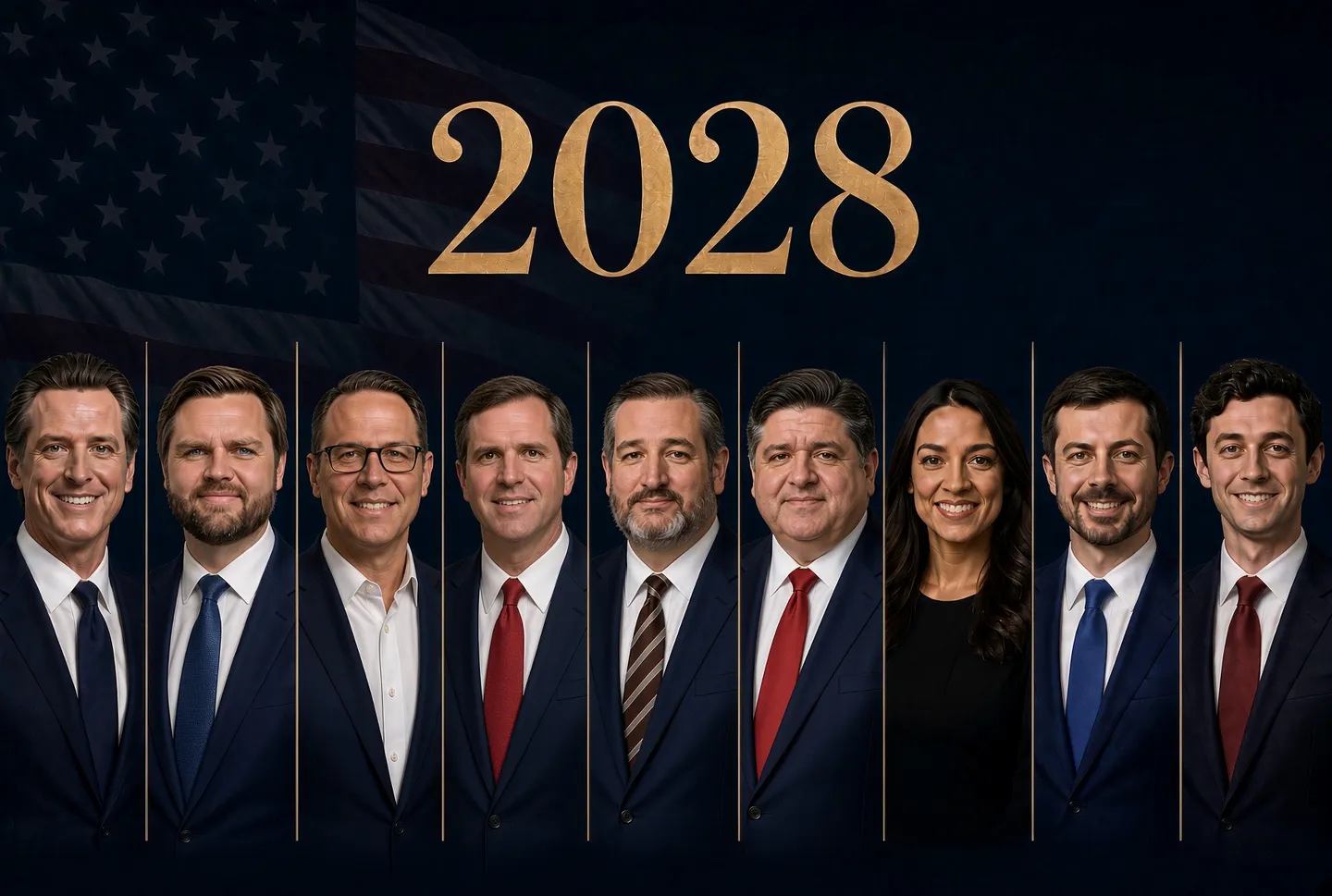
As most of the political world focuses on next month's midterm elections, the shadow primary for the 2028 presidential contest is quietly playing out in public view.
Democratic and Republican presidential prospects have been crisscrossing the country, raising money and tapping their political connections to help boost their parties' candidates — and their own White House ambitions.
Here's a closer look at some leading prospects and how what happens Nov. 3 may shape their political futures.
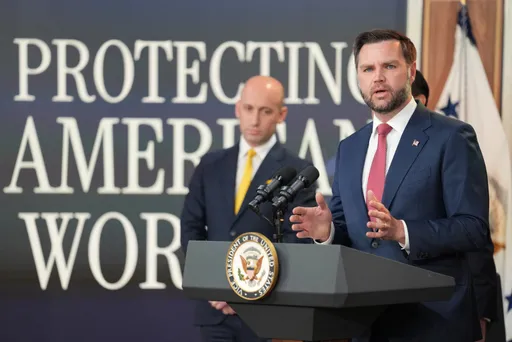
Vance steps up midterm campaign efforts
The 42-year-old has embarked on an extensive midterm campaign schedule from the Midwest to the South and Alaska, focused on the administration’s anti-fraud efforts.
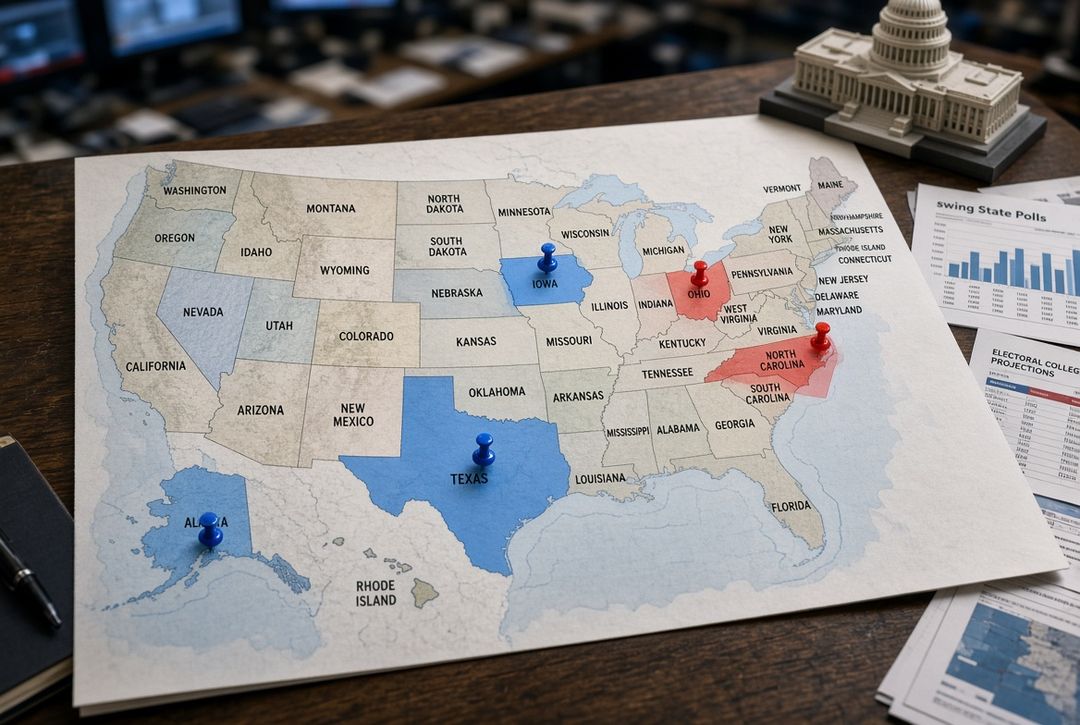
A key state will be Ohio, which Vance briefly represented in the Senate.
Republican Sen. Jon Husted, who was appointed to fill Vance’s seat in 2025, is facing a challenge from former Democratic Sen. Sherrod Brown.
Democrat Amy Acton is in a close contest with Republican Vivek Ramaswamy for governor.
The effectiveness of the conservative group Turning Point Action will also be closely watched. Erika Kirk, the widow of Turning Point co-founder Charlie Kirk and the organization’s new leader, has already endorsed Vance’s potential presidential bid and leaders have said they intend to use the group to support his campaign.
Vance has said he is not focused on running for president, but “trying to help elect Republicans.”
Newsom has a Southern strategy
Gavin Newsom leaves the California governor's office at the end of the year, and he's been among the most active Democrats throughout the midterms.
He's paid particular attention to the South, where he's campaigned with candidates up and down the ballot in states like Alabama, Mississippi, North Carolina, and, not surprisingly, South Carolina, which will host the party's first presidential primary contest in 2028.
The Southern focus aligns with the mission of Newsom's political action committee, established in 2023 to help his party compete in red states. But it could also help endear him to Black voters, a key constituency within the Democratic base
Newsom's national profile and extensive email list have helped him develop relationships with Democratic officials in states like Nevada and New Hampshire, where his fundraising emails have generated a surge of donations.
Perhaps Newsom's biggest midterm contribution was backing Proposition 50, California's response to the Texas Republican mid-decade gerrymander.
The proposition, approved by California voters last year, created a new congressional map that may allow Democrats to pick up as many as five additional U.S. House seats in California this fall.
Shapiro is all about Pennsylvania
Among the Democrats considered potential 2028 presidential contenders, Pennsylvania Governor Josh Shapiro has largely concentrated his midterm political activities within his home state.
He hasn't visited any early primary states or campaigned with any midterm candidates beyond his state.
The approach reflects Shapiro's focus on consolidating his political position in Pennsylvania, a key presidential swing state.
Shapiro is considered the favourite to win reelection against his Republican challenger, state Treasurer Stacy Garrity, and has directed political resources towards other races.
Beshear faces risk and reward
As chairman of the Democratic Governors Association, Kentucky Governor Andy Beshear has expanded his national political activities during the midterms.
He’ll headline a get-out-the-vote tour through key states, beginning with Nevada on Oct. 22.
He's also been on a national book tour, allowing him to cosy up to influential Democrats in early states.
Still, Beshear’s spending decisions as chief of the governors association in 2026 may present the highest risk and reward for him heading into 2028.
He’s been active in supporting Democratic candidates in traditional swing states like Wisconsin, Michigan and Arizona while pushing into Republican-leaning states like Ohio and Iowa, places he argues could be critical in the next White House campaign.
But Democrats in other states are clamouring for more resources and warning Beshear of blowback if he doesn't deliver.






Under pressure, the governors association sent $1 million this week to help the candidate for Texas governor, Gina Hinojosa.
Cruz hits the road Texas
Sen. Ted Cruz has long been one of his party's most active campaigners and fundraisers, and that's not changed as he openly weighs another presidential bid.
His PAC has spent more than $2.4 million this year on ads supporting midterm candidates, according to AdImpact, mostly to help Senate candidate Ken Paxton in his home state.
Cruz has travelled to Iowa three times, the first state on Republicans' nominating calendar and where he won the caucuses during the 2016 primary.
He’ll be in Alaska next week, and is also planning trips to South Carolina, North Carolina and most likely Michigan.
Pritzker's money plays Illinois
Gov. JB Pritzker is seeking his third term in November, but the Democrat has focused more on helping midterm candidates in other states. Pritzker's team says the billionaire Democrat has already donated $38 million to the party's midterm efforts.
More than other 2028 prospects, Pritzker has been focused on the Texas governor's race, where he donated $1 million this week, on top of $200,000 he gave earlier.
He's also been active on the speaker circuit, having participated in more than 75 events across the country. He's expected to visit South Carolina before Election Day.
AOC's progressive politics face a test
Rep. Alexandria Ocasio-Cortez of New York has been increasingly open about a potential presidential run, which could position her among the Democratic Party's progressive contenders.
But first, she's trying to prove that brand of politics can succeed in a presidential swing state like Michigan, where she has thrown her weight behind Senate candidate Abdul El-Sayed. They appeared together this week at a New York City fundraiser, and she cast his campaign as a broader test for the progressive movement.
“If Abdul can win in Michigan, anybody can win anywhere,” Ocasio-Cortez told the audience.
Ocasio-Cortez and other Democrats have acknowledged that she'll face questions about whether she can appeal to voters across the country.
Ocasio-Cortez argues an El-Sayed victory could challenge some of those assumptions.
Buttigieg is busy, too
Since leaving his job as transportation secretary under President Joe Biden, Pete Buttigieg has used his time to travel across the country, raising money and campaigning for Democrats on the ballot this year.
Buttigieg has endorsed nearly 100 candidates, from state legislative contests to Senate races, and has appeared on the campaign trail with roughly half of them, according to his team. He has visited 37 states since leaving office.
The range of those appearances also reflects his efforts to build connections across different parts of the Democratic Party.
Buttigieg has also campaigned for Democratic candidates in traditionally Republican areas, including Nancy Lacore, a US House candidate in South Carolina who campaigned with Buttigieg in August.
Ossoff’s Georgia audition
The Georgia senator is the only Democrat seeking re-election in a state Donald Trump carried in 2024, and the midterms are his whole ballgame. He has spent the fall in a rolling argument with Trump-backed challenger Mike Collins, casting the administration’s conflicts of interest as a cost-of-living problem, an AI problem, and a war problem.
Polls put him ahead by roughly 7 to 10 points; Cook rates the race Lean Democratic, and he has already raised close to $100 million. Early voting starts next week.
He insists the presidential chatter is fantasy. “I have zero interest in running for president in 2028,” he told local television last month, and he has repeated the line on national air.
He has hosted fundraisers for the Georgia Democratic Party and its coordinated campaign, appeared with gubernatorial nominee Keisha Lance Bottoms, and picked up an Obama ad this week.
A senior Georgia Democrat told the Financial Times his aim is not merely to win, but to win by enough that “he could change his mind in 2028 or after.” On prediction markets, he is already the favourite for the Democratic nomination.
The risk is the same one that made him look vulnerable a year ago. Georgia still requires 50 percent to avoid a December runoff, Collins is hitting him as a coastal trust-fund radical, and a narrow win would leave the 2028 talk looking like hype.