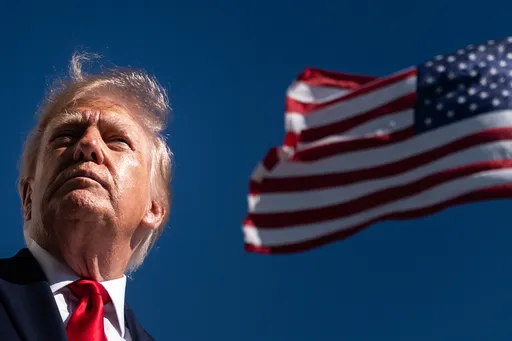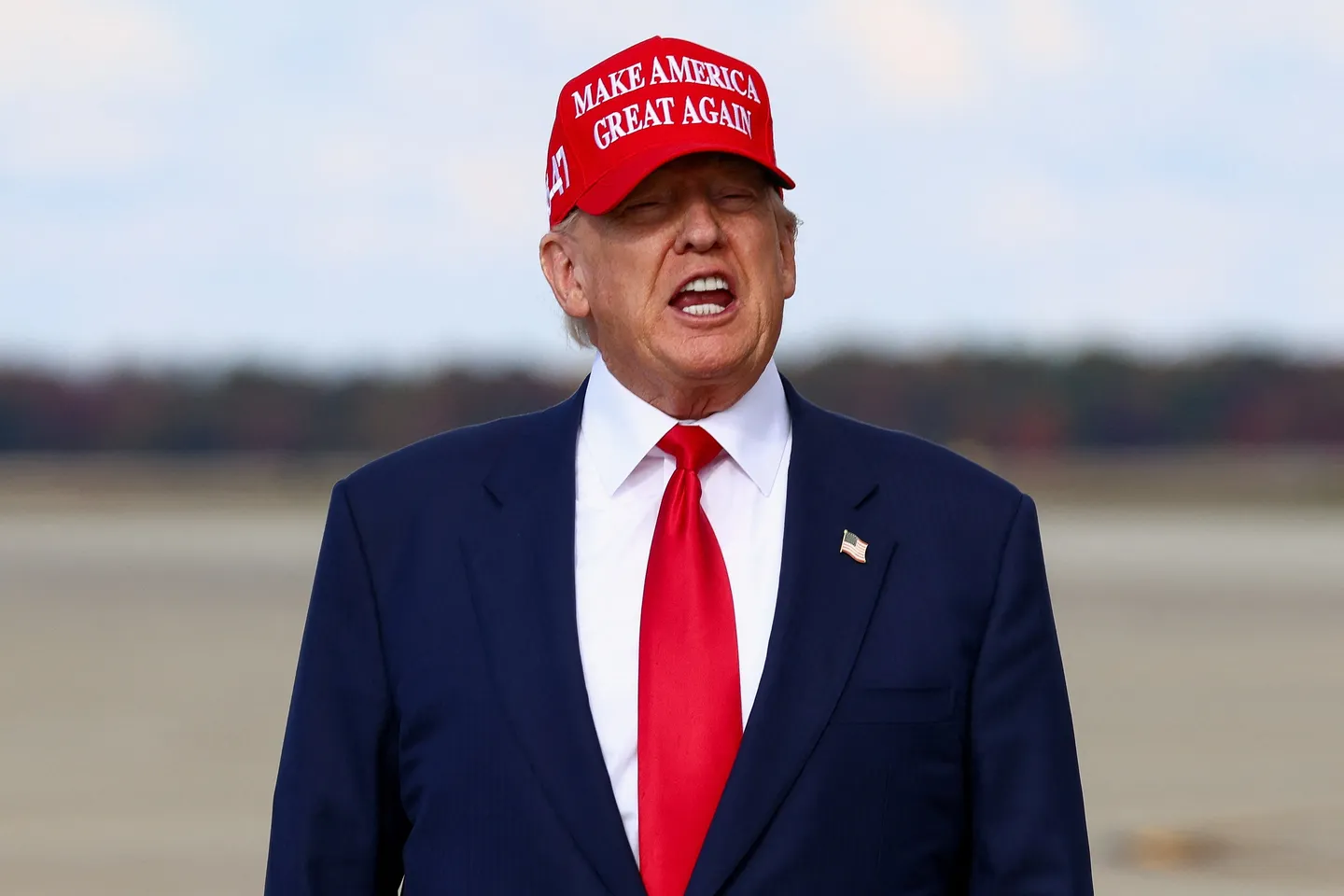
Back from a week abroad, US President Donald Trump is calling on the Senate to scrap the filibuster and reopen the government after a month-long shutdown, breaking with the majority of Republicans who have long opposed such a move.
Trump said in a post on his social media site Thursday that "THE CHOICE IS CLEAR — INITIATE THE ‘NUCLEAR OPTION,’ GET RID OF THE FILIBUSTER."
Trump’s sudden decision to assert himself into the shutdown debate — bringing the highly charged demand to end the filibuster — is certain to set the Senate on edge. It could spur senators towards their own compromise or send the chamber spiralling toward a new sense of crisis.
Trump has long called for Republicans to get rid of the Senate rule that requires 60 votes to overcome objections, dating all the way back to his first term in office. The rule gives Democrats a check on the 53-seat Republican majority and enough votes to keep the government closed while they demand an extension of health care subsidies.
Senate Majority Leader John Thune and most members of his Republican conference have strongly opposed changing the filibuster, arguing that it is vital to the institution of the Senate and has allowed them to halt Democratic policies when they are in the minority. Thune has repeatedly said he is not considering changing the rules to end the shutdown, and there would not be enough votes to do so, for now, even if he tried.
"The filibuster forces us to find common ground in the Senate," Republican Sen. John Curtis of Utah posted on X Friday morning, responding to Trump's comments. "Power changes hands, but principles shouldn’t. I’m a firm no on eliminating it."
Debate has swirled around the legislative filibuster for years. Many Democrats pushed to eliminate it when they had full power in Washington, as the Republicans do now, four years ago. But they ultimately didn't have the votes after enough Democratic senators opposed the move, predicting such an action would come back to haunt them.
Republican Senator Thom Tillis noted that he doesn’t believe there would be the Republican votes in the Senate to eliminate the filibuster. The Senate has 53 Republicans, and it would take 51 votes to change the rule.
"The filibuster is not going away this Congress," Tillis said.
"I will never support ending the filibuster, and I think Republicans have made that very clear," he said.
"I’m not changing the filibuster," said Senator Lisa Murkowski, Republican from Alaska. "Absolutely not," said Senator James Lankford, Republican from Oklama.
"It’s a nonstarter," said Senator John Cornyn, Republican from Texas. "We’re not going to destroy the Senate in order to give the Democrats what they want, OK? Because that’s exactly what they want, is to destroy the filibuster."
Little progress on shutdown
Trump's call comes as the two parties have made little progress towards resolving the shutdown standoff while he was away for a week in Asia. He said in his post that he gave a "great deal" of thought to his choice on his flight home and that one question that kept coming up during his trip was why "powerful Republicans allow" the Democrats to shut down parts of the government.
While quiet talks are underway, particularly among bipartisan senators, the shutdown is not expected to end before next week, as both the House and Senate are out of session. Democrats say they won't vote to reopen the government until Republicans negotiate an extension to the health care subsidies while Republicans say they won't negotiate until the government is reopened.
The latest development comes amidst polls that more Americans blame Trump and Republicans in Congress than Democrats for the shutdown, according to a Washington Post-ABC News-Ipsos poll.







More than 4 in 10 US adults — 45 percent — say Trump and the GOP are mainly responsible for the shutdown that may lead the government to cut off anti-hunger benefits, has caused air traffic delays, and has furloughed hundreds of thousands of federal workers.
Post flash poll notes that among registered voters, 37 percent now blame Democrats, while 46 percent blame Republicans.
Money for military, but not food aid
The White House has moved money around to ensure the military is paid, but refuses to tap funds for food aid.
In fact, Trump's “big, beautiful bill” signed into law this summer, delivered the most substantial cut ever to SNAP projected to result in some 2.4 million people off the programme.
At the same time, many Americans who purchase their own health insurance through the federal and state marketplaces, with open enrollment also beginning Saturday, are experiencing sticker shock as premium prices jump.
"We are holding food over the heads of poor people so that we can take away their health care," said Rev. Ryan Stoess during a prayer with religious leaders at the US Capitol.
"God help us," he said, "when the cruelty is the point."
Deadlines shift to next week
The House remains closed down under Johnson for the past month, and senators departed for the long weekend on Thursday.
That means the shutdown, in its 30th day, appears likely to stretch into another week if the filibuster remains.
If the shutdown continues, it could become the longest in history, surpassing the 35-day lapse that ended in 2019, during Trump's first term, over his demands to build the US-Mexico border wall.
The next inflection point comes after Tuesday's off-year elections — the New York City mayor's race, as well as elections in Virginia and New Jersey that will determine those states' governors.
Many expect that once those winners and losers are declared, and the Democrats and Republicans assess their political standing with the voters, they might be ready to hunker down for a deal.
"I hope that it frees people up to move forward with opening the government," Thune said.