US President Donald Trump will chair the first meeting of the Board of Peace in Washington on Thursday.
The new international body was set up initially for the reconstruction and stabilisation of Gaza after a so-called ceasefire slowed the intensity of Israel’s genocidal war in the besieged enclave in late 2025.
Endorsed by the UN Security Council through a resolution, the Board of Peace will coordinate humanitarian aid, rebuilding efforts, and long-term security in the war-torn territory.
The concept of the Board of Peace emerged from Trump’s 20-point plan announced in late 2025 to end the Gaza war.
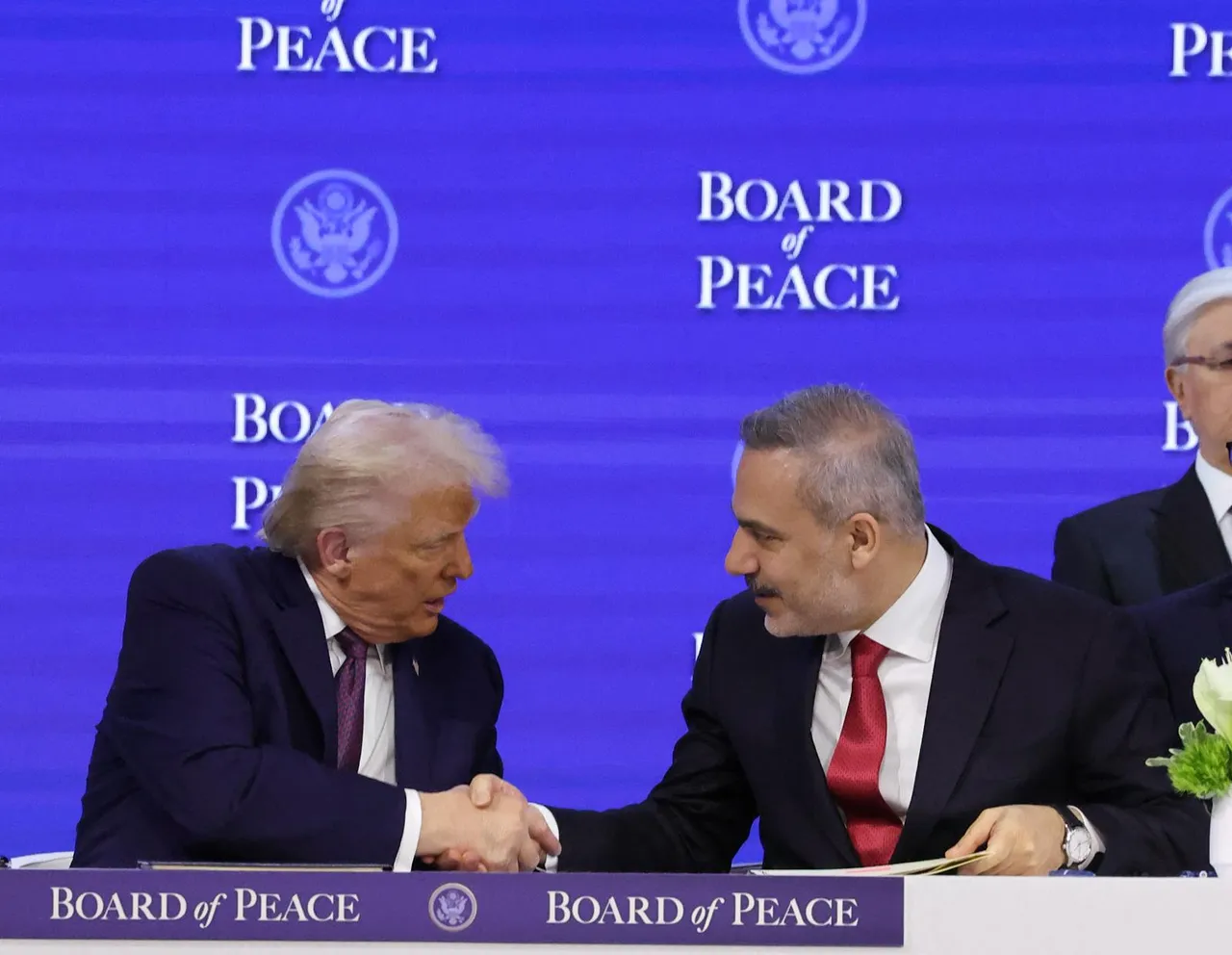
With Trump as its permanent chairman, the board was formally launched with a charter-signing ceremony at the World Economic Forum in Davos, Switzerland, last month.
Representatives from 19 founding member states, including Türkiye, attended the ceremony.
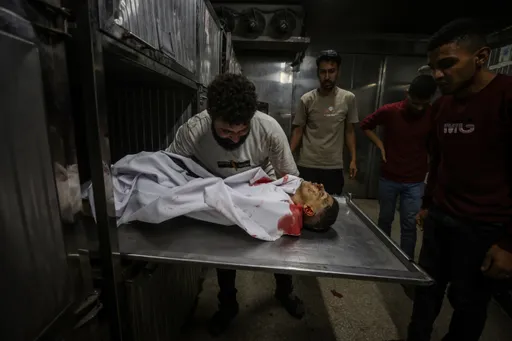
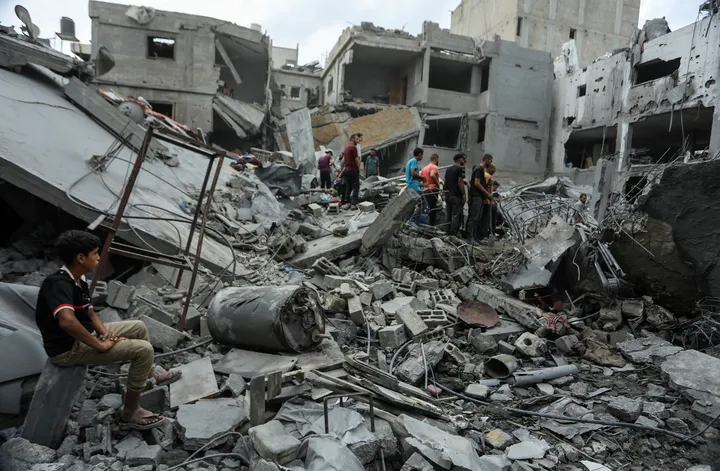
The immediate objective of the Board of Peace is to facilitate the rebuilding of Gaza, which suffered complete destruction during the two-year-long war in which Israel killed over 71,660 Palestinians and injured many more.
The board seeks to deliver humanitarian assistance, set up security mechanisms, and lay the foundation for economic recovery in Gaza.
It wants a technocratic administration for Gaza, managed by international experts rather than elected officials.
The initiative draws inspiration from past transitional administrations. However, the Board of Peace is structured differently, with Trump holding a lifetime chairmanship and wielding significant influence, including veto power over most of its decisions.
Supporters view the initiative as a pathway to lasting stability in the region.
The UN has already endorsed the new international body through a resolution, which granted it international legitimacy.
However, some critics have pointed out that the board includes Israel but not Palestinian representatives.
Who are the key participants?
The inaugural meeting, taking place at the Donald J. Trump Institute of Peace – formerly known as the US Institute of Peace – will bring together representatives from more than 45 nations.
Twenty-six founding members of the Board of Peace include Türkiye, Saudi Arabia, the United Arab Emirates, Qatar, Indonesia, and Pakistan, among others.
Membership involves financial contributions, including a reported $1 billion fee for a permanent seat.
Notable participants are expected from Middle Eastern and Gulf countries, which have shown a strong desire to participate because of regional security interests.
Jared Kushner, Trump’s son-in-law, who also played a role in earlier ceasefire negotiations, is closely associated with the initiative, along with international figures such as former UK prime minister Tony Blair.
The structure of the Board of Peace includes multi-level bodies with Trump at the top as a for-life chairman.
The apex body – or the “board proper” – will consist of national leaders from around the world.
Under that, there will be a “founding Executive Board” that will focus on investment and diplomacy. Six of its eight members are Americans, including Kushner and US Secretary of State Marco Rubio.
Another body within the broader Board of Peace structure will be called the Gaza Executive Board. It will have 11 members, including Turkish Minister of Foreign Affairs Hakan Fidan.
The Gaza Executive Board will oversee on-the-ground work alongside another administrative group, namely the National Committee for the Administration of Gaza (NCAG).
The NCAG will consist of supposedly technocratic, apolitical Palestinians, led by Dr Ali Shaath, a civil engineer with past stints in the Palestinian Authority.
While the Board of Peace has received support from many Muslim countries and regional powers, no G7 nation other than the US has joined the initiative.
Countries like Germany, France, the UK, and Canada have opted out. China and Russia have yet to respond to the invitation to join the Board of Peace.
The Vatican has also declined to join, saying the UN should manage such crises instead.
What is the agenda?
The meeting’s agenda centres on advancing Gaza’s recovery under the ceasefire framework.
A key focus will be a status update on the post-war plan, including humanitarian aid delivery and infrastructure rebuilding in the war-torn enclave.
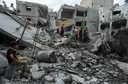
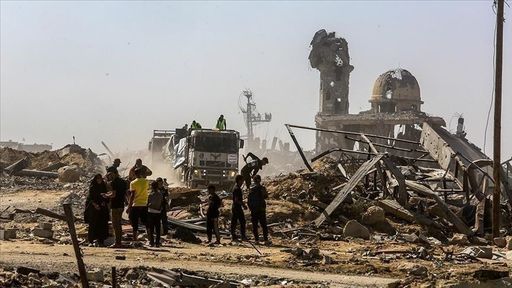
After more than two years of relentless bombing by Israel, Gaza requires extensive restoration of housing, water systems, power grids, schools, and hospitals. The UN estimates reconstruction costs to be $70 billion.
The board plans to deploy an International Stabilisation Force consisting of personnel from member states to maintain order and train the local police.
This force will operate outside of the traditional UN peacekeeping structure. One of the preconditions for deploying this force is the disarmament of the Hamas resistance group. The group has so far rejected disarmament unless Israel fully withdraws from Gaza and a Palestinian structure takes responsibility for the enclave’s governance and security.
The meeting aims to firm up timelines for reconstruction phases, ensuring aid reaches civilians quickly.
The $5 billion pledge
President Trump announced on February 15 that member states have pledged more than $5 billion for Gaza's humanitarian and reconstruction efforts.
These commitments, to be formally confirmed at the meeting, come primarily from participating nations, with Gulf states like the UAE and Kuwait expected to contribute substantially.
Funds will be used to meet immediate humanitarian needs – such as food, medical supplies, and shelter – and for longer-term projects to rebuild homes and infrastructure.
A portion of the pledged funds will also be spent on the stabilisation force and local police training.
While $5 billion represents a significant initial commitment, experts say Gaza’s full reconstruction will require 14 times that amount over the coming decades.