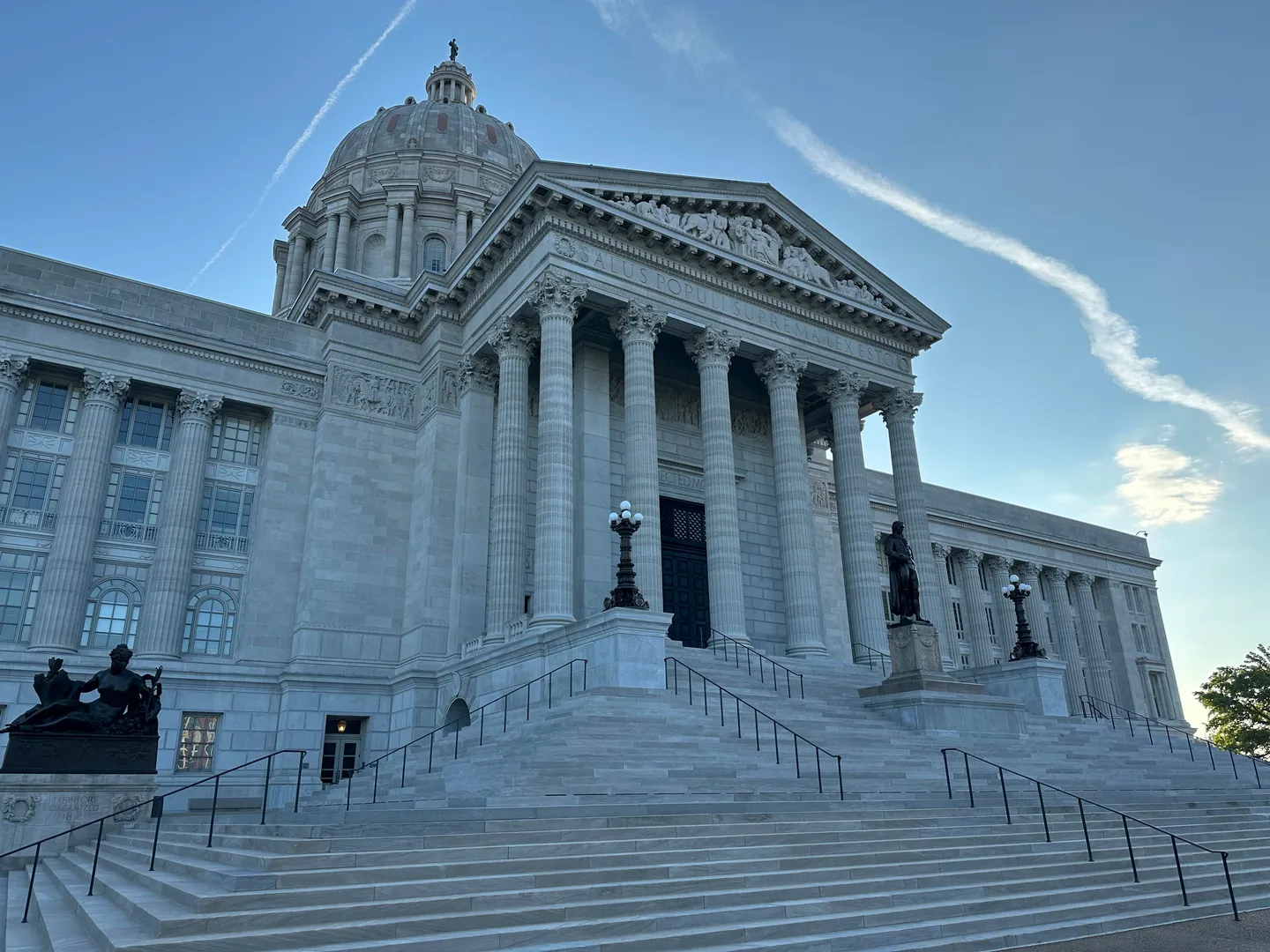
Republican lawmakers in Louisiana and Democrats in Virginia have pressed ahead with ambitious plans that could allow mid-decade redistricting as part of a growing national battle for partisan advantage in next year's congressional elections.
Louisiana lawmakers passed legislation on Wednesday pushing back the state's 2026 primary elections by a month — a move that could give lawmakers extra time to redraw the state's US House districts if the Supreme Court strikes down the current boundaries.
Meanwhile, Virginia lawmakers were considering a proposed constitutional amendment that, if ultimately approved by voters, would allow lawmakers to temporarily bypass a bipartisan redistricting commission and redraw congressional districts in response to similar efforts in other states.
President Donald Trump triggered a redistricting fray this summer by calling upon Republican-led states to take the unusual step of redrawing US House districts to their advantage ahead of the midterm elections.
Redistricting typically occurs once a decade, immediately after a census. But Trump hopes that redistricting now can help Republicans in next year's midterm elections hold on to the House, where Democrats need to gain just three seats to win control and impede Trump's agenda.

Republicans in Texas, Missouri, and North Carolina already have revised districts at Trump’s urging, and Republican-led Indiana is to begin a special legislative session Monday on redistricting.
So far, California is the only Democratic-led state to counter with a new congressional map, which is going before voters in a special election that concludes on Tuesday.
Louisiana delays elections
Legislation delaying Louisiana's congressional primary from April 18 to May 16 passed along party lines on Wednesday during a special session and is expected to be signed into law by Republican Gov. Jeff Landry.
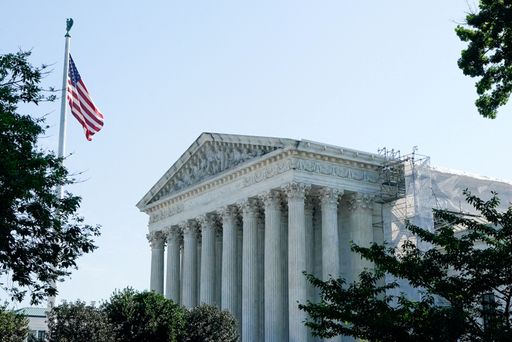
While Louisiana’s election dates have been adjusted before due to hurricanes, this particular change is in anticipation of a Supreme Court ruling in a potentially far-reaching redistricting case.
At issue is Louisiana’s six-district congressional map, where lawmakers created a second majority-Black district in response to a previous court ruling, ultimately flipping a reliably Republican seat to Democrats.
Proponents of the current map say it offers the opportunity for fair representation in a state where Black residents account for one-third of the population. Opponents argue that the state’s second Black majority congressional district was unconstitutionally gerrymandered based on race.
During arguments earlier this month, the Supreme Court's six conservative justices appeared inclined to effectively overturn the district boundaries.
It's unclear when a ruling will come.







Virginia’s gamble
Democrats hold a 6-5 edge over Republicans in Virginia's US House delegation. A new map could allow them to expand that advantage. But it requires a multistep process because a voter-approved constitutional amendment places redistricting in the hands of a bipartisan commission.
After the 2020 census, that commission deadlocked, so a court imposed districts that remain in use.
The Virginia House on Wednesday was considering a proposed constitutional amendment that would allow the legislature to draw new congressional districts in response to mid-decade redistricting done in other states.
But lawmakers must approve that amendment in two separate legislative sessions before it can be placed on a statewide ballot.
So far, Democrats haven't unveiled plans for how those new districts would be shaped.
A lawsuit brought by Republicans contends the special session on redistricting violates the state constitution.
Maryland's redistricting efforts
Democratic Senate President Bill Ferguson said his chamber won’t move forward with congressional redistricting, even though Democratic Gov. Wes Moore and the state’s Democratic House speaker have expressed interest in it.
Maryland Democrats already hold a 7-1 edge over Republicans in the U.S. House.
The state passed a map in 2022, and the parties dropped their legal fight before the new map was reviewed by the court.
Five of the judges on the seven-member Maryland Supreme Court were appointed by Republican former Gov. Larry Hogan.
Meanwhile, in Illinois, Democrats hold 14 of the state's 17 US House districts, which already were drawn to favour Democrats after the 2020 census. The Democratic Congressional Campaign Committee said it provided a proposed new map to legislative leaders last week that could allow Democrats to win an additional seat.
U.S. House Minority Leader Hakeem Jeffries traveled to Illinois on Monday to meet with Democratic state lawmakers about redistricting, and the state's Democratic Congress members released a statement on Tuesday urging state lawmakers to seriously consider a new map.