Israeli opposition leader Yair Lapid has criticised the Netanyahu government over rising crime and deteriorating security in the country, questioning whether Israelis are living better under the current far-right administration, Israeli media reported.
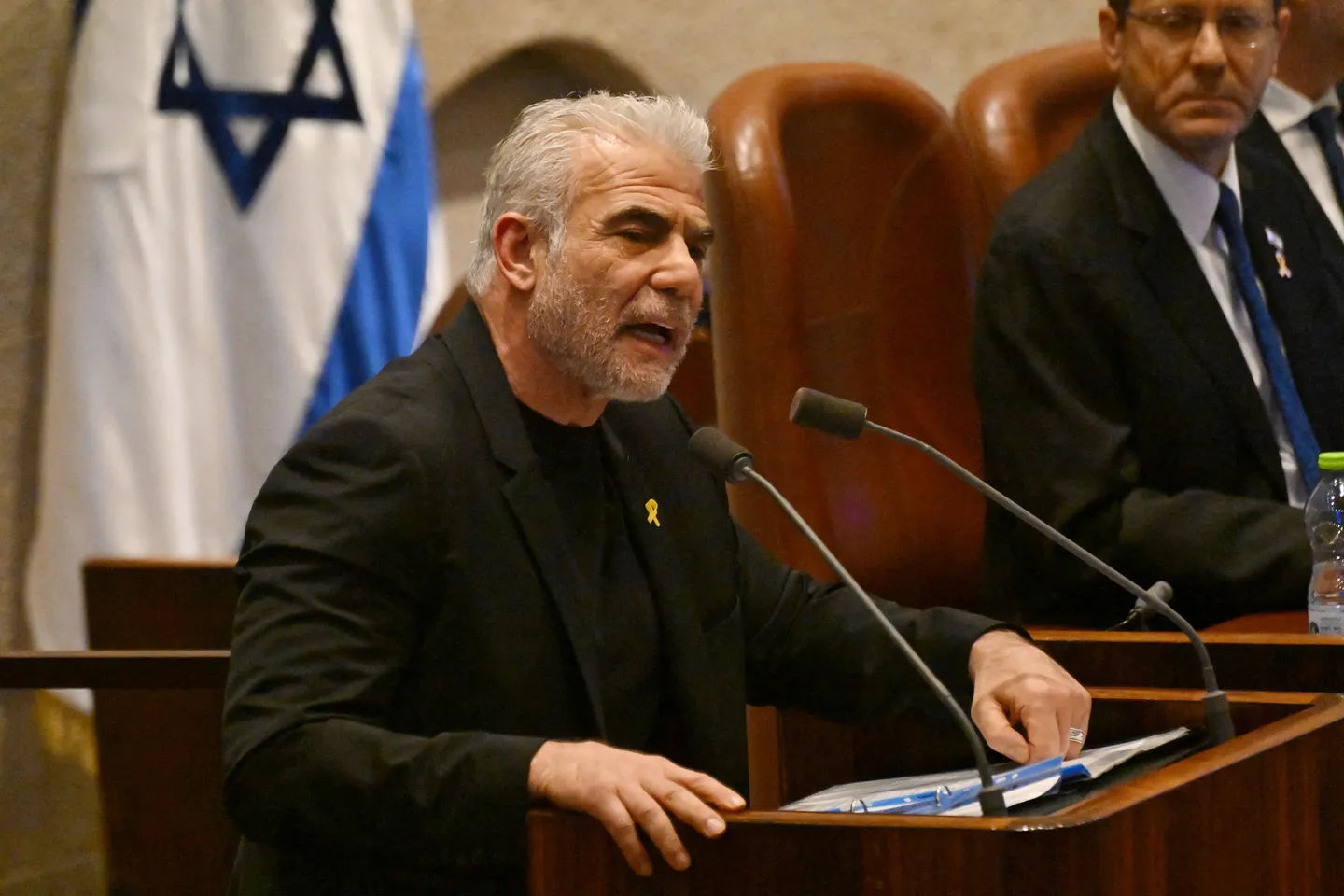
Lapid delivered a sharp rebuke of Prime Minister Benjamin Netanyahu’s government during a plenary Knesset debate on Monday, warning that rising crime and security concerns are undermining public confidence.
Speaking at the ‘40 signatures’ discussion, Lapid said the real test for the government is whether Israelis live better or worse under its rule. “The question that remains for Israelis is whether they live better or worse — this is the test of the government,” he said.
Lapid highlighted the security and social situation in southern Israel, pointing to recent incidents and rising threats. “Prime Minister, what happened during your (US) visit — the Israeli south was burning, Beersheba is at the bottom of the country's cities in terms of personal security,” he said.
He also drew attention to rising sexual offences, citing official data showing a 45 percent increase in such crimes, describing it as evidence of a serious decline in law and order.
Netanyahu, who was present during the debate, has repeatedly claimed that his government is committed to national security and public safety.
Less secure
Lapid’s remarks reflect growing unease among citizens in southern Israel, where residents have voiced concerns about personal safety. Many feel the government is prioritising internal political conflicts and regional tensions over tackling domestic safety issues. These criticisms highlight a wider debate on the government’s ability to manage both internal and external threats at the same time.







Recent survey data from the Institute for National Security Studies (INSS) shows that many Israelis feel less secure personally and have concerns about internal social tensions.
The survey found that only about 28 percent of Israelis reported a high or very high sense of personal security, while the remainder felt moderate to low security amid ongoing threats and social concerns.

Earlier INSS data also showed that a significant share of the public fears another major security breach like the October 7 attacks, and many believe government decisions are not based solely on security considerations.
Israel’s genocidal war on Gaza and ongoing hostilities have not only inflicted heavy civilian casualties and destruction in the besieged Palestinian enclave but also heightened security fears among many Israelis, especially in southern Israel.
Since the Gaza ceasefire agreement came into effect in October, the Israeli army has committed hundreds of violations, killing at least 422 Palestinians and wounding 1,189, according to Gaza’s Health Ministry.
The ceasefire was supposed to halt Israel’s two-year war that killed nearly 71,400 Palestinians, most of them women and children, injured more than 171,200 others, and left the enclave in ruins.