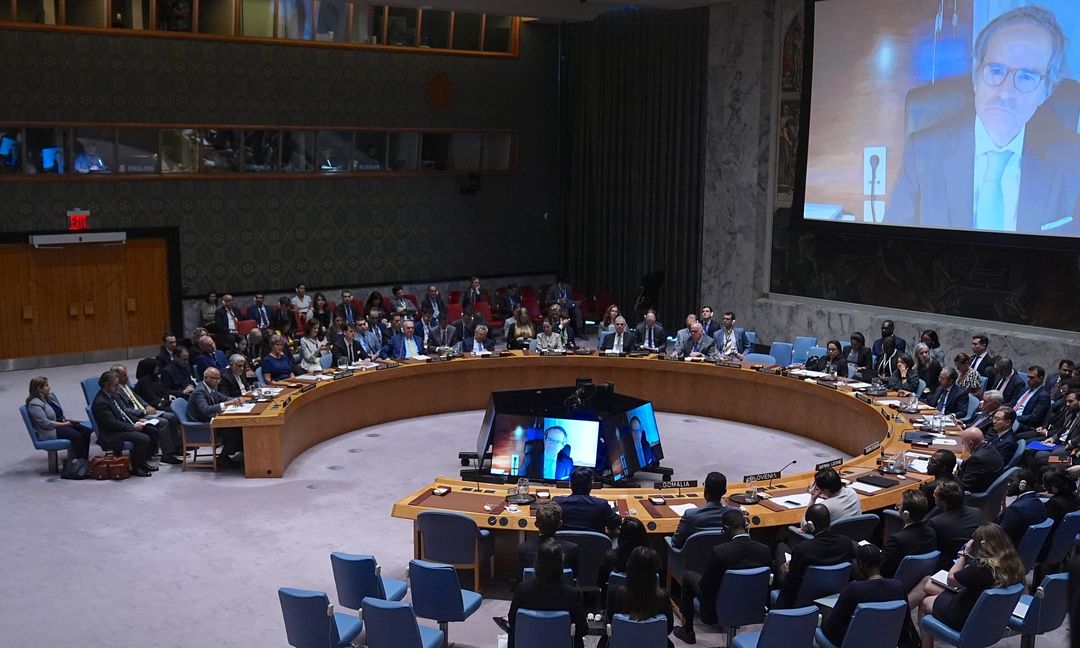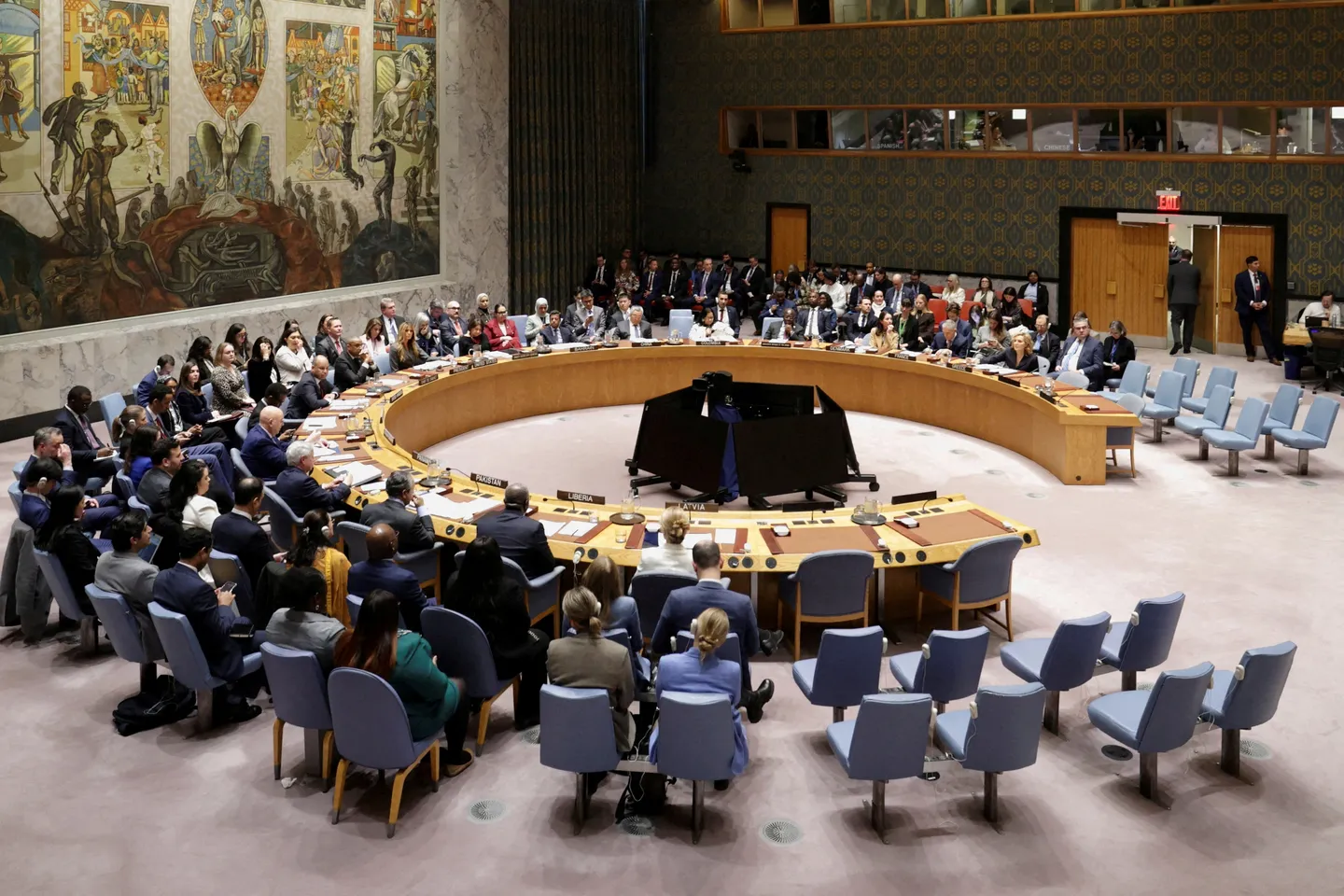
The UN Security Council has held a second straw poll to gauge support for a growing field of candidates seeking to succeed Antonio Guterres as the organisation’s next secretary-general.
Friday’s second informal poll showed Guyana's Carolyn Rodrigues Birkett was narrowly ahead, according to Reuters.
Costa Rica’s Rebeca Grynspan emerged as the front-runner in the first informal vote, held behind closed doors by the 15-member Council last month.
Other candidates include Rafael Grossi of Argentina, the current head of the UN nuclear watchdog; former Chilean president Michelle Bachelet; Ecuador’s Maria Fernanda Espinosa; Guyana’s Carolyn Rodrigues-Birkett; Uganda’s Olara Otunnu; and former Senegalese president Macky Sall.
Since the first straw poll, Ecuador’s Ivonne A-Baki has also entered the race to succeed Guterres, whose second five-year term ends on December 31, 2026.
“The candidates will be informed of the results through the respective permanent representatives of nominating member states. That’s all I have to say today,” Denmark’s UN ambassador Christina Lassen said after Friday’s vote. Denmark currently holds the Council’s rotating presidency.
Lassen said the Council was still considering when to hold the next straw poll.
"It's too early to have a consensus," said council-member Democratic Republic of Congo's ambassador Zenon Ngay Mukongo after the vote.
Ahead of the poll, Daniel Forti of the International Crisis Group said the five veto-wielding members, Britain, China, France, Russia and the United States, might wait until later in the process to reveal their preferences. He added that further candidates could still enter the race.
Russia’s UN ambassador Vassily Nebenzia said on Thursday that he could not rule out the emergence of additional candidates.
"If, for example - I'm speculating now - if there is a deadlock on any of the candidates we are seeing today, if nobody... flies, then I think that we may see other candidates as well," Nebenzia said.

Criticism over transparency
To secure the Security Council’s recommendation, a candidate must win at least nine of its 15 votes without being vetoed by any of the five permanent members.
The successful candidate’s name is then submitted to the UN General Assembly for confirmation.
The straw poll was introduced in the early 1980s in an attempt to break a deadlock between two candidates shut down by vetoes. The informal mechanism has endured in various forms despite criticism over the lack of transparency.
“There is a good chance that some nominees realise after (Friday’s) vote that their campaigns have reached the end of the road,” Forti said.
Each member state must anonymously assign each candidate as “encourage,” “discourage” or “no opinion,” giving those with limited support an opportunity to withdraw, although they are not required to do so.
In the initial rounds, which are expected to continue for several weeks, all ballots are the same colour.
After an unspecified number of votes, however, the five permanent members will use differently coloured ballots, allowing potential vetoes to be identified without revealing which country cast them.
Traditionally, the UN’s top job rotates among different regions, with Latin America seen as next in line. Several candidates are from the region, although Senegal’s Sall and Uganda’s Otunnu are also seeking the post.