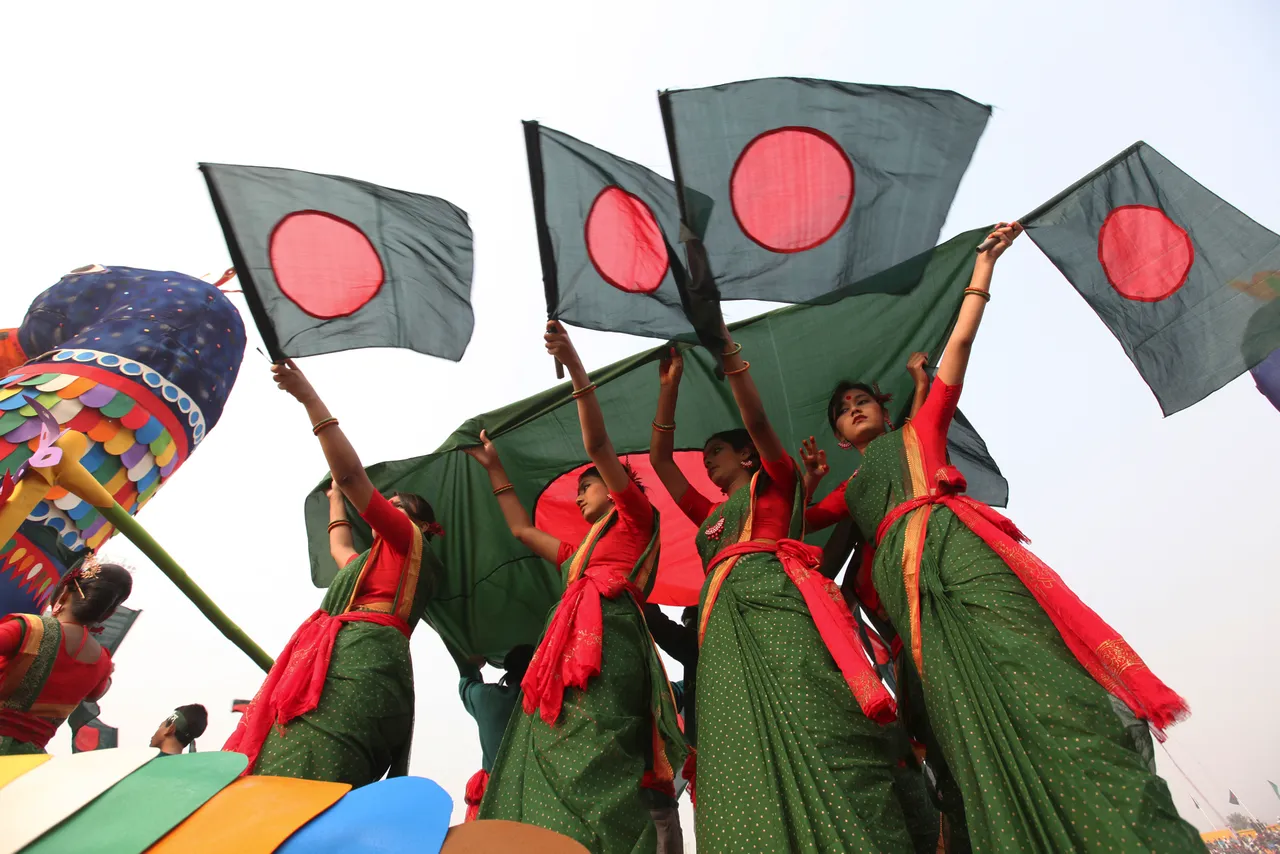
Bangladesh, one of the world’s most densely populated countries located in South Asia, will hold a general election on February 12.
The first since the 2024 uprising that ousted long-time premier Sheikh Hasina, the election will take place under the interim government led by Nobel laureate Muhammad Yunus.
Analysts view the upcoming national poll as a chance to reset the democratic order after 15 years of iron-fisted rule of Sheikh Hasina-led Awami League, which won three consecutive elections in 2014, 2018, and 2024 amid widespread allegations of rigging.
Bangladesh existed as the eastern wing of Pakistan from 1947 to 1971, when it split into a separate country at the end of a bloody war between Islamabad and New Delhi.
In the last 55 years, the country has seen democratic spells punctuated by military coups.
However, two women leaders shaped much of recent politics in Bangladesh. Most recently, Sheikh Hasina of Awami League led the country for a decade and a half until protests forced her out in 2024.
She now lives in exile in India.
Khaleda Zia, Sheikh Hasina’s long-term rival who died in 2025, led the Bangladesh Nationalist Party (BNP) to electoral victory twice in the 1990s and 2000s.
Road to independence (1947-1971)
In 1947, British India split into India and Pakistan.
Pakistan consisted of two parts – western and eastern – separated by more than 1,600 km of Indian land.
East Pakistan, now Bangladesh, had a predominantly Bengali population.
It was rich in resources, like jute. But political power in the country remained mostly with Pakistanis from the western wing.
Language became a matter of discord.
Pakistan's founder, Muhammad Ali Jinnah, declared in 1948 that Urdu should be the only state language. Citizens in the then East Pakistan protested as they wanted Bengalis recognised too.
Protests started soon, sparking civil unrest throughout the eastern wing.
Meanwhile, the economic disparity between the two parts of Pakistan widened, while the west wing continued to hold sway in political matters.
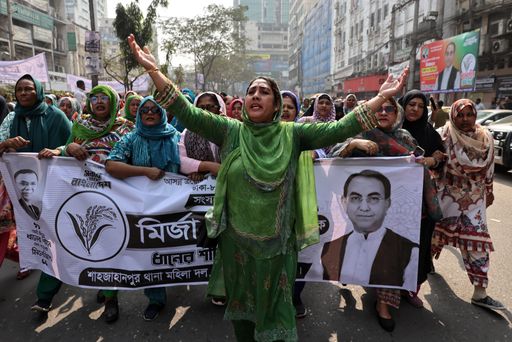
Sheikh Mujibur Rahman, Sheikh Hasina’s father, founded the Awami League in 1949 to push for greater autonomy for East Pakistan.
A massive cyclone hit East Pakistan in 1970, killing hundreds of thousands. As aid from the western wing flowed slowly, public anger and frustration grew, leading to the victory of the Mujibur Rahman-led Awami League in the general election.
But West Pakistan showed reluctance to hand over power, giving rise to separatist sentiments.
Independence and Mujibur Rahman’s rule (1971-1975)
In March 1971, Pakistan's army cracked down on separatists in East Pakistan. Mujibur Rahman declared independence on March 26.
Guerrilla fighters, known as the Mukti Bahini, fought back. India helped with training and later joined the war against the Pakistan army.
The war lasted nine months. It ended in December 1971 when Bangladesh became independent. Mujibur Rahman became the prime minister of Bangladesh.
In 1975, he changed the system to one-party rule and became president.
On August 15, 1975, army officers killed Mujibur Rahman and many members of his family. This coup led to years of instability.
Periods of military rule (1975-1990)







After Mujibur Rahman's death, Khondaker Mostaq Ahmad briefly took power.
Then Major General Ziaur Rahman, husband of future premier Khaleda Zia, seized control in November 1975.
Later, he founded the BNP.
Ziaur Rahman became president in 1977. He held elections in 1979 and won. He boosted ties with the West and China in a marked departure from Rahman’s pro-India stance.
In 1981, rebels killed Ziaur Rahman in a coup.
Lieutenant General Hussain Muhammad Ershad took power in 1982 by declaring martial law. Ershad ruled until 1990.
Protests grew in the late 1980s. Student wings of the Awami League and the BNP joined hands. Ershad resigned in 1990 amid mass strikes. A caretaker government held elections.
Parliamentary democracy (1991-2008)
Elections in 1991 brought back democracy. Khaleda Zia, Ziaur Rahman's widow, led the BNP to victory. She became the first female prime minister. Her rival – Rahman’s daughter, Sheikh Hasina – led the opposition under the banner of the Awami League.
The two women alternated power. Sheikh Hasina won in 1996. Khaleda Zia returned in 2001. Their feud – called the Battle of the Begums – redefined Bangladeshi politics.
Their rivalry caused episodes of violence amid claims of corruption.
In 2007, the army backed a caretaker government. It ruled for two years. Both women leaders faced arrest on graft charges. Elections in 2008 went to Sheikh Hasina.
Hasina's long rule (2009-2024)
Sheikh Hasina won again in 2014, 2018, and 2024, becoming the longest-serving prime minister.
The economy grew, but so did India’s influence. Critics allege that the elections were unfair. The opposition party, the BNP, boycotted many elections held by the Awami League government.
Meanwhile, the rivalry between the two women continued.
Khaleda Zia was sentenced to 17 years in prison in 2018 for corruption. She stayed under house arrest until 2024.
Sheikh Hasina’s rule turned authoritarian, with India wielding an outsized role in the internal affairs of the second-largest economy in South Asia.
Protests over job quotas grew in 2024. The ensuing violence led to the deaths of hundreds.
To evade accountability, Sheikh Hasina resigned and fled to India on August 5, 2024.
Subsequently, the army chief announced an interim government led by Yunus.
Khaleda Zia of the BNP was freed from jail. At 80, she died on December 30, 2025, from illness.
The BNP, now being led by Khaleda Zia’s son Tarique Rahman, is one of the three main political parties jostling for power in the upcoming elections.
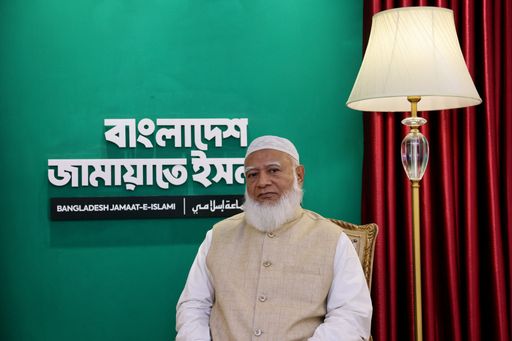
The other two parties are Jamaat-e-Islami and the National Citizen Party, a new party formed by student leaders after the 2024 uprising.
The Awami League, Sheikh Hasina's party, is barred from contesting the polls.