 Kazim Alam
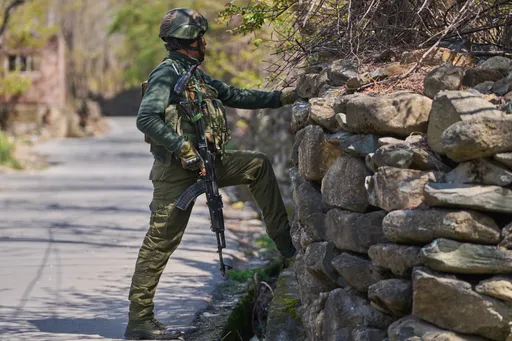
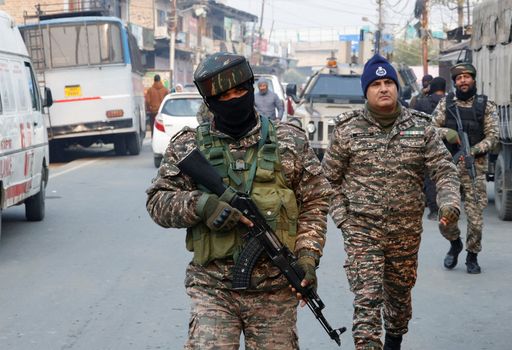
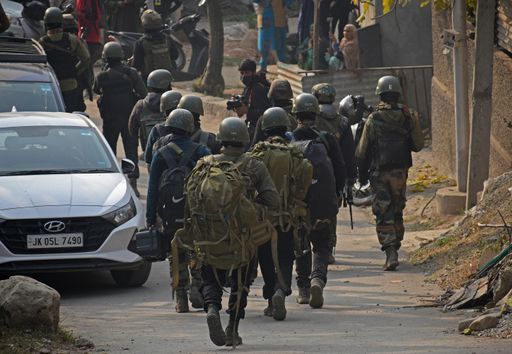
Last week, Indian security forces raided the office of Kashmir Times, an independent media organisation that has operated in India-administered Kashmir for more than seven decades, providing an unfiltered view of the conflict in the contested Muslim-majority region.
The security forces, which claimed to have seized “incriminating arms and ammunition” from the office premises, also searched the home of the newspaper’s managing editor Anuradha Bhasin, and Prabodh Jamwal, her husband and the editor of Kashmir Times.
The raid took place under India’s Unlawful Activities Prevention Act, a controversial law that grants security agencies sweeping powers of arrest, search and inquiry on the officer’s subjective belief of a “design” to commit an offence.
The security forces claim the newspaper is involved in “criminal conspiracy with secessionist and other anti-national entities” operating within and outside India-administered Kashmir.
“The whole operation is so shocking. We completely deny these allegations,” Bhasin tells TRT World.
Bhasin is also an occasional contributor to TRT World.
Established in 1954 by Bhasin’s late father, Kashmir Times is viewed as an influential voice in the wider Kashmir region, a mountainous area in the Himalayas that both India and Pakistan claim in full but administer in part.
For decades, India-administered Kashmir has witnessed a freedom movement, which the Indian state has tried to quell with full military force.
The raid is part of a renewed clampdown against so-called secessionist elements in India-administered Kashmir after a car bomb near New Delhi's historic Red Fort on November 11 killed a dozen people and injured many more.
Indian authorities identified the suicide bomber as one Umar Un Nabi, a 29-year-old Kashmiri doctor, prompting a wave of raids, arrests, and home demolitions in India-administered Kashmir and beyond.
Bhasin questions the timing of the raid because the newspaper’s office has remained shut for four years.
“There’s no staff. The newspaper went out of print over four years ago,” she says.
The print edition of Kashmir Times ceased to exist in 2021. Two years ago, the newspaper was revived as a small digital platform that publishes occasional stories, interviews and opinion pieces.
Even that limited presence, Bhasin says, is what the authorities find intolerable.
“The allegations are completely outrageous and show the state’s desperation to malign us and discredit us,” Bhasin says.
Bhasin, who is currently out of India along with her husband, calls the raid on her office part of a larger pattern.
“In the last decade, we have faced relentless targeting in different ways, and this seems to be part of the pattern and a further exacerbation of it,” she says.



“This raid and the narrative they are spinning show they will stoop to a new low,” she adds.
As for the singling out of Kashmir Times, Bhasin points to the newspaper’s editorial line.
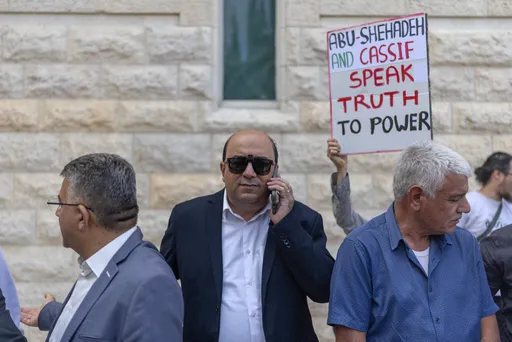
“They cannot tolerate Kashmir Times, the sole voice in the region that amplifies the marginalised voices and speaks truth to power,” she says.
“The counter-narratives that we bring when all media is simply amplifying government propaganda, the marginalised voices and the unheard voices we platform… we are the sole independent voice,” she says.
Bhasin says India-administered Kashmir has gone through a major transformation since 2019, the year when Prime Minister Narendra Modi revoked Article 370 of the Indian Constitution, stripping the region of its special status and limited autonomy.
“Very little reportage of the region exists in the media,” she says.
“Media people are harassed. Starting from the internet shutdown to the arrest of journalists, criminalising their work, slapping criminal charges and raiding their homes and offices, all of that has been happening in (India-administered) Kashmir. It creates a chilling impact,” she says.
Bhasin also highlights less visible forms of pressure that she says have proved even more effective in silencing the voices of dissent.
“What creates a bigger impact is the subtle and sophisticated ways of arm-twisting, the choking of newspapers by blocking their government advertisements, which are their main source of revenue,” she says.
The federal government stopped giving ads to her newspaper in 2010, putting Kashmir Times under severe financial strain.
“Journalists are continuously and repeatedly summoned to police stations. They are intimidated, their devices are confiscated, and they are forced to give up their data.”
Bhasin says Indian authorities appear to act with impunity because all accountability forums have disappeared from the public domain.
“The state is intolerant to dissent, and it has stamped out all voices, whether it is civil society, or the media, which no longer holds the power to account, no longer asks tough questions, no longer brings out the ugly truth,” she says.
In October 2020, the office of Kashmir Times in Srinagar was sealed by the government, a few months after Bhasin filed a Supreme Court petition challenging the prolonged internet blockade in the region.
Bhasin says she could not pinpoint the exact trigger for last week’s raid on her office.
However, she insists that the underlying reason for the state’s heavy-handedness is as clear as day: “The authorities are unwilling to tolerate our journalism.”