 Kazim Alam
As a 21-year-old student from India-administered Kashmir studying law at Jamia Millia Islamia, a federal university with a sizeable Muslim enrolment in New Delhi, Burhan JD navigates a world that feels increasingly like a minefield.
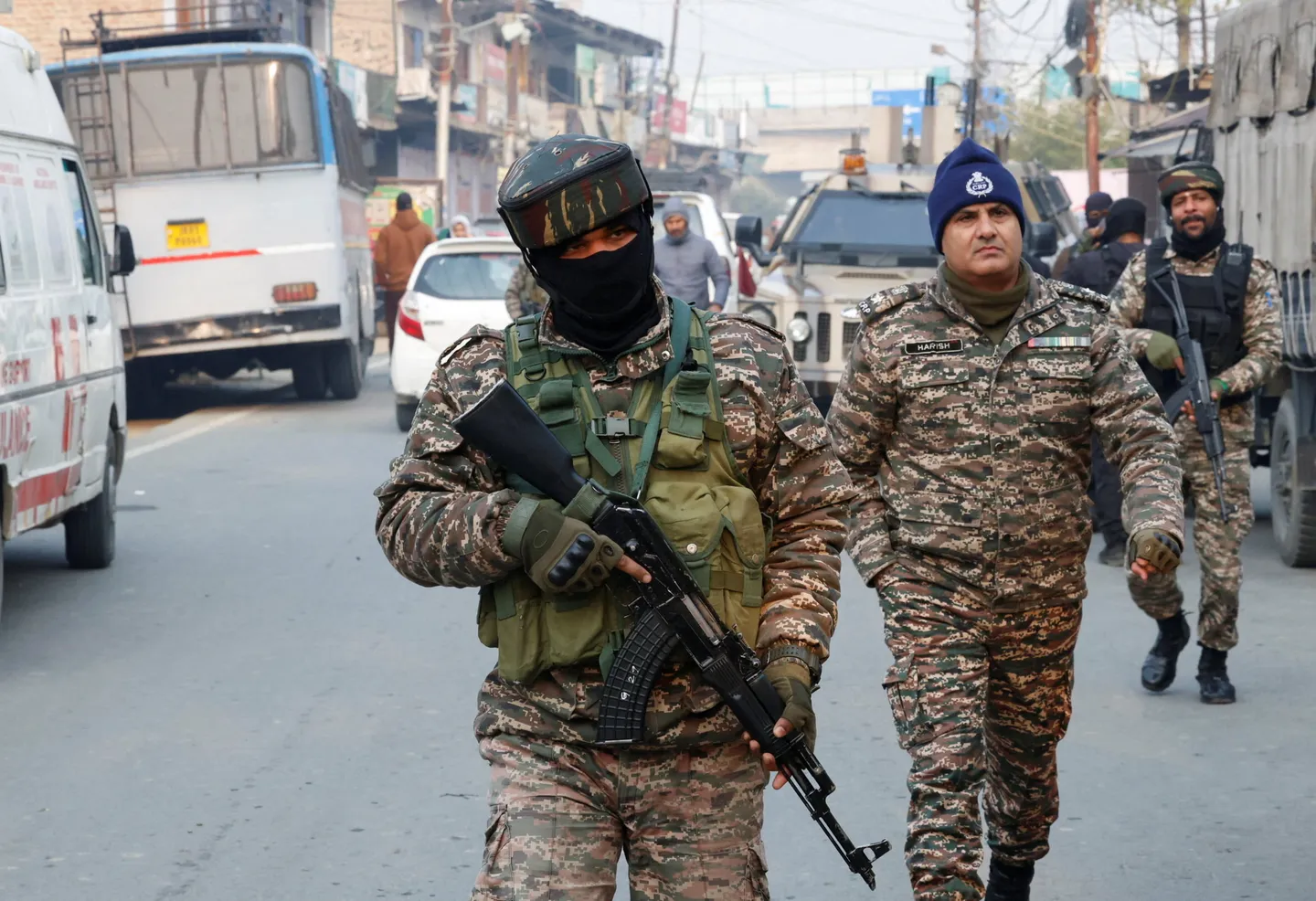
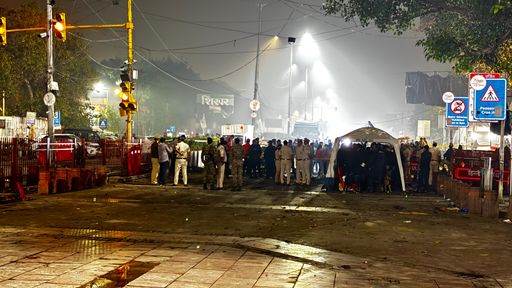
Students from Muslim-majority Kashmir, part of the wider Himalayan region that both New Delhi and Islamabad claim in full but administer in part, have come under a renewed cloud of “collective suspicion” in India after a car bomb near New Delhi's historic Red Fort killed 12 people and injured many more.
Indian authorities have identified the suicide bomber as one Umar Un Nabi, a 29-year-old doctor from the Pulwama district in Kashmir.
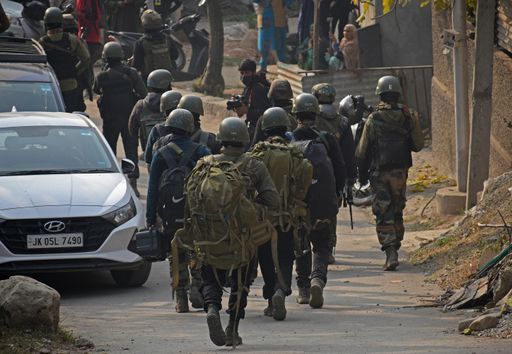
They connected the attack to a so-called “white-collar terror module”, prompting a wave of raids, arrests, and home demolitions reportedly targeting Kashmiri students and professionals living across India.
Burhan says that though there are not many “overt incidents” of harassment, eviction threats, or institutional discrimination, the overall atmosphere across India was stifling.
“It's a deepening of suspicion and isolation (of Kashmiris) that makes everyday life feel like a negotiation for basic dignity,” he tells TRT World.
He highlights a video clip of a Kashmiri woman on a Delhi bus enduring a barrage of slurs.
“A man started making provocative, generalised remarks about Muslims and Kashmiris. It went beyond casual prejudice and crossed into clear verbal harassment targeted towards an innocent lady,” he says.
Harassment of Kashmiris suspected of links with the so-called terror module has wreaked emotional havoc on their families. Bilal Ahmad Wani, a dry-fruit trader from Kashmir, set himself on fire after his son and brother were questioned by the police.
Wani’s family told reporters that he was “visibly shaken and “couldn’t even walk properly” after he returned from the police station where the police held two of his family members.
There have been reports of landlords telling Kashmiri tenants to vacate the premises, forcing them to leave for home out of fear.
No isolated tragedy
Kashmiris living in Indian cities get a collective target painted on their back every time a terror incident rocks the country in which suspects are from India-administered Kashmir.
Nabi, the alleged bomber, has ignited the same cycle of suspicion.
Indian authorities claim to have found links between the blast and earlier arrests in Kashmir, where police allegedly seized bomb-making materials from homes rented by Kashmiri doctors.
Subsequently, the police arrested Amir Rashid Ali, another Kashmiri, as an accomplice, accusing him of conspiring with Nabi.
An intense wave of raids swept through Kashmir, Haryana, and Uttar Pradesh in the following days, where the police rounded up medical professionals and students, demolished private properties, and issued wanted notices.
Burhan says his phone keeps buzzing in the blast’s aftermath with frantic messages from home: “Don’t go out, don’t go out of the locality because you realistically know nothing about what's going to happen next”.
The crackdown on Kashmiris in India is no isolated tragedy. It is part of a longstanding conflict exacerbated by Prime Minister Narendra Modi’s revocation of Article 370 of the Indian Constitution, which stripped Kashmir of its special status and limited autonomy in 2019.
New Delhi bifurcated the India-administered Kashmir into two “union territories” under direct federal control, a move that was followed by a communications blackout lasting years, mass detentions, and a rise in draconian laws like the Unlawful Activities Prevention Act (UAPA) to silence any opposition.
So far, the Indian security agencies have arrested almost 9,000 people under the UAPA, even though the number of convictions hovers around 250.
The highest number of arrests took place in India-administered Kashmir, where 2,633 people were detained, but only 13 were convicted.
“The year 2019 was a watershed moment,” Burhan says, referring to the change in the constitutional status of India-administered Kashmir.
“It amplified a scrutiny that has always simmered but now feels relentless, like a spotlight that follows you everywhere,” he says.
Burhan now avoids late-night auto rides, where drivers might probe his background.



He says overt hostility is rare in his Muslim-majority neighbourhood. A casual “Oh, you’re from Kashmir?” is still the most common conversation opener.
Yet, psychology has changed, he says.
“The psyche does not require a broken bone to register a threat. It is exquisitely attuned to patterns,” he says.
Ali Saeed*, another Kashmiri student pursuing higher studies in New Delhi, echoes Burhan's sense of unease.
“Incidents like (the Delhi blast) always put Kashmiris in a vulnerable spot,” he tells TRT World.
Even if people do not say anything, one can sense the slight change in their tone and look, he says.
“It’s subtle, but it’s enough to make you feel you’re being judged for something you have nothing to do with,” he says.
People rarely ask Kashmiris about normal things, like culture or daily life, he says.
“The conversation goes straight to politics or security,” he adds.
‘It’s ethnic profiling’
Nasir Qadri, an international law practitioner from Kashmir now serving as a critical legal scholar at Koc University in Istanbul, tells TRT World that the post-blast verifications constitute ethnic profiling by Indian authorities.
He says Indian security agencies invoke UAPA provisions that grant sweeping powers of arrest, search and inquiry on the officer’s subjective belief of a “design” to commit an offence.
“When applied through mass verification drives, these practices disproportionately target Kashmiri students and amount to de facto ethnic profiling, not evidence-based counter-terror investigation,” he says.
The ripple effects of the change in the constitutional status of India-administered Kashmir in 2019 extend beyond law books.
Qadri refers to a new political landscape altogether, which is marked by arbitrary detentions, property seizures, mass employment dismissals, designation of human-rights groups as terrorist outfits, and passport impoundments.
“These measures generate a coercive environment in which speech, association, and movement are governed through punishment rather than rights,” he says.
Hafsa Kanjwal, associate professor of South Asian history at Lafayette College in the US, tells TRT World that the shrinking space for dissent in India is undeniable.
“A lot of the student activists that were involved in university protests have been arrested under terrorism charges under the UAPA,” she says.
“If this is what is happening to students in India, you can only imagine what will happen to people, students and activists in Kashmir or from Kashmir," she says.
The institutional grip of Prime Minister Modi’s BJP party over universities, courts, and the media has normalised violence, she says.
“Kashmiris have always faced significant surveillance and harassment in Delhi and other cities in India. This is only going to increase… it will make violence against Kashmiris a lot more possible,” she says.
For Burhan, who keeps scrolling through hateful threads on social media against Kashmiris, the discourse feels personal.
“The harassment need not be personally encountered to be lived. It circulates as rumour, as a viral video, as the story of a friend of a friend,” he says.
*The name has been changed to protect the identity of the person.