India is grappling with the aftermath of an attack in New Delhi that has put Muslims, particularly Kashmiris, in the line of fire. Here’s a timeline of events, which can easily make up for a suspenseful Bollywood flick.
The matter of posters
On October 17, police in India-administered Kashmir claimed it was looking for perpetrators who had put up “anti-India posters” in several parts of Srinagar.
Such posters and graffiti have long been common across Muslim-majority Kashmir, where the people have resisted New Delhi’s rule and protested against the Indian military’s presence.
But since India abrogated the semi-autonomous status of Kashmir in 2019, clamping down more severely on any form of dissent, the possession of any pamphlet, books or even a newspaper has led to hundreds of arrests under draconian laws like the Unlawful Activities Prevention Act (UAPA) and the Public Safety Act (PSA).
On October 19, police arrested a Kashmiri paramedic, Irfan Ahmed, from Nowgam area of Srinagar, alleging that he was behind the display of posters.
Around two weeks later, on November 5, police arrested a Kashmiri doctor, Adil Rather, from Sahranpur in Uttar Pradesh, claiming CCTV footage showed him “pasting posters.” He was arrested and detained in Srinagar, Indian-administered Kashmir’s capital, for questioning.
Three days later, on November 8, police arrested a second Kashmiri doctor, Muzammil Shakeel, from New Delhi.
The same day, police claimed an assault rifle had been recovered from a locker of a medical college in Indian administered Kashmir, where Adil Rather had worked as a senior resident till October 2024.
Even though Rather had left the college a year back, the police alleged the locker still belonged to him.
On November 9, more Kashmiri doctors working in northern India were detained and questioned, and police announced the seizure of weapons and 2,900 kilograms of bomb-making materials, including 353 kg of ammonium nitrate in Faridabad city near New Delhi. It remains unclear how the accused were able to get hold of truckloads of explosives.
Police also raided the home of another doctor, Umer Nabi in the Pulwama district of Kashmir.
Fearing his arrest, Nabi had been on the run but had contacted his family on November 7, according to Indian authorities.
The doctor’s sister-in-law said : “He called us on Friday, November 7, and I told him to come home. He said he would come after three days,” she said, adding that police took the doctor’s mother and two brothers for questioning.
On November 10 at approximately 6:10 local time, the Indian-administered Kashmir’s police posted this tweet: “You can run but you can't hide !”
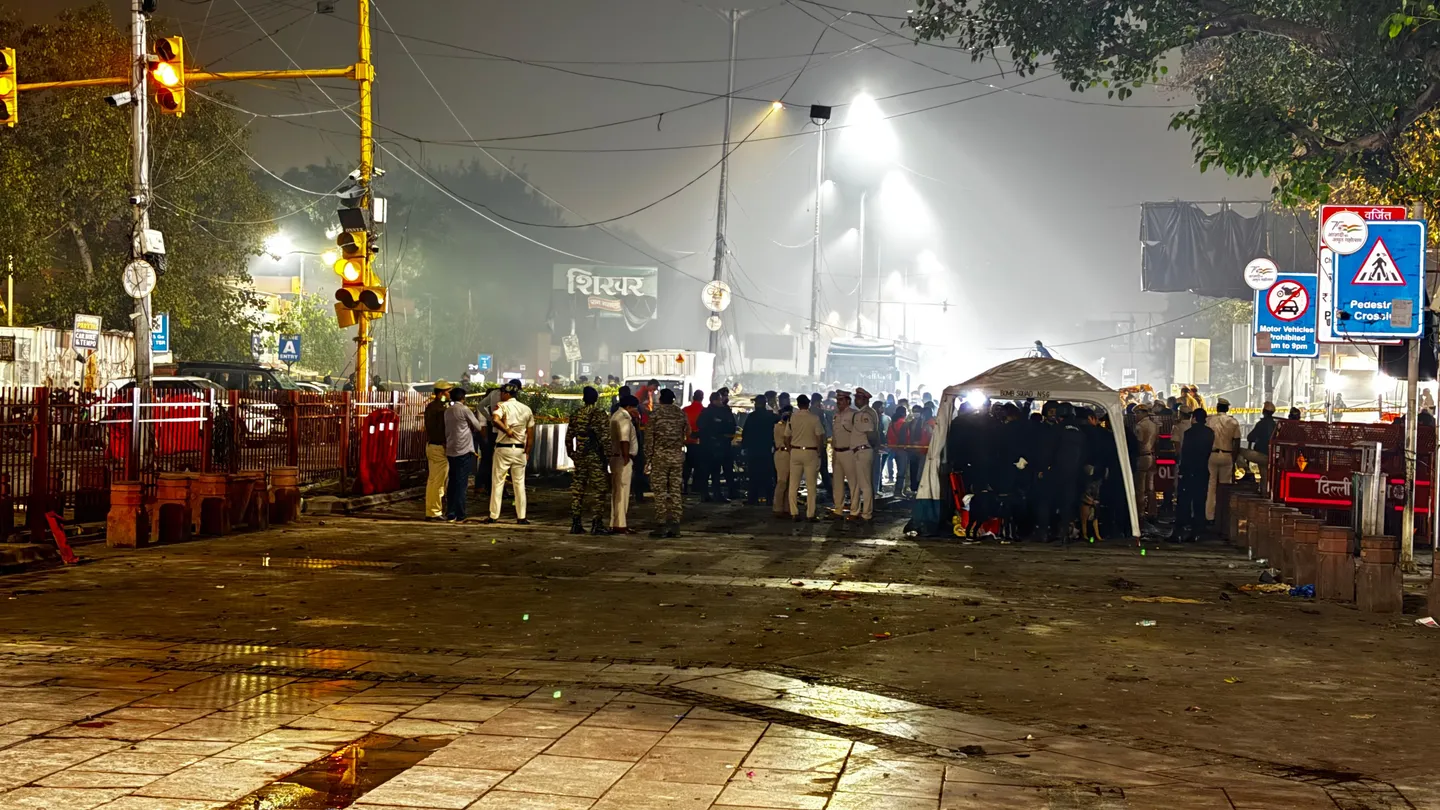
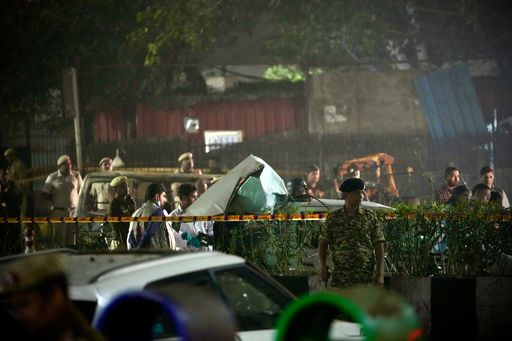
Exactly 41 minutes later, an explosion in a car rocked New Delhi's tourist Red Fort area, killing at least 13 people and wounding several others.
Within minutes, Indian news channels labelled it a terror attack, despite the absence of any official confirmation.
Television anchors jumped the gun and shouted rhetorical and jingoistic slogans in shows about the involvement of Kashmiri Muslims, Pakistan, Indian Muslims, and even dragged Turkiye into the incident.
Some outlets named Umer Nabi as the alleged driver of the car, which exploded, with ties to doctors who were arrested in connection with the poster investigation.
Despite the media claims, authorities did not release documentary evidence linking any of the accused to the blast.
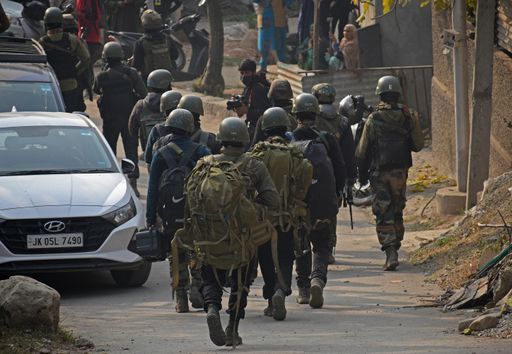
Indian forces launched large-scale raids across Kashmir, detaining hundreds. Many of the homes searched belonged to relatives of people already imprisoned or labelled “anti-India activists.”
Relatives, friends and even neighbours of the arrested doctors have been detained.
Anti-Muslim hatred
On November 11, anti-Muslim hate graffiti popped up on streets, and social media competed with Indian media on Islamophobic content.
“Muslims and dogs should not enter the premises”, and “No dogs and Muslims” were painted on the walls inside the Indian Statistical Institute campus in Kolkata.
In news debates, many right-wing panellists called for collective punishment of Kashmiri Muslims.
Indian media, meanwhile, wrote another plot, alleging that Muzaffar Rather, brother of the arrested doctor Adil Rather, had fled the country in August. Almost similar news began appearing simultaneously on various Indian online platforms, alleging that Rather had travelled to Türkiye in 2021.
Some Indian media outlets alleged that he visited in 2022, and some as late as January 2025.
Some news channels claimed that he was now in Afghanistan.
On November 12, Türkiye rejected allegations in Indian media outlets claiming links between Ankara and the car explosion.
"The deliberate reports in certain Indian media outlets claiming that 'Türkiye is linked to terrorist acts in India and provides logistical, diplomatic, and financial support to terrorist groups' are part of a malicious disinformation campaign aimed at damaging bilateral relations between the two countries," said Türkiye's Centre for Combating Disinformation (DMM).
A female doctor, Shaheen Saeed, was also arrested by police from New Delhi, alleging she was part of the same “terror module.” Module is a relatively new term that Indian security forces are using for the alleged fighters’ cell.
On November 13, the Association of Indian Universities (AIU) suspended the membership of Al-Falah University, Faridabad, saying that the institution is no longer in “good standing.” Umer and Shaheen were working as professors at Al-Falah University.
On November 14, police demolished the house of Umer Nabi’s father in Pulwama even before forensic reports had identified him as the person in the car, which exploded. Officials said they had taken samples from a severed leg found in the car, claiming a forensic lab gave a “verbal” identification, though the written report remains pending.


The entire saga took a murky turn when, on November 14, explosives that authorities had confiscated as part of the New Delhi blast investigation, mysteriously exploded. Nine people were killed and 27 were wounded in the incident at Nowgam Police Station in Srinagar.
Authorities said a cache of explosives, reportedly seized from the accused Kashmiri doctors, detonated while a forensic team was examining them. Authorities said that mini trucks were used to transport 2,900 kilograms of explosives seized by police from Haryana’s Faridabad to Srinagar, around 800 kilometres away, and only a part of the transported explosives was destroyed in the police station explosion, The Hindu reported.
However, ABP News reported that the explosion resulted in the destruction of much of the critical evidence needed for the ongoing investigations and that the material was flown in from New Delhi.
A member of parliament from Kashmir, Aga Ruhullah, called the deadly police station blast a big lapse on the part of investigators, calling for a thorough probe.
On November 16, the National Investigation Agency (NIA), India’s top counter-terrorism body, claimed to have arrested another Kashmiri resident, Amir Rashid from New Delhi, identifying him as the “owner of the car involved in the attack.”
Death by humiliation
On November 17, Bilal Ahmad Wani, a trader from Kashmir, died after setting himself on fire a day before. He, his son and brother had been arrested along with hundreds of Kashmiri Muslims in what India calls “as part of the widening investigation”.
Family members said Wani was traumatised after failing to secure the release of his son.
“He felt humiliated,” a relative told local reporters, urging authorities to stop “the indiscriminate detentions” sweeping across southern Kashmir.
Wani’s only crime was that he’s a neighbour of Adil Rather. His son, Jasir Bilal, was handed over by the police to NIA, after his father succumbed to burn injuries.
About 2,000 Kashmiri students have been questioned in Faridabad by the police till November 17.
In many other Indian states, Kashmir students are facing harassment and intimidation, India Today reported.
“Students are being harassed on campuses and in neighbourhoods. Some landlords have told Kashmiri tenants to vacate immediately. Many have left for home out of fear,” Kashmiri students say.
“WhatsApp groups have turned into informal investigation panels. Anonymous accounts recycled old prejudices,” they alleged.
Many more Kashmiri Muslim doctors are also being detained in various states of India.
Officials say hundreds of doctors educated in Bangladesh and Pakistan are under the scanner too and being investigated for “terror links”, the Deccan Herald reported.
At least 21 Muslims in the Indian state of Assam were arrested after they took to social media, raising questions and voicing suspicion on the timing of the blast, investigations, media framing and police repression.
Two Indian ministers in the southern state of Karnataka also raised doubts about the timing of the explosion, which occurred a day before the second phase of the Bihar elections.
On November 17, 44 Kashmiri labourers were arrested in the Indian state of Assam in what has been termed as harassment of Kashmiris.
All comes down to disputed Kashmir
Kashmir has remained at the heart of a decades-long dispute between nuclear-armed neighbours India and Pakistan, both of which claim the territory in full but control separate parts.
Armed resistance to New Delhi's rule began in 1989 in India-administered Kashmir, where many Muslim residents support independence or a merger with Pakistan.
India, which has stationed more than 700,000 troops in Kashmir, accuses Pakistan of fuelling the insurgency. Islamabad denies the allegations and says it only extends political, moral, and diplomatic support to Kashmiris and their right to self-determination.
Kashmiris widely view the armed revolt as a legitimate freedom struggle.
The conflict has claimed tens of thousands of lives, including civilians, fighters, and Indian troops, over nearly eight decades.
The UN has passed several resolutions advocating for a plebiscite in the region.
Since 2019, India has stepped up its crackdown in Kashmir.
Thousands of Kashmiri Muslims, including journalists, human rights defenders, academicians and political activists, still languish in Indian jails.
A blanket ban has been imposed on several socio-political organisations. Several Kashmiri Muslims have been thrown out of jobs or denied employment.
Mosques and schools have been locked.
Critics, academics, journalists and students have faced opaque “no-fly lists,” and entry denials into the territory.
The passports of several Kashmiris have been impounded. Funerals of deceased Kashmiri activists and fighters have been denied.