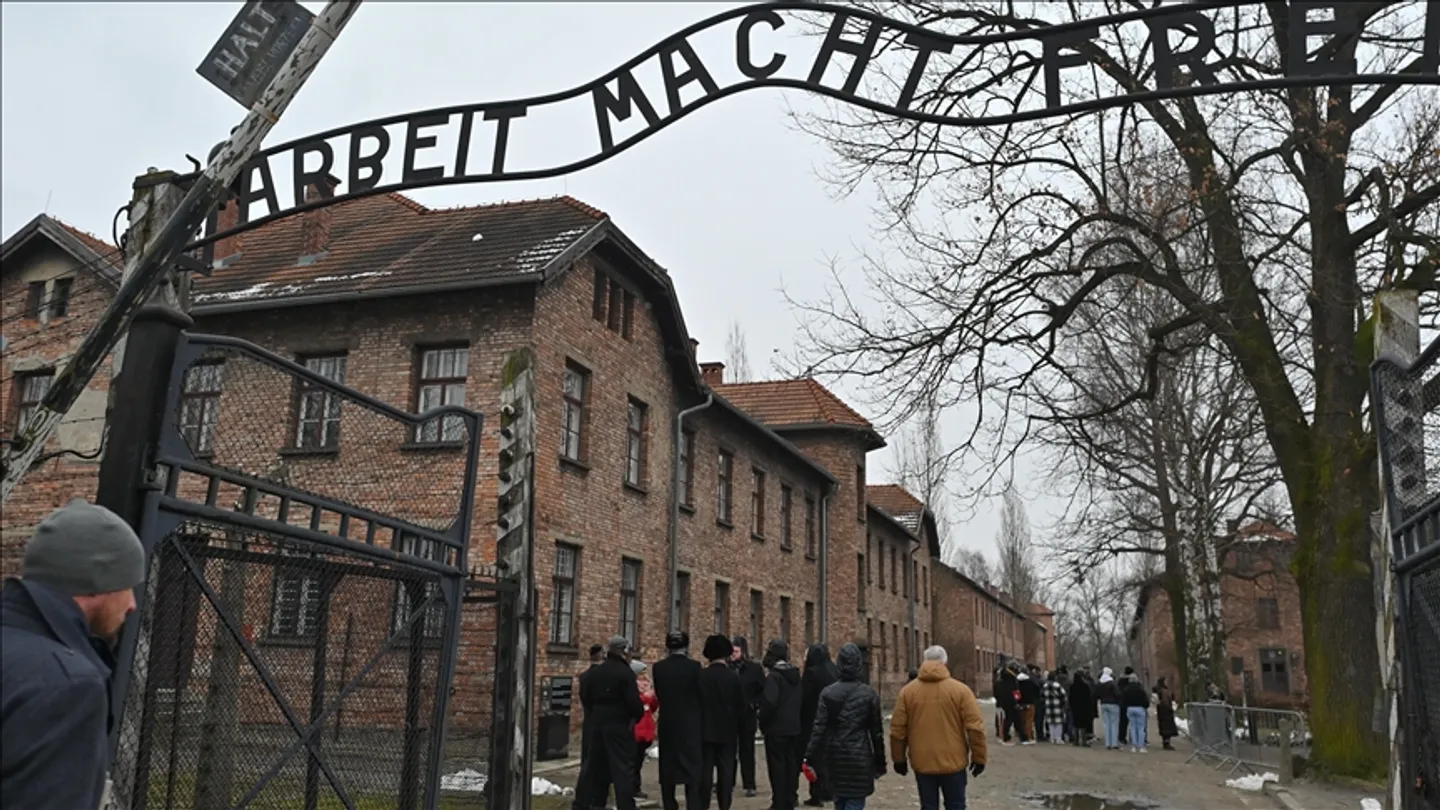
A spat between Poland and Israel has broken out after an online post by Israel's official Holocaust memorial institution triggered a backlash, with senior Polish officials pushing for corrections.
Yad Vashem, the Jerusalem-based World Holocaust Remembrance Center, posted a message on X saying: "Poland was the first country where Jews were forced to wear a distinctive symbol to isolate them from the surrounding population."
The message provoked a wave of criticism in Poland. Commentators pointed to a familiar frustration: the conflation of Poland with World War II's German-occupied Poland.
The dispute, though superficially about terminology, taps into deeper anxieties around historical memory, sovereignty, and the politics of the region.
Radoslaw Sikorski, Poland's foreign minister, interjected directly beneath the original post: "Please clarify that you mean 'German-occupied Poland'."
Maciej Wewior, Foreign Ministry spokesman, posted a reply, quoting in full the corrective statement by Poland's Auschwitz-Birkenau Museum: "If anyone should know the historical facts, it is Yad Vashem. They should be fully aware that Poland was occupied by Germany at the time, and it was Germany that introduced and enforced this antisemitic law."
Arkadiusz Mularczyk, member of the European Parliament, also responded by saying Yad Vashem should not obscure the truth.
"Poland was the first victim of the Second World War, not a perpetrator of crimes. The Holocaust was a German crime - a fact that is not open to negotiation or 'reinterpretation'," he said on X.



Shortly after the backlash, Yad Vashem issued another post, stating that it was done by German authorities.
However, the post didn't quell the heat, as many commentators, including the Polish Deputy Prime Minister Radoslaw Sikorski, said it should have said "German-occupied Poland" or "German-occupying authorities."
Holocaust language conflict
Poland and Israel have been locked in intermittent conflict over Holocaust language for nearly a decade.
For Poland, maintaining the distinction between Nazi occupation and Polish state agency is essential. The country lost its sovereignty in Nazi Germany's 1939 invasion and did not legislate anti-Jewish laws.
The 2018 "Holocaust law" crisis — when the Polish government attempted to criminalise suggestions of Polish complicity — still echoes in the background. Though the current administration is more liberal, the sensitivity remains.
The killing of Polish aid worker Damian Sobol in Palestine’s Gaza last year has also put a strain on ties between Warsaw and Tel Aviv, with Polish officials accusing Israel of refusing to cooperate and stalling the investigation.