 Kazim Alam
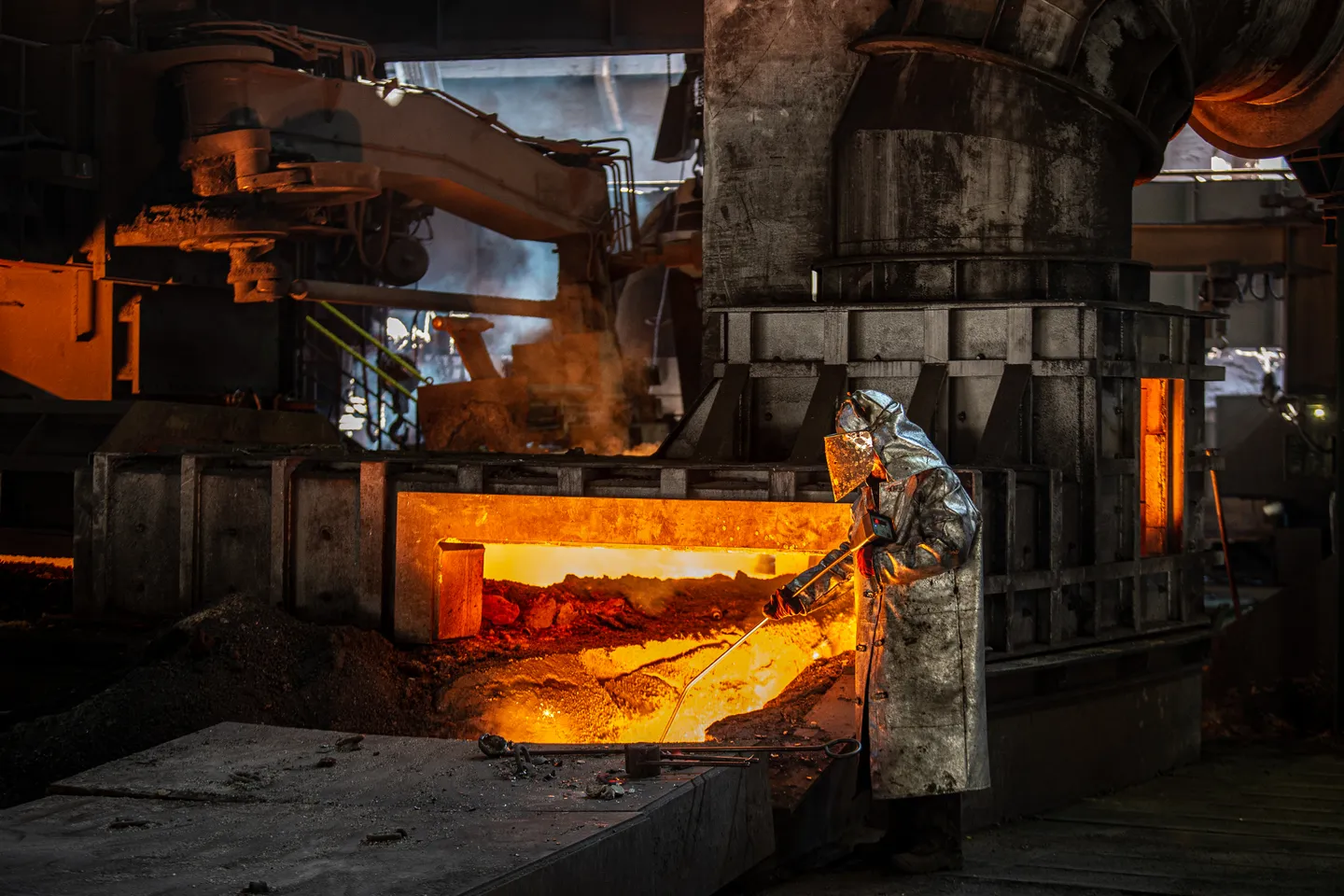
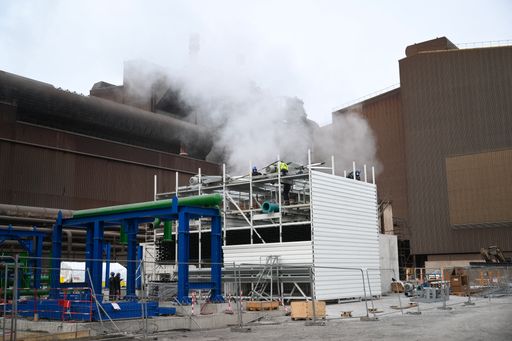
Surpassing Germany as Europe’s biggest steel producer, Türkiye has recently become the world’s seventh-largest steel maker.
Analysts say the European Union's aggressive tariffs and safeguards on steel imports from countries like China and Russia have led to major disruptions in global steel supply chains.
For Türkiye, however, the EU's restrictive measures have opened doors to export markets rather than slamming them shut.
“Türkiye’s ascent to become Europe’s largest steel producer is a geopolitical and economic story as much as an industrial one,” Dr Mian Waqar Badshah of Istanbul University tells TRT World.
Solidifying its position in the global steel supply chain as a dominant player, Türkiye’s crude steel production increased 7.2 percent year-on-year to 3.2 million tonnes in September, the latest month for which industry-wide data is available.
Meanwhile, its steel exports registered a 7.6 percent increase to 1.4 million tonnes in the same month.
Badshah says Türkiye occupies a “uniquely strategic position” for the EU due to its proximity, integration, and reliability.
This integration makes Türkiye “an indispensable partner for EU supply chain resilience” when tariffs disrupt traditional sources.
China leads global crude steel output by a wide margin, followed by India, Japan, the US, and Russia.
The US imposed a 50 percent tariff on steel imports in June.
The European Commission followed suit and reduced the quotas for tariff-free steel imports by almost half, besides imposing a 50 percent duty for excess shipments in an attempt to protect EU-based steelmakers.
In this context, Türkiye has scale, capacity for electric-arc-furnace (EAF), and a strong export base to grow its steel exports, Professor Baris Alpaslan of the Social Sciences University of Ankara tells TRT World.
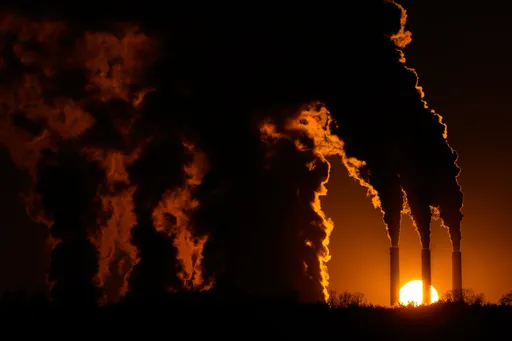
The EAF, which uses electricity to melt scrap, is considered cleaner than conventional steelmaking processes.
“European buyers are actively seeking reliable, nearer-shore suppliers as part of friend-shoring,” Alpaslan says, while referring to the act of sourcing goods from countries that are geopolitical allies, such as members of the same trade bloc or military alliance.
“Turkey’s geographic proximity, customs-union ties and fast delivery window give Turkish mills a logistical and commercial advantage versus distant suppliers,” he says.
Capitalising on ‘friend-shoring’
To capitalise on the EU’s friend-shoring policy of sourcing from trusted, nearby partners, Badshah of Istanbul University recommends a two-pronged strategy to policymakers.
First, Türkiye must “embrace and master” EU compliance, he says.
Rather than viewing the Carbon Border Adjustment Mechanism (CBAM) -- a carbon tariff on carbon-intensive products like steel and cement imported into the EU -- as a barrier, Badshah says, Ankara should treat it “as a new rulebook to master” by investing in carbon accounting and verification systems.
This will allow Turkish exporters to offer “a frictionless, compliant purchasing experience” that stands in contrast to the “administrative burden and uncertainty” faced by other, non-EU suppliers.
Second, Badshah stresses the need to focus on value-added and specialised products.
The future is not in competing on the volume of generic steel, but on the quality and specialisation of high-value steel products for sectors like automotive, renewable energy, and aerospace, he says.
By producing advanced, high-margin steels, Türkiye can “embed itself even deeper into critical European value chains,” making its exports less of a commodity and more of a specialised component that is invulnerable to protectionist measures, he says.
Alpaslan of the Social Sciences University of Ankara agrees with this assessment.
He calls for Turkish steel producers to upgrade downstream processes for coatings, automotive-grade and construction-grade steels to capture more of the EU value chain.
He notes that major Turkish groups are already signalling expansion into EU plants and special economic zones, a move that could transform raw exports into integrated manufacturing partnerships.
The economic payoffs could be substantial.
Alpaslan says a modernised EU-Türkiye Customs Union could boost the Turkish GDP by roughly 1.8-2.5 percent through enhanced competitiveness and reduced trade frictions.
Such export-led growth will translate into sustained job creation in both industry and upstream services like logistics, input suppliers, and downstream fabrication, he says.
With exports already up 12.1 percent in the first nine months of 2025, this trajectory suggests meaningful employment gains, particularly in high-skill manufacturing and green technology sectors.
Looking beyond economics
Alpaslan says that relying on Türkiye, a NATO member since 1952 that hosts key alliance infrastructure, enhances EU’s strategic autonomy in critical materials.
Sourcing from a geographically proximate and established trading partner helps the EU reduce exposure to “far-flung bottlenecks and geopolitical risks,” complementing the economic bloc’s efforts to diversify supply chains.
A modernised customs union will enable European Original Equipment Manufacturers (OEMs) -- companies that produce components that are sold to other firms for integration into final products -- to place “higher-value stages of production with Turkish firms”, he says.
Turkish steel firms stand to gain from the EU’s Green Deal, a policy initiative that sets the EU on a path to a green transition to achieve climate neutrality by 2050.
Badshah describes it as “a fundamental, long-term restructuring” of the EU’s industrial base.
“For Turkish steelmakers, this is the single greatest opportunity -- and the most significant challenge -- of the coming decade. The question is not if they must decarbonise, but how fast they can do it to seize a first-mover advantage,” he says.
A “green premium” is emerging, as downstream industries like automotive giants Volkswagen and Mercedes-Benz seek low-carbon suppliers to meet their own net-zero targets, he says.
Aiming for ‘green premium’
Badshah identifies three key levers to maximise the benefit from the green premium.
One, Turkish steelmakers should aggressively pivot to the EAF technology, which has a “significantly lower carbon footprint” than traditional blast furnaces.
Promoting a “circular economy model” by recycling domestic and European scrap is a powerful and “immediately actionable” green strategy, he says.
Two, the Turkish steel industry should make a strategic bet on hydrogen produced via electrolysis, a process to decompose a chemical by passing an electric current through a liquid.
Badshah envisions using solar, wind, or geothermal energy for direct reduced iron (DRI), an ironmaking process alternative to the energy-intensive blast furnace method.
A single “green steel” plant powered by Turkish renewables, he says, would be a “monumental proof-of-concept”, positioning Türkiye as a leader in Europe’s decarbonisation efforts.
Three, he says, the country’s steelmakers should strive to create a “green brand” for Turkish steel.
Badshah urges steel producers to obtain third-party certifications, conduct transparent life-cycle assessments, and market dedicated “green steel” product lines.
This shift, he says, will redefine Türkiye from a “cost-competitive” supplier to a “sustainable and strategic” one, enabling premium pricing and long-term contracts insulated from carbon tariffs.
Badshah says Ankara can turn Europe’s regulatory framework into its greatest competitive advantage.
“Türkiye has the potential to leapfrog older European producers and become a clean, modern, and preferred ‘green steel’ hub for the continent,” he says.