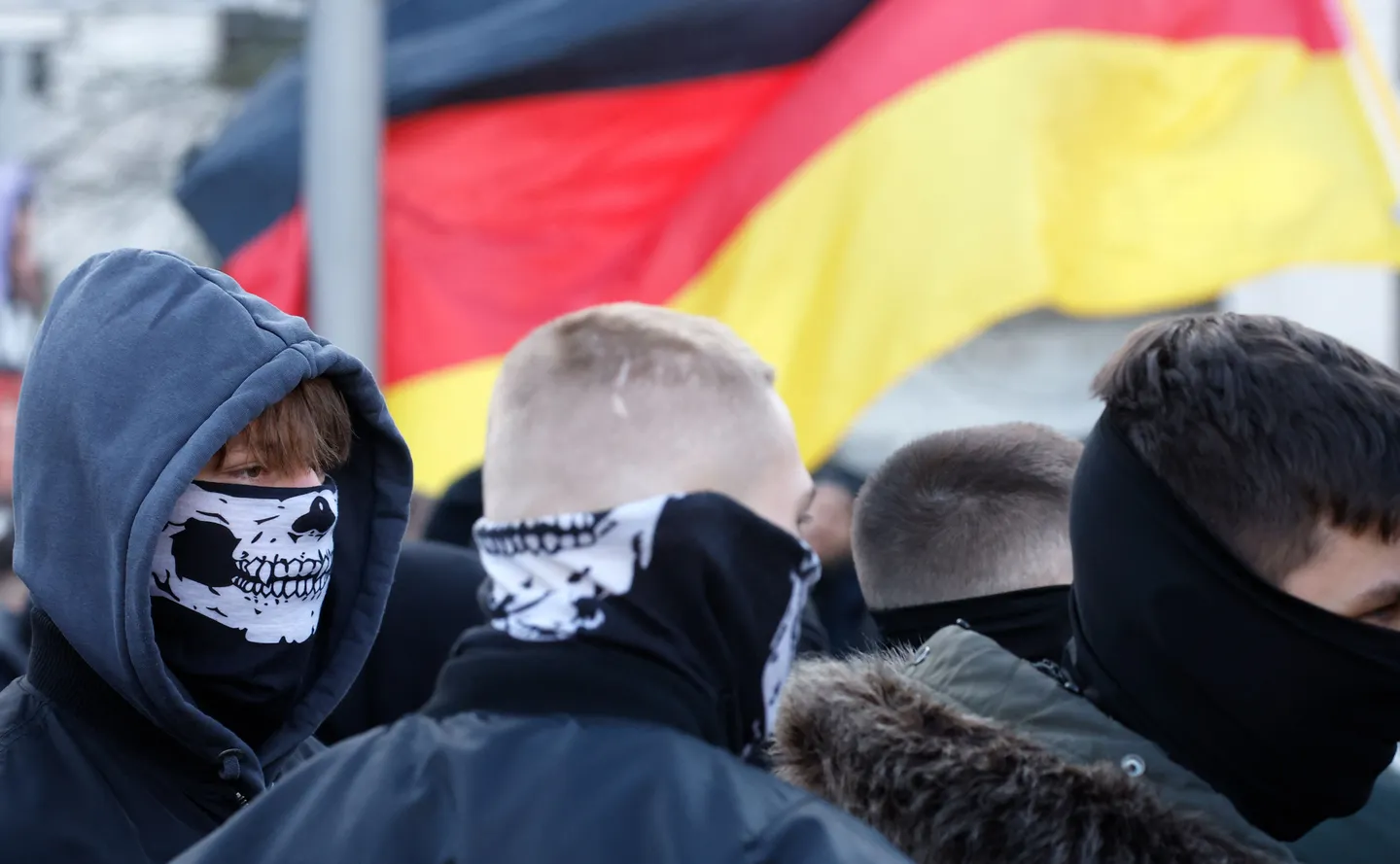
Far-right ideas once relegated to the political fringes are moving into the German mainstream, and experts warn the trend now threatens core democratic values.
New findings from the long-running Die Mitte study show that one in five Germans who see themselves as part of the mainstream no longer clearly reject statements associated with far-right ideology.
Researchers say this marks the strongest normalisation of far-right ideology in at least a decade.
“We clearly observe that in the centre of society – what we define as the democratic centre – right-wing extremist sentiments, pictures, images, and worldviews are being shared increasingly,” said Andreas Zick, one of the study’s lead authors.
He warned that support for aggressive nationalism and chauvinism has climbed to 20 percent, while a core tenet of far-right ideology – that German identity is a matter of blood and ancestry – is gaining traction beyond known extremist circles.
“What right-wing extremism tries to propagate is that there’s a natural German folk by tradition and history. This view is now more widely shared in the center of society than in previous years. These are aspects of normalisation,” Zick told Anadolu.
The study, conducted throughout 2024 and into 2025, reveals a rise in illiberal attitudes and the normalisation of xenophobic and far-right views – even among those who do not vote for far-right parties.
Researchers found that prejudice, stereotyping, and discrimination against immigrants are on the rise, while there is a marked decline in trust towards core democratic institutions and growing sympathy for authoritarian solutions.
A democratic system losing trust
The researchers say Germany’s democracy is facing a mounting crisis of confidence.
Overall distrust in democratic institutions rose sharply, from 14.3 percent in 2020-2021 to 21.5 percent in 2024-2025. Even more striking was the loss of faith in elections: the share of people who question the legitimacy of the voting process has more than tripled, from 5.8 percent to 18.2 percent.
“This is a warning signal that trust is decreasing and it goes hand in hand with the agreement to right-wing extremist attitudes,” said Beate Kupper, another lead author of the Die Mitte study. “As we can see statistically, those who distrust in democracy are more open to anti-democratic offers.”
She attributed the growing alienation to several factors: frustration with policy failures, the belief that political elites ignore ordinary citizens, and the appeal of populist narratives that promise quick and emotional solutions.
“If you zoom in, you can also see that quite a lot of people have an illiberal perception of democracy. For example, they want to abolish the fundamental rights of minorities, which is an illiberal position towards democracy that is not part of the German Constitution,” Kupper told Anadolu.

Dramatic shift among young Germans







The most unsettling transformation appears among younger generations.
The study found that 12.5 percent of respondents aged 18-34 openly endorse xenophobic views – more than double the 5.9 percent among those aged 35-64 and nearly twice the 6.5 percent among people 65 and older.
“Young people suffered from the COVID pandemic, from the crises, and they have the image that they are not heard by mainstream politicians,” Zick said, citing school closures, economic insecurity, and the current housing crunch.
He also highlighted the role of online propaganda: “Then what we observe in many studies in Germany is that political attitudes are created in younger generations by social media. And right-wing extremism and populism invests a lot into social media and political messages and political news.”
The surge in short, emotionally charged far-right content has reshaped political engagement among young voters – and changed the political landscape itself.
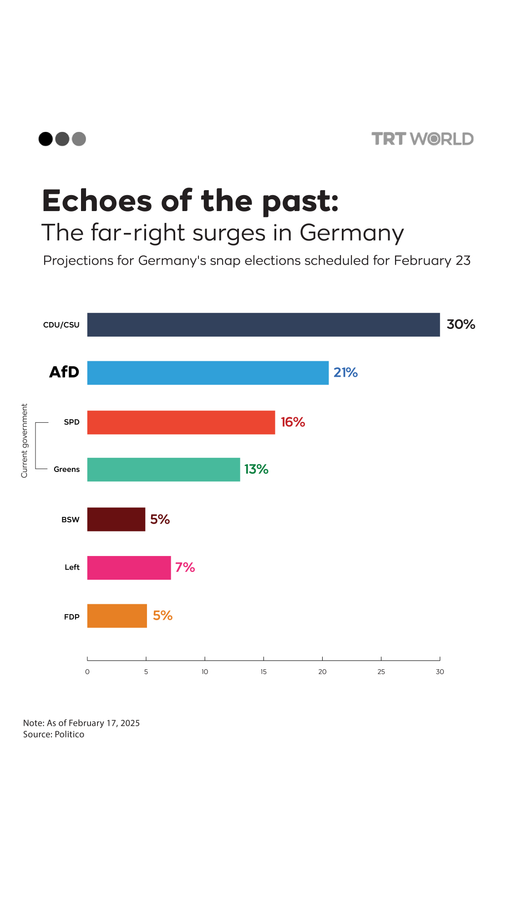
In the February 2025 election, the far-right Alternative for Germany (AfD) won 20.8 percent, its strongest national result yet. Current polls put the AfD at 26 percent, ahead of Chancellor Friedrich Merz’s conservatives and dominant in several eastern regions.
‘30 percent say AfD is like any other party’
The combination of disinformation, anti-immigrant sentiment, and political dissatisfaction has altered how many Germans perceive the AfD – despite repeated warnings from security authorities.
“We have 30 percent now – more than in previous years – that say the AfD is a party like any other party … A third is a lot of people,” Kupper noted. “But we have also two-thirds of the population who are really scared about the increase of right-wing extremism.”
In May, Germany’s domestic intelligence service officially classified the AfD as a “proven extremist group,” citing suspected activities threatening the democratic constitutional order.
The party defines German identity in exclusionary ethnic terms and advocates for “remigration” – a euphemism for deporting immigrants, including naturalised citizens deemed insufficiently assimilated.
Kupper cautioned conservative parties against cooperating with the AfD, stressing that such a move would only legitimise it further.
She said experience from other European countries proves that far-right parties do not moderate once they are treated as legitimate political partners.
Instead, she added, mainstream partners often shift rightward themselves.
“We must be aware of right-wing extremism, taking it really serious as a threat to democracy and society. And I say again, keeping German history in mind, everybody can be next on the list.”
“Looking at the party landscape in Europe, we see that it’s not a good idea going hand-in-hand with right-wing extremists,” she said.