 Esra Karataş Alpay
UNESCO’s decision to designate December 15 as World Turkic Language Family Day has been hailed by scholars and leaders as a landmark moment—one that elevates the shared linguistic and civilizational heritage of Turkic-speaking people to formal international recognition.
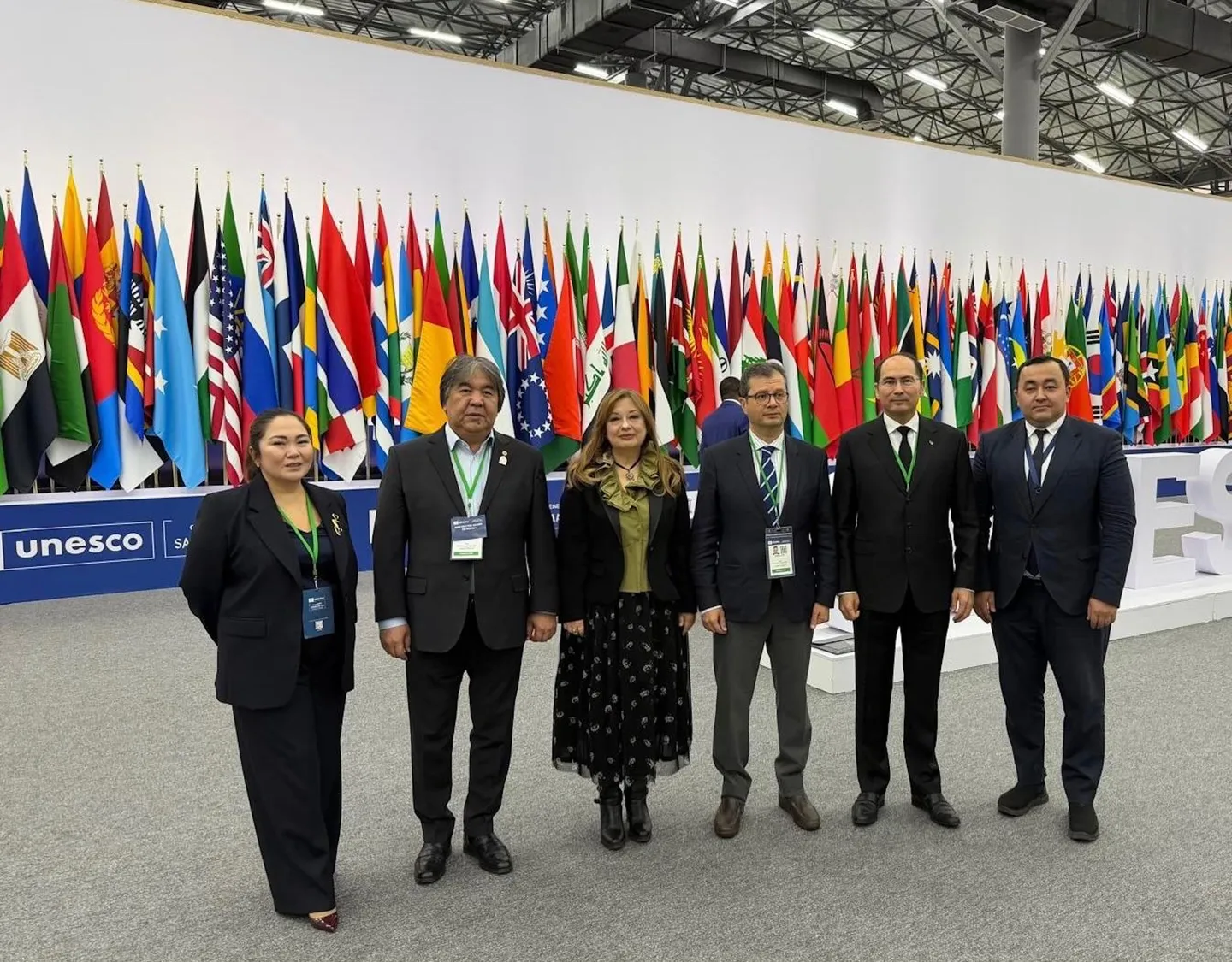
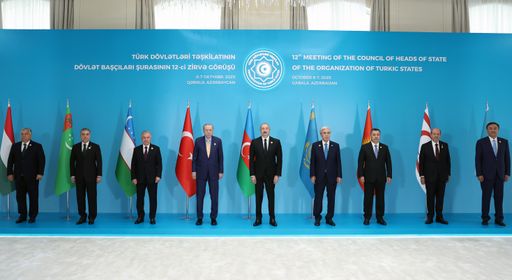
Adopted at UNESCO’s 43rd General Conference in Samarkand, the resolution followed a joint initiative led by Türkiye, with Azerbaijan, Kazakhstan, Kyrgyzstan, and Uzbekistan as co-sponsors.
The measure was approved by 26 countries, reflecting what observers describe as an uncommon diplomatic alignment around culture and language rather than geopolitics alone.
“This day carries significance for the Turkic world across several key dimensions,” says Yasar Sari, an international relations scholar and Eurasian expert at Ibn Haldun University in Istanbul, adding that the decision represents “a major diplomatic success achieved at the international level”.
The resolution signifies global recognition of the Turkic language family and its many branches “as a universal cultural value,” while also strengthening cooperation among Turkic states in education, science, arts, and cultural preservation, Sari says.
More than 200 million people speak Turkic languages across a vast geography extending from Central Asia to Eastern Europe, the Caucasus, and the Middle East.
Yet both Sari and other scholars emphasise that their significance cannot be reduced to numbers alone.
The choice of December 15 is said to be symbolic.
On that date in 1893, the Danish linguist Wilhelm Thomsen deciphered the Orkhon Inscriptions.
Living expression of societies
Anchoring the observance to the Orkhon Inscriptions underscores Türkiye’s deep cultural and historical roots within the broader Turkic language family, Sari says, while also enhancing the global visibility of the Turkish language—an outcome he describes as “a significant step in Türkiye’s cultural diplomacy”.
These eighth-century monuments revealed the common roots of Turkic languages and marked the beginning of modern Turkic studies.
The inscriptions, regarded as the earliest known written records of Turkic, highlight a written tradition that lasts over 1,300 years.
The declaration is not viewed solely through the lens of history.
“I do not see World Turkic Language Family Day as a mere note on the calendar,” Basak Kuzakci, an assistant professor at Marmara University in Istanbul and a researcher on the Turkic world, tells TRT World.
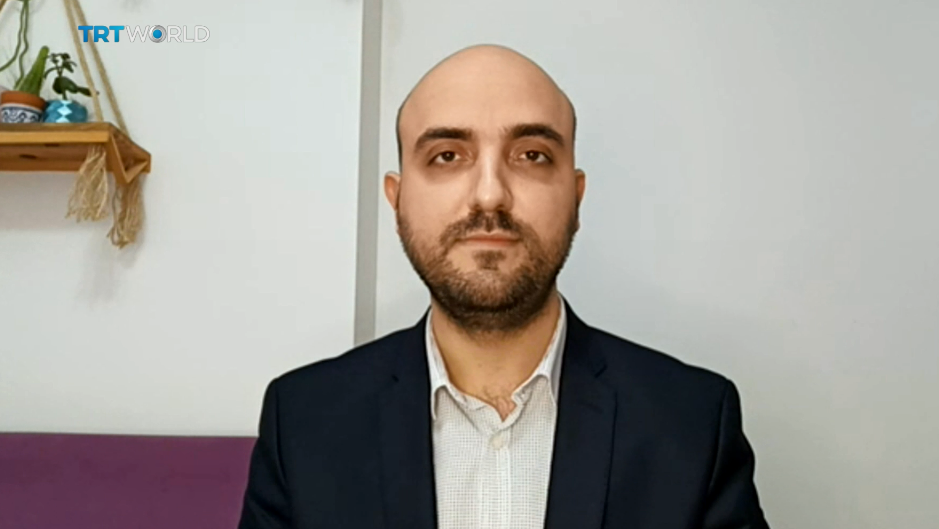

“It is a threshold where we turn inward and ask ourselves: Which memory, which shared voice do we belong to?”
Kuzakci emphasises that Turkic languages are not simply collections of words, but the living expression of societies that have built cities, carried states, and produced ideas over centuries.
From Central Asia to the Balkans, “people may not have known one another, but their words recognised each other,” she says.
What gives the new international day its contemporary relevance, Kuzakci states, is not remembrance alone but continuity.
Turkic languages, she adds, are “living, evolving, and reshaped by new generations.”
One of the clearest examples, according to Kuzakci, is the Common Alphabet initiative within the Organisation of Turkic States. She stresses that this effort is often misunderstood as a technical debate. “It is not simply about scripts, it is the will to make a shared memory more visible, more accessible, and more sustainable.”
In her view, this reflects a shift from rhetorical unity toward institutionalised cultural integration.
Immense potential
The fact that the common alphabet was embraced at the level of heads of state demonstrated that cultural unity had become a strategic objective, Kuzakci says.
The same summit in Samarkand also highlighted literature as a unifying force. Kuzakci says the elevation of Chingiz Aitmatov as a shared literary figure of the Turkic world, describing him as “not a writer of a single geography, but a bearer of shared conscience, shared pain, and shared hope”.
The presentation of Aitmatov’s work by Türkiye’s president, she added, showed that language and literature are being embraced not only symbolically, but also through state-level vision.
In a global environment where cultural visibility increasingly depends on narrative power, both Sari and Kuzakci see immense potential ahead.
Sari points to expanded academic research and educational cooperation, while Kuzakci highlights documentaries, scholarly production, and digital content created by younger generations as pathways for Turkic languages to reach wider audiences.
Sari describes the World Turkic Language Family Day, which marks the formal international recognition of a Turkic civilizational identity as a coherent global cultural force.
“Language is not a relic inherited from the past; it is a responsibility carried into the future. Societies that keep their memory alive do not lose their way.” Kuzakci says.