 Jianlu Bi
The optics of January 3 were undeniably cinematic. ‘Operation Absolute Resolve’ — the lightning strike on Venezuela and the abduction of Nicolas Maduro and his wife to the US—was designed to project ultimate power.
It was precisely the kind of geopolitical theatre that the second Trump administration thrives upon: a demonstration of overwhelming force that resolves a complex, decade-long stalemate in a single night of shock and awe.
In Washington, the mood among supporters is triumphant; the “backyard” has been brought to heel, and the flow of vital petroleum is being “secured”.
Yet, as the smoke clears over Caracas, a critical question demands an answer.
Can a policy built entirely on naked coercion ever translate into enduring influence? In the cold calculus of geopolitics, the United States has undoubtedly won the battle for territory and resources.
But in the complex, historical tapestry of Latin America, it has almost certainly lost the war for ‘hearts and minds’.
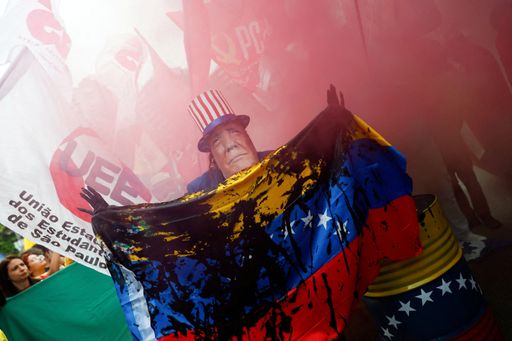
A legacy of interventions
To understand why, one must look beyond the immediate tactical success and dissect the strategic paradigm that enabled it.
This was not merely a counter-narcotics operation; it was the violent baptism of the Trump Corollary—a hyper-aggressive mutation of the 1823 Monroe Doctrine for the 21st century.
This new doctrine fundamentally abandons the pretext of shared democratic values that, however imperfectly, characterised previous US approaches to the region.
Instead, it embraces a purely transactional view of the hemisphere.
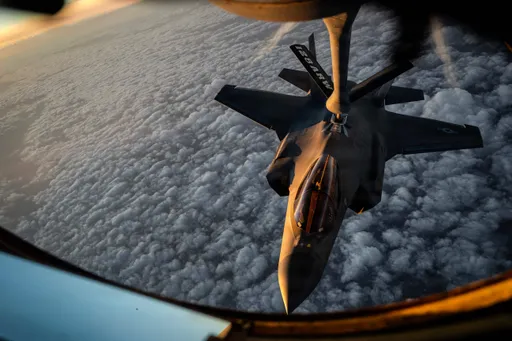
As defence data reveals, the Biden administration’s entire four-year total of air strikes (555) has been eclipsed in just the first year of Trump’s return to office (626).
This data point is crucial; it proves that the violence in Venezuela is not an anomaly but a feature of a broader strategy where diplomacy is replaced by high-frequency kinetic dominance—from Iranian nuclear sites to terror cells in Somalia and Nigeria, and now, to Caribbean capitals.
This brings us to the ‘hearts’ equation of Latin America.
For decades, the US has struggled to overcome the legacy of its 20th-century interventions—the coups in Chile and Guatemala, the invasion of Panama.
Yet, there was always a lingering aspiration towards a rules-based order, a sense that international law provided some shield for smaller nations against the colossus of the North.
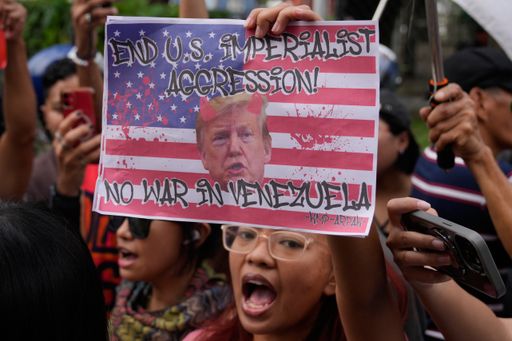
January 3 shattered that shield. By bypassing the UN Security Council, ignoring sovereign immunity, and conducting a regime change operation based on domestic US executive orders, Washington has sent a terrifying message to every capital from Mexico City to Santiago: sovereignty is conditional on American approval.
As The New York Times editorial board presciently warned regarding Trump’s character, a leader who disdains norms domestically will inevitably project that chaos internationally.
The psychological impact on the region is profound fear, not affection.
When a nation’s security depends entirely on avoiding the ire of an unpredictable superpower that views international law as a mere suggestion, the resulting relationship is one of resentful submission, not partnership.
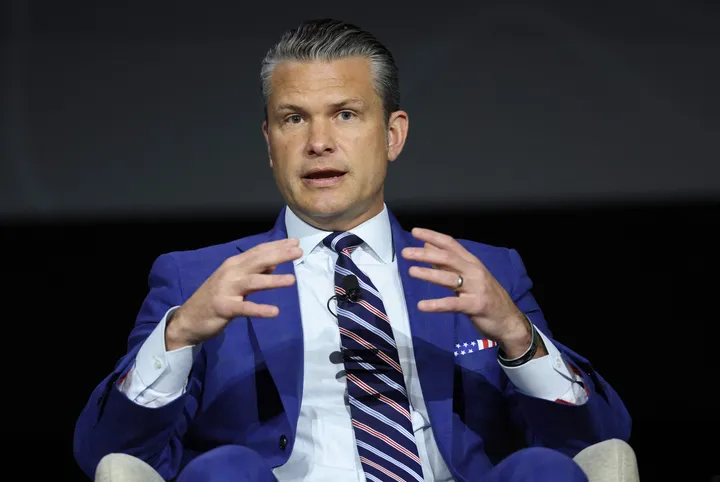

You cannot bomb people into liking you; you can only bomb them into compliance, which lasts only as long as the bombers are overhead.
The ‘Trump Corollary’ offers Latin America a stark proposition: obedience in exchange for survival, and resource extraction managed by US firms.
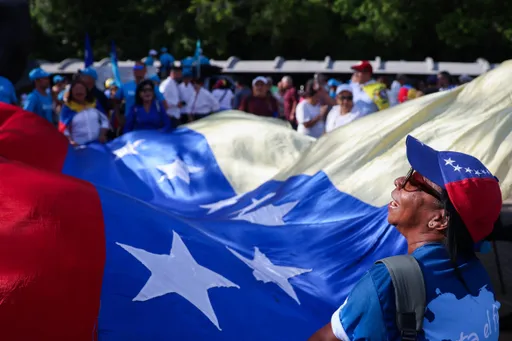
The promised "rebuilding" of Venezuela is widely perceived across the Global South not as aid, but as neocolonial foreclosure—a hostile takeover of national assets at gunpoint.
US vs China
For a pragmatic Latin American president—whether on the left in Brazil or the centre-right in Chile—the choice is becoming alarmingly clear.
The US model is high-risk and high-demand, requiring political alignment that often alienates domestic populations.
The Chinese model, conversely, offers “win-win multilateralism” that focuses on economic development without moral lectures.
The immediate aftermath of the Venezuela raid illustrates this dynamic perfectly.
China is carefully avoiding direct military confrontation with a volatile US administration while simultaneously positioning itself as the defender of international law and the protector of the Global South against Western bullying.
In this context, the ‘minds’ of Latin American leaders are drawing a pragmatic conclusion: to survive the Trump Corollary, they must hedge aggressively.
They cannot afford to antagonise the American grizzly bear violently thrashing in their front yard, but they certainly cannot trust it to guard their house.
Therefore, the inevitable strategic response for the region will be to deepen economic and diplomatic ties with Europe, and especially with China, as an insurance policy against American unpredictability.
The short-term gains of this approach are tangible: Maduro is gone, and the oil spigots will soon be turned towards the USS.
But the long-term costs are incalculable. A hemisphere ruled by fear is inherently unstable. It breeds nationalism, fuels anti-American radicalism, and makes the alternative offered by Beijing look not just attractive, but essential for national survival.
The US has proven, once again, that it possesses the military capability to crush any opposition in the Western Hemisphere within hours.
But in the 21st century, lasting primacy is not built on the ability to destroy; it is built on the ability to construct shared prosperity and maintain mutual respect.
By choosing the path of the gunboat over the path of the partner, America may have secured Venezuela’s oil, but it has definitively forfeited Latin America’s trust.