 William A. Booth
Once again, we are told that a “regime” must be “changed”, and, as is often the case, it is the United States government claiming the right to enforce it.
Although the term ‘regime change’ only gained prominence towards the end of the Cold War, the practice of removing a leader or government by force and installing a preferred successor has occurred more than a hundred times in modern history.
Sometimes it leads to a period of apparent stability, often at significant military or economic cost to the instigating power, like in West Germany and Japan.
Sometimes, it results in civil war as resentful local populations direct their anger at the occupying force and its collaborators, whom they see as traitors or sellouts.
When the occupying power deems the costs of maintaining control too great, violent conflicts can ignite and persist as in Iraq, Libya, and the Democratic Republic of the Congo.
Most often, however, it seems to lead to authoritarianism, violence, reprisals, and lasting tensions that can ebb and flow over generations, as evident in Chile, Argentina, Haiti, and Indonesia.
Nobody – least of all the architects of Maduro’s abduction – knows what will happen next in Venezuela.
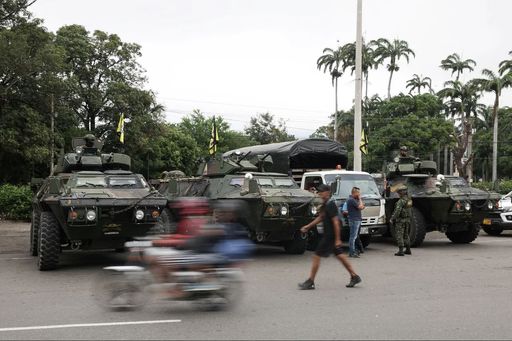
Experts assumed that the US President Donald Trump and Rubio would immediately install Maria Corina Machado, the divisive Nobel Peace Prize laureate, as Venezuela’s new leader, but Trump quickly distanced himself from the idea.
This has led to all manner of speculation about the type of ‘regime change’ we are witnessing: is it a palace coup? Is there a split (or splits) within Chavismo?
Is – and I think this is fairly clear – there a split in the instigating power’s ruling elite? Isolationists will want a quick result, with Maduro on trial, and agreements drawn up over oil and mineral resources.
This may suit Trump and his notoriously short attention span, as he can claim victory without worrying too much about the consequences.
Hawks like Marco Rubio will campaign for something more dramatic, however – not just the dismantling of Chavismo (which they view as a gross affront to the manifest destiny of the United States), but a stepping stone to action in Cuba or beyond.
And let us not overlook the agency of Venezuela’s government and people. There may well be Chavista politicians confident they can outlast Trump, and they could be right.
Meanwhile, the popular militias which emerged under the much-missed Chavez may take their own view on where the country’s resources should go.
Disregard for Venezuelans
What is painfully clear, however, is that ‘regime change’ has once again been carried out without any consideration for the population of the target nation.
As in Afghanistan, Iraq, and Libya, nuanced scholarly analysis of local power structures has been discarded, overshadowed by two persistent discourses.
First, that this ‘change’ is legitimate on the grounds of business and property, that somehow the mechanisms of extraction were being ‘unfairly’ impeded: Guatemala and Iran experienced this in the 1950s, albeit wrapped in the cant of anti-communism.

Second, that any worries around international law should be set aside because this was a ‘bad guy’, a ‘criminal’, a ‘corrupt ruler’.
However, there was no call from the then-national security advisor Henry Kissinger to overthrow the generals in Chile or Argentina — Jorge Rafael Videla and Augusto Pinochet — as they cracked down on dissidents.
Videla and Pinochet were friends of Kissinger because they were dyed-in-the-wool anti-leftists. ‘Regime change’ has always been a partisan pursuit.
This reinforces the utter disregard for Venezuelans, and by extension, all who are viewed as ‘other’ by the current great power.
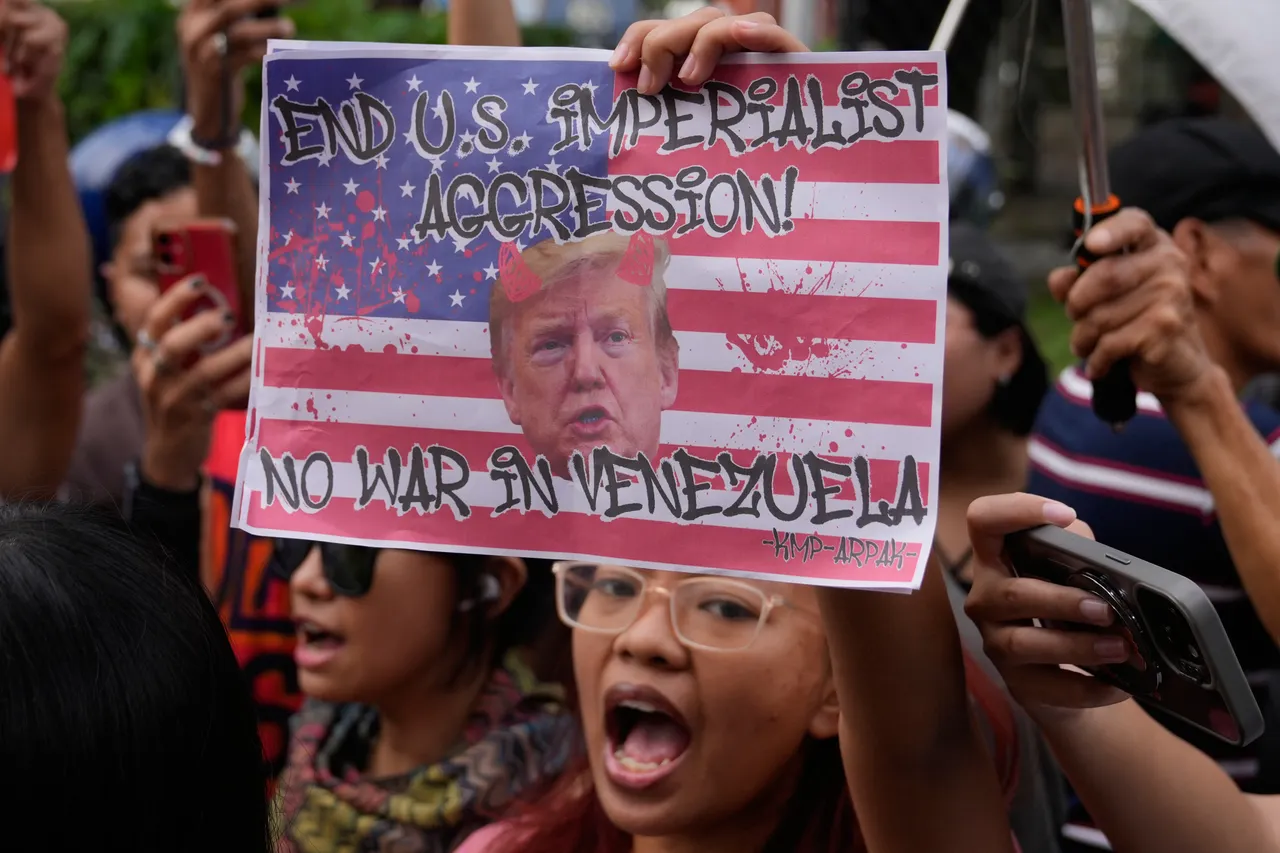
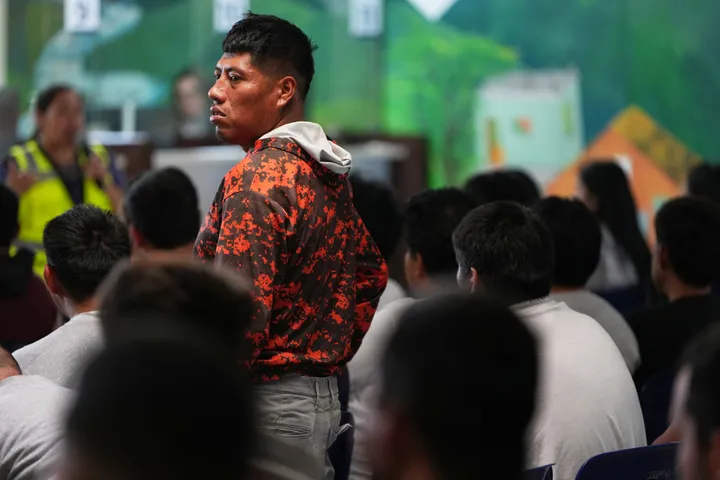
As Trump claims to support democracy in Venezuela, he simultaneously sends thousands of Venezuelan exiles into the abyss of Salvadoran prisons.
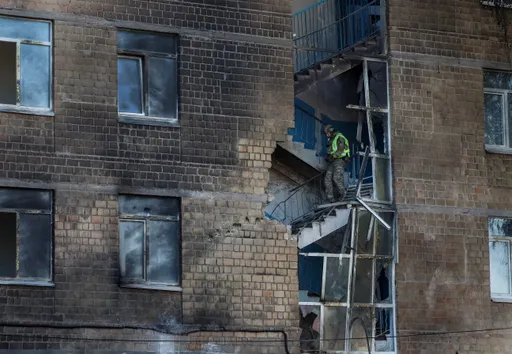
And as Washington policy-makers speak of future prosperity for Venezuelans, they seize oil tankers and bomb refineries and docks, adding new chaos to the ongoing misery of sanctions.
Similarly, Haitians are being herded into new, controlled elections orchestrated from outside, adding to the long history of interference, coups, and punitive debt spanning generations.
Meanwhile, they are dehumanised in US political discourse, accused of barbaric practices and criminality.
People who speak of ‘making economies scream’ are not, and never have been, humanitarians.
They are instead students of the ‘might is right’ school, and should be feared as such.
Who will stop them?
European leaders – with the notable exception of Spain - are timid satraps. Latin America is divided between a left very much on the defensive and a buoyant wave of strongmen revivalists and absurd Trump wannabes.
China is, possibly wisely, playing its cards very close to its chest. We do not know whether the world in five years will settle into a new multipolar, more-or-less ‘rules-based’ arrangement that many have predicted.
We may instead be heading for a rather brutal division of our planet into spheres of influence where, as long as one stays broadly within the established regional boundaries, anything goes.
This is probably the most dangerous period since the 1930s, but when pre-War dictators decided to exercise their strength in defiance of rather pathetic multilateralism, nobody had nuclear bombs.
The presence of such apocalyptic weapons across the globe ought to encourage restraint, indeed, a desperate desire for peaceful resolutions to disputes.
Instead, we see the houses of government in many capital cities filled with the most reckless and callous dilettantes.