 Esra Karataş Alpay
Türkiye’s ambitious Social Housing Project, which aims to deliver 500,000 units under the banner of ‘Homeowner Türkiye’, lays out a new social vision that blends urban planning, economic stability, and cultural identity.
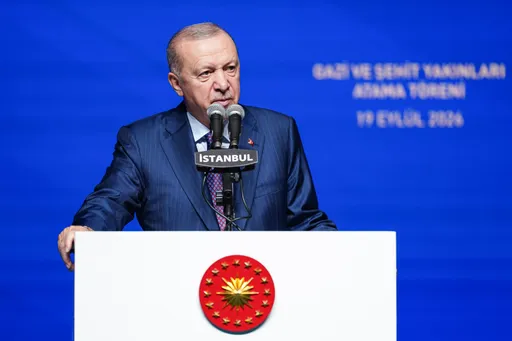
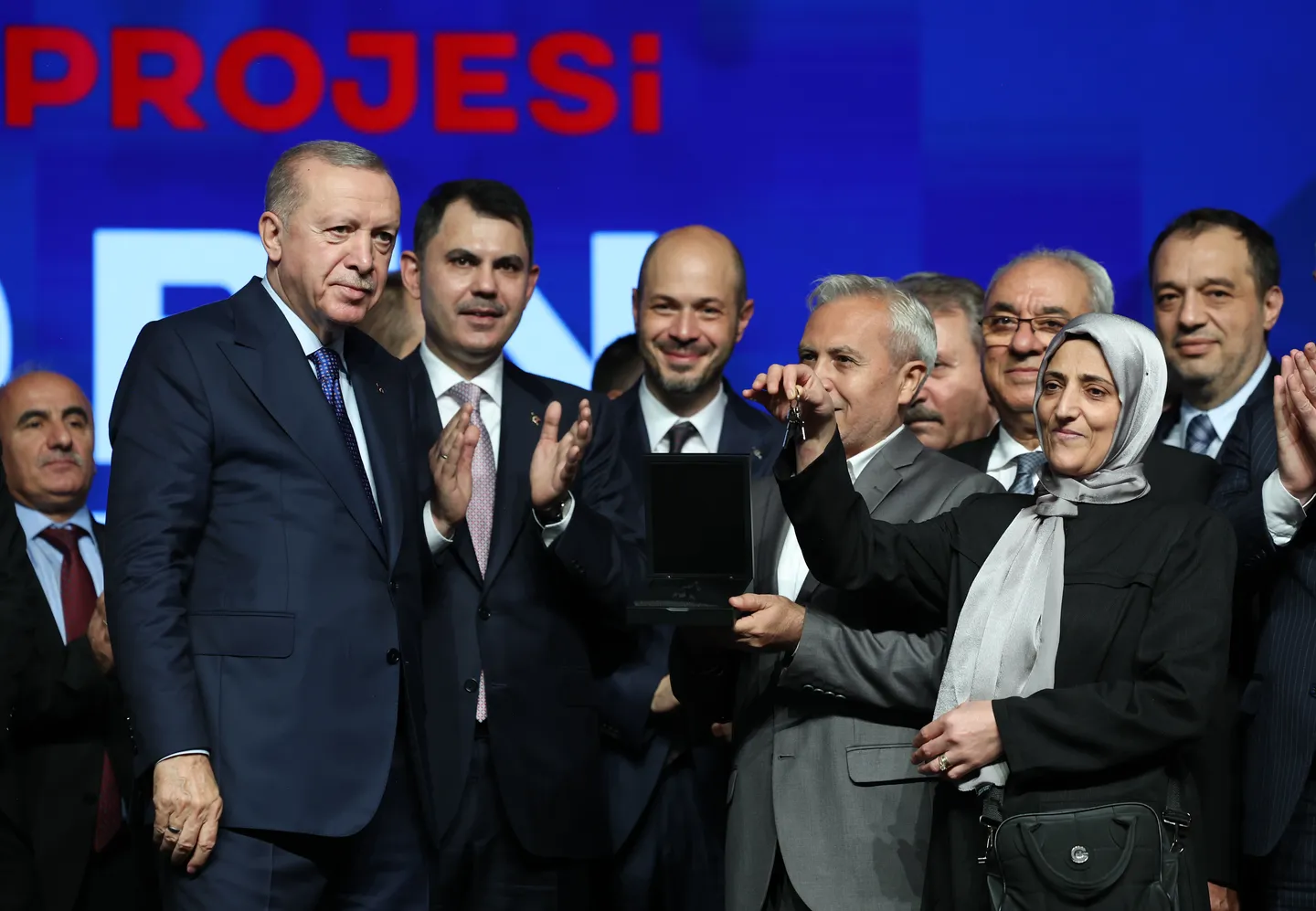
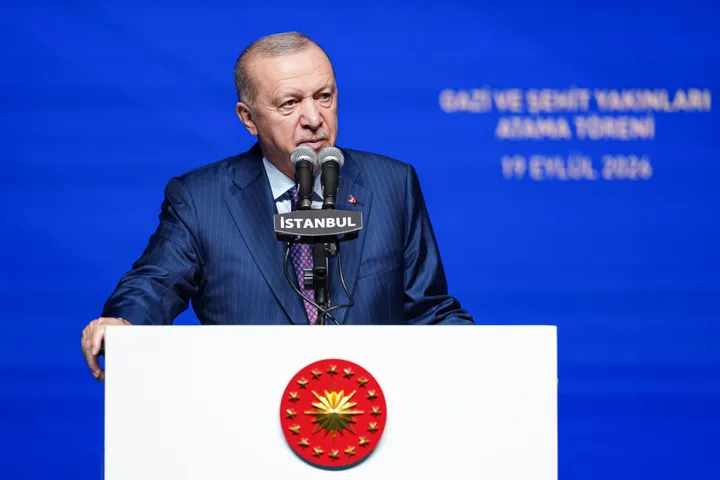
Unveiled by President Recep Tayyip Erdogan, the project officially opened for applications on November 10 and aims to deliver half a million affordable state-backed homes for low- and middle-income citizens across 81 provinces.
But beyond the numbers, observers say its deeper significance lies in what it symbolises: a revival of the “social state” ideal and a redefinition of what home ownership means in modern Türkiye.
“This is not merely a housing project,” says Associate Professor Hicran Hamza Celikyay.
“It is an effort to build ‘homes’ that embody our civilisation’s urban imagination — places that reflect both material security and spiritual belonging,” the associate professor at Duzce University tells TRT World.
“It is an effort to build ‘homes’ that embody our civilisation’s urban imagination — places that reflect both material security and spiritual belonging”.
At its core, the project marks a philosophical shift, seeking to merge architecture, community, and national identity into a single vision for the future.
“[The initiative bridges] the connection between housing and home; and between home and family.”

Its launch coincides with the government’s declaration of 2025 as the Year of the Family, reinforcing the project’s focus on community and belonging.
Pointing to Türkiye’s constitutional view of housing as a human right, Celikyay says, “cities are not merely physical spaces of streets, squares, and houses, they are living organisms that carry memory, spirit, and identity”.
The project, she explains, seeks to reinterpret this heritage for the modern era, so that every house becomes a yuva — a Turkish home that signifies safety, warmth, and belonging.
According to government officials, the program represents the largest housing initiative in the history of the Republic, backed by the Housing Development Administration (TOKİ) and the Ministry of Environment, Urbanization and Climate Change.
Applications are open via e-Devlet, Ziraat Bank, Halkbank, and Emlak Katilim Bank branches, with a carefully managed system designed to prevent online congestion.
The first homes are expected to be delivered by March 2027, and construction tenders have already begun.
Professor Abdulmenaf Turan, a leading scholar of urban governance from Ankara University, says the initiative is “a historical public policy milestone that gives physical form to the idea of the social state”.
“It is part of the human right to live with dignity. This project builds on that principle, making affordable housing accessible while reinforcing citizens’ trust in the state,” he tells TRT World.
Under the scheme, citizens can purchase units with a 10 percent down payment, 240-month repayment plans, and monthly instalments starting at ₺6,750. (US$160)
Prices begin around ₺1.8 million(US $42.850), and income ceilings have been set at ₺145,000 (US $3.400) for Istanbul and ₺127,000 (US $3.000) for other provinces.
Building communities
Beyond the numbers, the project’s urban design philosophy is equally ambitious.

The planned homes, mostly 1+1 and 2+1 apartments ranging from 55 to 85 square meters, are only one part of a much larger vision.
Each of Türkiye’s 81 provinces will feature integrated community infrastructure, including neighbourhood centres, preschools, handicraft workshops, sports halls, guesthouses, family health centres, and mosques, 500 of each in total.
This holistic approach signals a new kind of urbanism with a conscience, where space is designed not only to be livable but also humane.
A defining feature of the initiative is its focus on inclusivity.
Sixty percent of the planned units are reserved for vulnerable groups such as retirees, people with disabilities, veterans, and the families of martyrs.
Additional allocations include five percent for veterans and disabled citizens, 10 percent for families with three or more children, and 20 percent for young people and retirees, ensuring that the project reaches those most in need of stability and belonging.
Experts note that this new chapter builds on two decades of urban transformation.
Under TOKİ’s leadership, Türkiye has already replaced millions of unsafe buildings, once informal “gecekondu” dwellings, with safe, earthquake-resistant housing.
Professor Turan notes that “urban renewal has become an instrument of resilience”.
“From the ruins of unsafe housing and disaster zones, new communities are being born — homes rebuilt after earthquakes, floods, and fires. The social housing program now unites all of these efforts under one coherent vision,” he says.
Since its establishment, TOKI has completed 1.75 million homes and transformed more than 2 million independent structures. The latest 500,000-unit plan, Turan says, “extends that trust into the next century of the Republic”.
Sustainable development
Beyond domestic policy, the project aligns closely with international agendas.
Analysts say its principles echo the United Nations’ Sustainable Development Goal 11 — “Sustainable Cities and Communities”, which aims to ensure universal access to safe and affordable housing by 2030.
It also mirrors the core themes of recent World Habitat Day observances — from “Resilient Urban Economies” (2023) to “Leave No One and No Place Behind” (2022).
This initiative positions Türkiye within the global conversation on urban resilience and housing diplomacy, demonstrating that Türkiye is not only addressing its domestic housing needs but also contributing an exportable model of social urbanism.
The model, which combines long-term affordability, disaster resilience, and community design, has drawn interest from urban planners in Asia and the Middle East.
As the first foundations are laid, analysts say the project’s true measure will not be in concrete poured, but in communities revived and families restored.
For many, the project embodies the broader promise of the Century of Türkiye — that the nation’s next hundred years will not only be built on economic strength, but on shared dignity, belonging, and hope.