 Sadiq S Bhat
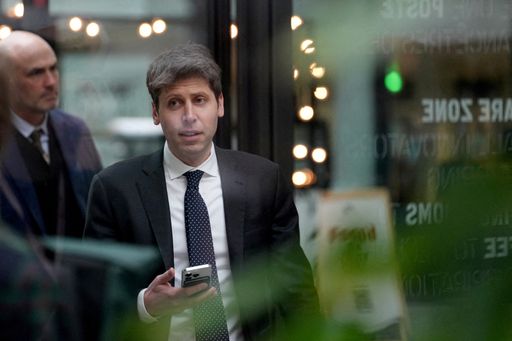
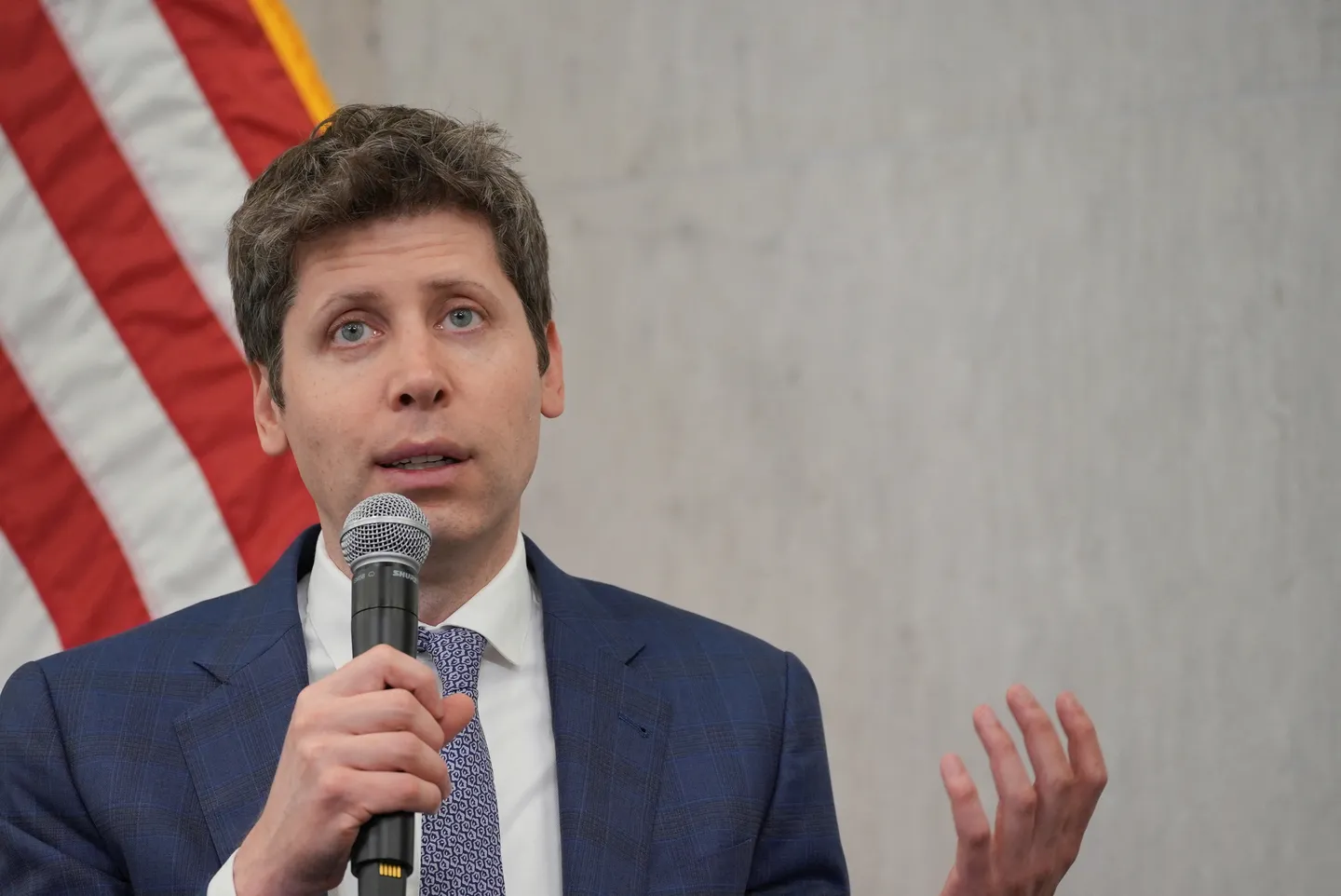
Washington, DC — OpenAI Chief Executive Sam Altman is reportedly mulling a move to either acquire or partner with a major rocket company, a step that would place him directly against Elon Musk’s SpaceX.
Altman is said to have started sounding out top rocket engineers, speaking in quiet rooms about a leap that is expected to bring him level with Musk in the only arena wide enough for their long rivalry to expand.
The two have clashed across multiple industries for years, and that rivalry now appears to be moving into orbit.
Earlier this year, Altman zeroed in on Stoke Space, a startup formed by former Blue Origin staff and now building a fully reusable rocket designed to break SpaceX’s hold on launch services, the Wall Street Journal reported on Wednesday.
Talks began in the summer, then gathered speed in autumn, with Altman exploring billions in equity investments and a possible controlling stake.
The momentum has not been steady. People close to OpenAI say the discussions have been off and on.
Meanwhile, the stock market has cooled.
In recent weeks, OpenAI has declared a “code red” to steady ChatGPT as it loses ground to Google’s Gemini. Product launches are paused. Teams are pulled towards reinforcing the company’s core.
Altman’s fascination with orbit goes back a long way. For years, he has raised the idea of placing data centres in space to ease environmental pressure and keep pace with soaring computational demand.
He pushed the idea further at times, imagining a future where human energy use grows so vast that infrastructure must move off planet.
“Like, maybe we build a big Dyson sphere around the solar system and say, ‘Hey, it actually makes no sense to put these on Earth,’” he told podcaster Theo Von recently.

Markets rise
The idea remains untested.
Google and Planet Labs plan to send two prototypes with onboard chips into low-Earth orbit by early 2027. Stoke keeps shaping its Nova rocket as SpaceX moves ahead with Starship.
As small groups of challengers press forward, everyone in the race is trying to claim a piece of the next chapter in launch technology.
Altman’s interest in Stoke came as he stitched together enormous chip and data centre commitments with Oracle, Nvidia, AMD and others.
Markets rose sharply after his announcements in September and October.







The commitments for OpenAI are huge. It has secured over $1 trillion in new computing and infrastructure commitments in 2025 alone, mostly in recent months. The company expects around $13 billion in revenue for the full year 2025.
Altman’s investment reach spans more than 400 companies, a legacy of his years at Y Combinator (a California-based startup accelerator). He invests less personally now but still uses OpenAI’s balance sheet to pursue sweeping projects.
Earlier this year, he committed $18 billion to Stargate, a new data centre venture backed by SoftBank.
Gateway to orbital infrastructure
The rivalry with Musk runs through all of it. Shared origins. Diverging ambitions. xAI and OpenAI are competing for supremacy.
Merge Labs is opposite Neuralink. A coming social network that could challenge X. A stake in Stoke may take their competition into a new frontier.
Altman recognises the pull. “Should I build a rocket company?” he said in a June podcast.
Rocket development is slow and unforgiving. Ten years for a new system if things go well. Regulations, failures and long odds. Nova shows the scale of the task.
Still, the idea remains tantalising. A rocket is a gateway to orbital infrastructure, beyond Earth’s limits. A stage large enough for two of the most driven figures in technology to carry their rivalry skyward.
For now, Musk stays dominant in orbit, yet Altman's strategic push into space is seen as a complement to OpenAI's terrestrial expansions, such as the $500 billion-plus Stargate data-centre initiative.
That collaborative project between OpenAI, Microsoft, Oracle, SoftBank, will see new data centres with a combined capacity of up to 10 gigawatts.
It involves setting up huge facilities full of powerful computer chips, including more than 400,000 in Abilene. The idea is to get everything ready so that one day these computers can run in space, where there is steady solar power that can handle the growing energy demands that will soon be hard to meet on Earth.
Reports that Altman held advanced talks earlier in 2025 to buy a controlling stake in reusable rocket tech clearly position him to take on Musk directly.
Musk’s SpaceX currently dominates global spaceflight with reusable Falcon 9 (97 percent of US launches) and Starlink’s 5+ million users, while Starship is on track for uncrewed Mars landings in 2026 –2027.
While it is still early days, all eyes are on the two men who began building software on Earth and now seem to be steering towards a contest that could one day play out in the sky, far beyond anyone’s reach.