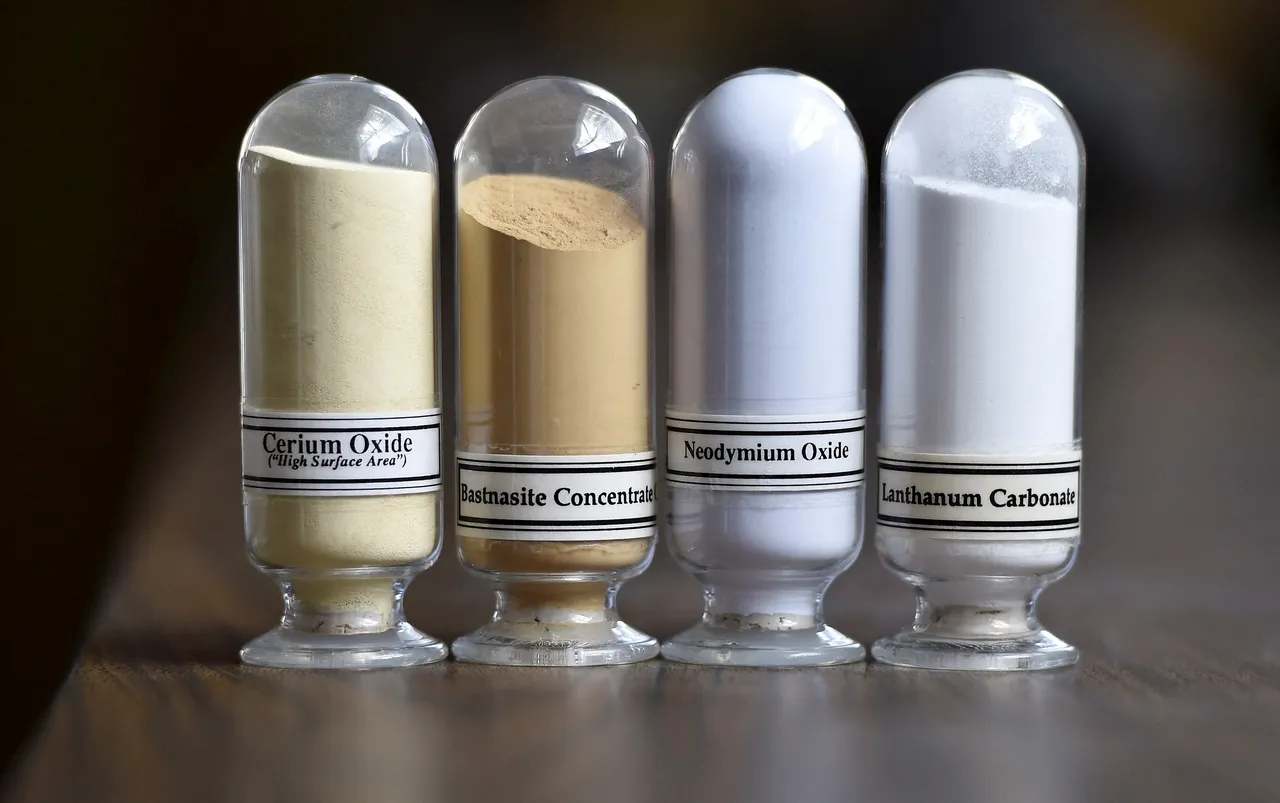
A new proposal has been made in Türkiye to establish a critical minerals authority to assess the country’s potential in rare earth elements (REEs), according to the chair of the Turkish Union of Chambers and Commodity Exchanges (TOBB) Mining Council.
Speaking to Anadolu, Ibrahim Halil Kirsan highlighted the wide uses of rare earths across various sectors, including electric vehicles (EVs), batteries, renewable energy, industrial robots, and the defence industry, adding that they are also a cornerstone of trade wars between China, the US, and the EU.
Kirsan noted that REEs and other critical minerals have reshaped countries' geopolitical priorities, amid “a new industrial revolution.”
“The world is heading toward a mineral supply crisis, similar to the oil shocks of the 1970s, minerals are becoming the new oil,” he said.
National security and supply risks
Kirsan stated that the digitalisation and electrification efforts in many sectors, as well as the increasing use of clean energy technologies, have led developed nations to view access to critical and strategic minerals as a matter of national security.
He highlighted China's control of roughly 70% of the global critical mineral production as of last year, with Türkiye, located at a geographical crossroads between Asia and Europe, a crucial country with important mining potential.
Noting that Türkiye ranks eighth among 168 nations in mineral diversity, 22nd in reserves, and 28th in value, he called the country “one of the leading candidates in the field of REEs.”



Kirsan stated that work is underway at Eti Maden’s Beylikova REE pilot plant in central Türkiye, following positive results from experimental studies.
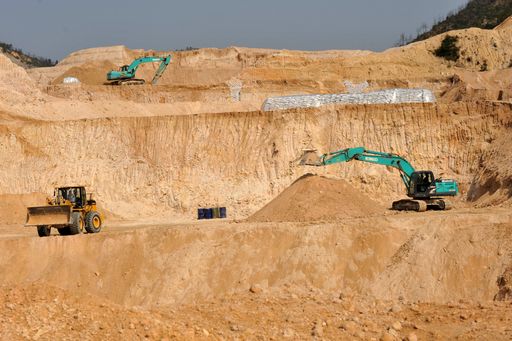
“Currently, China holds a 90 percent monopoly in refining rare earth worldwide and it doesn’t share its technology with other countries,” he said. “International cooperation via joint efforts with the US, Japan, South Korea, Australia, and European countries that have this tech will play a key role in bringing Türkiye’s REE deposits into operation.”
Calls for national strategy and coordination
“We need to prepare a national critical minerals strategy and establish a critical minerals technology authority to coordinate work on REEs by public institutions and universities,” he noted.
Kirsan said responsibility for rare earth elements in Türkiye is currently divided among three ministries: the Energy and Natural Resources Ministry oversees raw materials, the Industry and Technology Ministry handles processed products, and the National Defence Ministry focuses on defence and security-related uses.
“Establishing the legal infrastructure for this proposed structure, including its missions and regulations, through a commission of experts from these three ministries would benefit Türkiye in its REE operations,” he said.
He noted that this agency would assess Türkiye’s mining potential, the industry’s supply-and-demand-based mineral and metal needs and ensure that mining projects produce results.