 Murat Sofuoglu
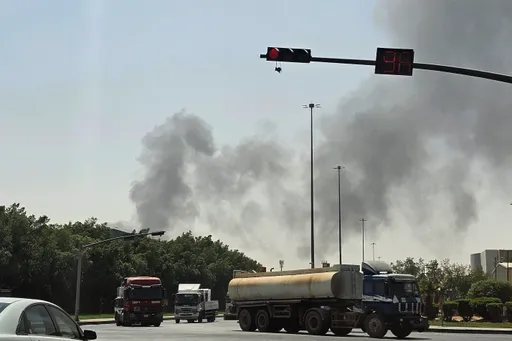
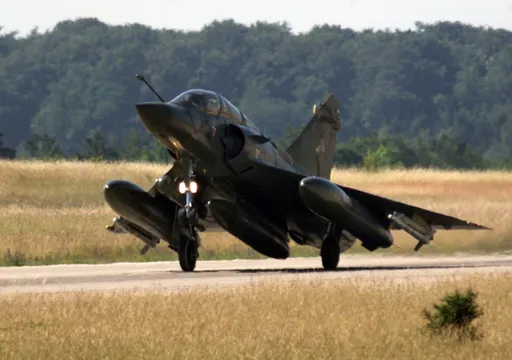
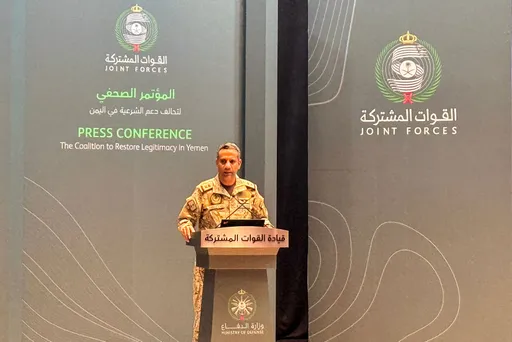
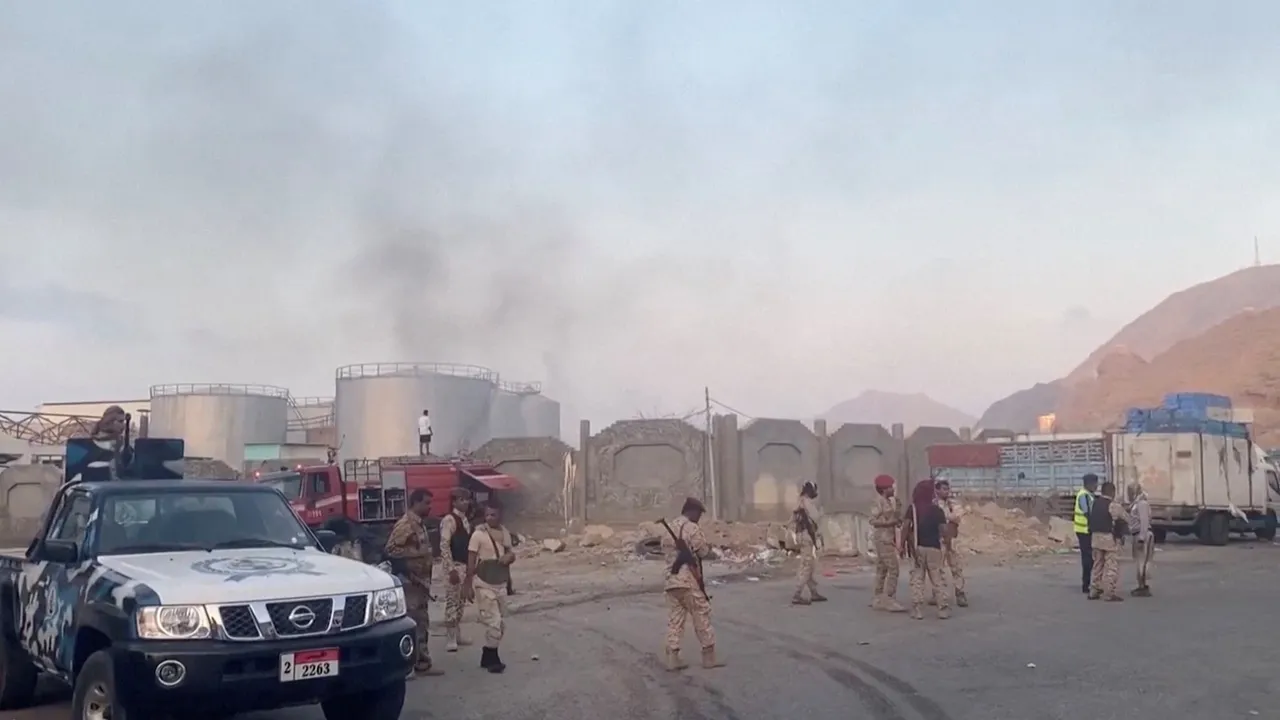
The Middle East’s already complex battlefields have entered a new phase after Saudi Arabia carried out air strikes on UAE-backed Southern Transitional Council (STC) forces in Yemen’s Hadramaut province, following allegations that separatist fighters ambushed government troops moving to retake military positions, a move that marks a sharp escalation in tensions between Gulf allies.
The clashes came after the STC’s recent territorial expansion in eastern Yemen, the closure of Aden airport to a Saudi delegation, and growing concern in Riyadh that separatist forces are consolidating control near Saudi Arabia’s border.
In response, the UN-recognised, Riyadh-backed Yemeni government has demanded that UAE forces withdraw from the northeast, underscoring a deepening rift between the two Gulf states over the future of the divided country.
Although the UAE has announced plans to withdraw its forces, Saudi air strikes on STC positions on Friday suggest the confrontation is unlikely to de-escalate, as Riyadh signals a willingness to adopt more forceful measures against Abu Dhabi-linked forces across Yemen.
“Saudi Arabia is expected to launch more air strikes against STC-affiliated armed groups, potentially expanding them into ground operations mobilising Riyadh-backed Dera al-Watan forces aimed at securing control of the Hadramaut and Mahri provinces in eastern Yemen,” Esam Alahmadi, a Yemeni political analyst and a sociology PhD researcher at Selcuk University, tells TRT World.
On the other hand, the UAE will continue to support the STC-linked armed groups, smuggling weapons to them and “intensifying its activities against Saudi Arabia, as well as other groups advocating the unity of Yemen more than ever before,” he says.
Saudi Arabia and the UAE have differences not only on Yemen but also on other critical geopolitical issues, from the Sudan conflict to Israeli expansion across the Middle East.
There are growing links between the UAE-backed STC and Israel. The STC leadership recently disclosed their intent to join the Abraham Accords, as their main supporter, the UAE, already did.
‘Differing visions’
Analysts view the Saudi-UAE rift as a structural political conflict rather than a temporary crisis, rooted in 'differing visions” for Yemen's future.
The Saudi-UAE face-off is an interesting turning point for the Yemen war because the two rich Gulf states intervened in the war-ravaged Arab country’s civil war to eradicate Iran-backed Houthis from the northwest and the Red Sea coast.
The country has been divided into different zones, each allied with various regional powers ranging from Iran to Saudi Arabia and the UAE.
Iran-backed Houthis, the followers of Zaidis, an offshoot of Shia Islam, control northwestern Yemen, including the country’s ancient capital Sanaa.
The STC, with UAE support, controls most of the south, including important port cities like Aden and Mukalla, advocating the possibility of a separatist Southern Yemeni state.
The Saudi-backed internationally recognised government, known as the Presidential Leadership Council (PLC), does not have direct rule over significant territories, except for some parts of Marib and Taiz provinces in the western part of the country.
While the PLC was formed in 2022 with the blessings of both Saudis and the UAE, the STC refused to integrate its military forces under the Council’s command, which increased tensions between Riyadh and Abu Dhabi.
Yemen’s civil war led to a significant humanitarian crisis, leaving nearly 20 million people in need of aid and displacing 4.5 million people.
“Saudi Arabia views Yemen as a strategic security and border depth that must be governed through a unified state, while the UAE has treated it as an open arena for strategic influence centered on ports, islands, and local forces,” Adel al-Shuja'a, the former spokesman of Ali Abdullah Saleh, the late Yemeni president, who was killed by Houthis in 2017, tells TRT World.
For the UAE, which has no borders with the war-torn country, it does not matter much who controls the Hadramaut and Al-Mahra provinces, which have large geographies in northeast Yemen.
But the identity of those who hold power in these provinces, which neighbour Saudi Arabia, makes a crucial difference for Riyadh due to its border and national security implications, according to al-Shuja’a, who is also a member of the executive committee of the internationally recognised government’s ruling party, the General People’s Congress.
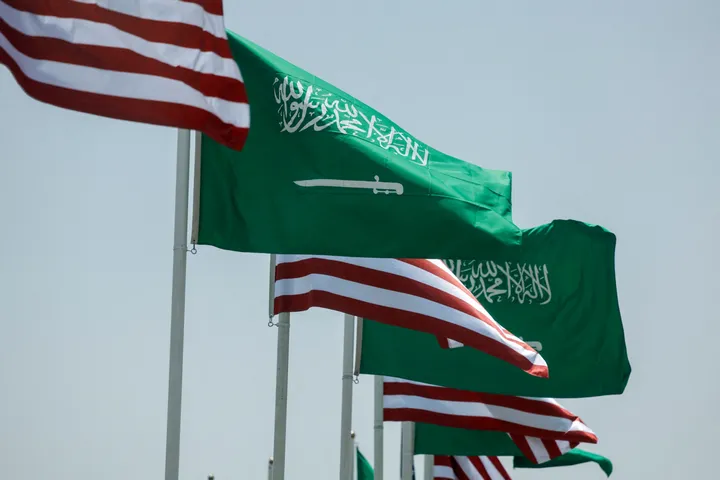



“This divergence has not been resolved since 2019; it was merely postponed and is now resurfacing with greater intensity,” he says.
As a result, even after the UAE withdrawal, the Saudi-UAE confrontation will remain at least at the level of a ‘cold conflict’ through media wars, indirect political messaging and repositioning themselves through their local allies in Yemen.
While a direct clash is unlikely, the Saudi-UAE competition is expected to intensify over the control of ports, islands and local military forces, with each side trying to establish new facts on the ground ahead of any comprehensive settlement, adds the Yemeni politician.
Abu Dhabi will utilise the influence it has built up over the Yemeni civil war, activating its “counterterrorism” narrative against Al Qaeda and other groups that once controlled Mukalla port.
“The UAE tends to avoid open confrontation, but it is highly effective in managing long-term, low-intensity conflicts,” al-Shuja’a says.
Saudi red lines on UAE
Analysts have regarded the two oil-rich Gulf states as allies, noting that UAE leader Sheikh Mohamed bin Zayed Al Nahyan was once a mentor to Saudi Crown Prince Mohammed bin Salman, which is partly credited for the latter’s rise to de facto leadership in Riyadh.
The two Sunni states, both of which have opposed Shia Iran’s expansion in the Middle East, were also instrumental in installing an unsuccessful blockade against Qatar in 2017.
The UAE has become increasingly linked with Israeli policies since the Abraham Accords and has taken a more interventionist stance in various conflicts from Sudan to Libya, not always aligning with Riyadh and sometimes opposing Saudi interests directly, as it has recently done in Yemen.
But with their recent Mukalla attack, the Saudis clearly showed their disapproval of UAE policies, marking a red line against Abu Dhabi, according to Luciano Zaccara, a Doha-based analyst on Gulf politics.
The crisis has been there for a long time, but what happened in Yemen’s northeast was a peak, which Mohammed Bin Salman saw as a UAE transgression, which “went too far”, he says.
“Mohammed Bin Salman is setting the criteria to define what are Saudi security red lines not only for the kingdom but for the Gulf Cooperation Council (GCC) itself,” Zaccara tells TRT World, referring to the Saudi role as a big brother in the regional group, which is both an economic union and military alliance.
“Therefore, if the other council states are not abiding by that criteria, they become a threat instead of a partner,” says Zaccara to explain why Saudis bombed UAE shipments in Mukalla.
While Saudis suffered due to Yemen war, they have recently become more confident after restoring their relations with the US, Qatar and other regional powers, he says, seeing Riyadh’s Mukalla bombing as a sign in that direction.
But he still doubts that this will alter the Emirati behaviour in other conflicts, such as Sudan.
Other analysts also identify a Saudi red line with a 'dual political and security message' directed at the UAE in the Mukalla bombing.
First, it is a Saudi attempt aiming to prevent the flow of weapons outside the framework of Yemen’s internationally recognised government, al-Shuja’a says.
Second, it is a message directed at partners before adversaries like Houthis, signalling that Saudi Arabia “no longer accepts the presence of influential forces on the ground operating without direct coordination with it,” he adds.
“Riyadh is attempting to redraw lines of influence in the so-called non-Houthi areas and to reaffirm that the Yemeni file must be managed through the gate of the legitimate state, not through parallel local or regional networks.”