 Esra Karataş Alpay
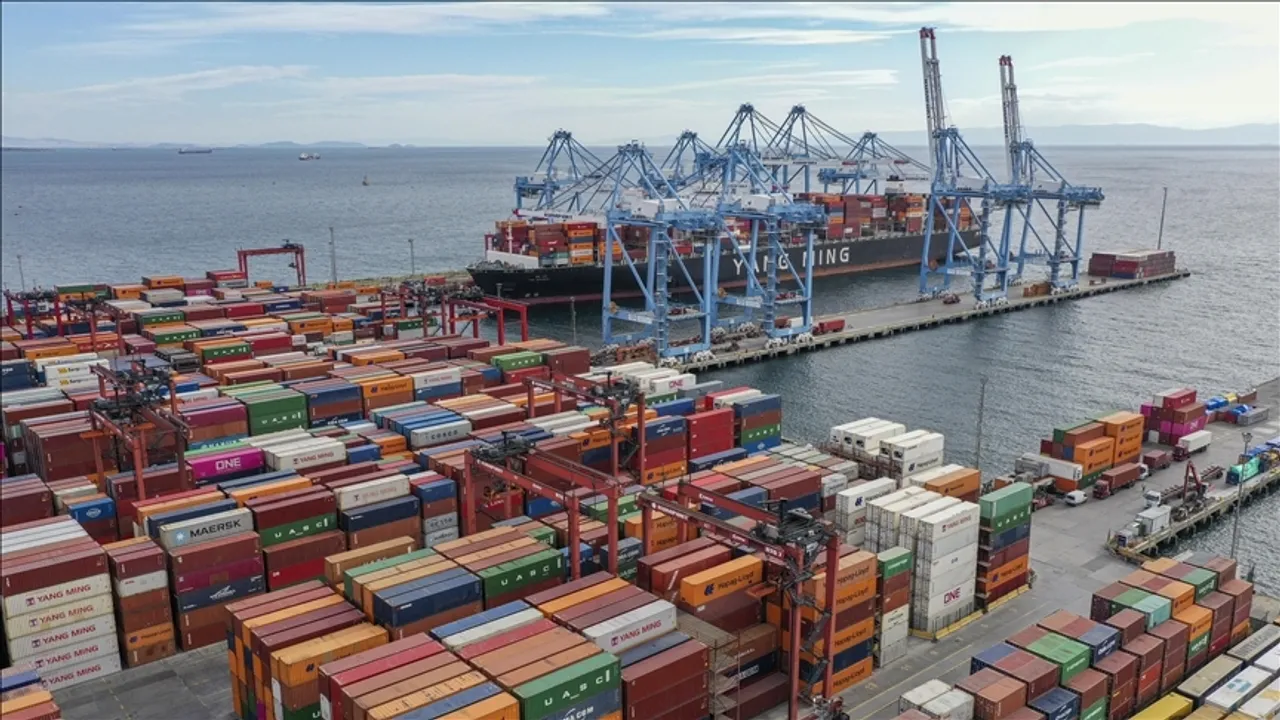
In the first week of January, President Recep Tayyip Erdogan announced a stunning success for the country in 2025 – Türkiye’s exports have crossed record numbers, showcasing the resilience of the economy despite global headwinds.
“We have achieved the highest export figure in the history of our republic,” the Turkish president said at an official event at the Istanbul Congress Centre.
“Despite global uncertainty, wars in our region, rising protectionism and the heavy burden of the February 6 earthquakes, we overcame these tests with honour.”
Official data show that Türkiye’s exports reached $273.4 billion in 2025, up 4.5 per cent year on year, marking the fifth consecutive annual increase since 2021.
December exports alone surged 12.8 per cent to a record $26.4 billion, with the automotive sector leading the export surge with $41.5 billion, followed by chemicals and electronics.
For the president, the figures were proof that Türkiye’s investment-, production- and export-led growth model was delivering results even as the economy deliberately cooled under a disinflation programme.
“Attempts to build equations that exclude Türkiye have failed,” the president told the audience. “It is now understood that no lasting system can be formed without Türkiye.”
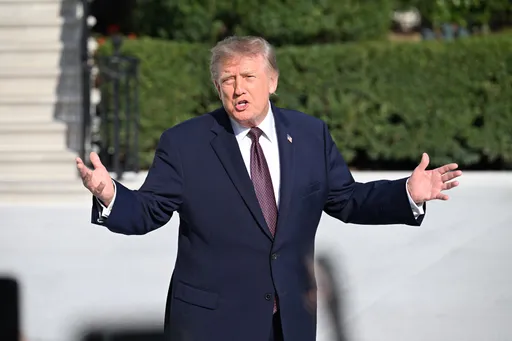
Significantly, the record numbers came in a year when the world economy was thrown into a tailspin by a trade war sparked by US President Donald Trump.
Performance under pressure
Behind the headline numbers lies a more complex story — one of exporters operating under intense domestic and global pressure.
Senior economist Professor Kerem Alkin attributed the export surge to multiple factors.
“One of the main reasons Turkish exporters are breaking records is the pronounced slowdown in the domestic market,” Alkin tells TRT World.
“Across almost all sectors, firms are struggling to sell at home. The disinflation programme is designed to slow demand — and exporters are being pushed, by necessity, to turn outward.”
He notes that this dynamic echoes the post-2001 recovery period, when exporters helped pull Türkiye out of crisis. But he stresses that today’s conditions are far harsher.
“Back then, there were no trade wars, no semiconductor rivalries, no rare-earth conflicts, no regional wars on our borders,” he says.
“Today’s exporters are succeeding in a much more fragmented and hostile global economy.”
Mustafa Gultepe, the President of the Türkiye Exporters Assembly (TIM), aligns with the professor’s analysis.
“2025 was a very difficult year for exporters,” he tells TRT World.
“Labour-intensive sectors in particular are losing competitiveness. High production costs mean we are struggling to hold prices.”
He adds that while Türkiye remains a preferred supplier for European buyers, there is a limit to how much cost pressure exporters can absorb.
“If we are 10 to 15 per cent more expensive, customers may still choose us,” he says. “But beyond that, we risk falling off the buyer’s radar.”
To counter those risks, TIM is calling for expanded employment subsidies, higher minimum-wage support and greater access to long-term, low-cost financing.




“Investment, production, employment and exports must once again become the locomotive of the economy,” he says. “If exporters are supported, we are confident we can reach our 2026 targets.”
Diversification as a survival strategy
Despite these constraints, exporters have expanded aggressively into new markets.
In 2025 alone, Turkish exporters organised trade missions in 76 countries, participated in 401 international fairs and added nearly 13,000 new firms to the export ecosystem.
Eight sectors and 27 provinces posted record annual exports, while shipments to 65 countries reached all-time highs.
Senior economist Alkin sees this geographic diversification as essential.
“Exporters are fighting not to lose long-standing customers while simultaneously pushing into Latin America, Africa and Southeast Asia,” he says.
“Today, Turkish firms are seriously active in more than 200 markets worldwide.”
Beyond goods, services exports have emerged as a critical stabiliser. Tourism, health services, education and logistics are all posting record earnings, helping to contain the current account deficit.
“Service exporters are delivering extraordinary results,” Alkin says. “They are now as important as goods exporters in managing Türkiye’s external balance.”
One structural advantage, economists and exporters agree, is Türkiye’s reputation as a reliable supplier at a time when global supply chains are being re-engineered.
“European firms increasingly prefer sourcing from nearby, dependable partners,” senior economist Alkin says. “Türkiye can deliver high-quality goods quickly and, crucially, without last-minute disruptions.”
That perception, reinforced during the Covid, has positioned Türkiye as what senior economist Alkin calls a “safe harbour economy” — a status that now translates into guaranteed and trusted orders.
Türkiye’s export boom, then, is both a success story. It reflects extraordinary resilience and adaptability, but also highlights the strain exporters face from costs, currency dynamics and global fragmentation.
President Erdogan echoed this sentiment at the TIM Istanbul meeting.
“Those who turn their face toward Ankara will win.”
For Türkiye’s exporters, the message is clear: the world may be closing in, but for now, the outward push continues — record by record.
In today’s economy, global trade has become more fragmented, politicised and unpredictable than ever before.
Yet Turkish exporters have responded by widening their geographic reach, deepening their role in services and capitalising on Türkiye’s growing reputation as a fast, dependable and disruption-free supplier.
The result is a paradoxical success: exports are rising not because constraints have eased, but because resilience, diversification and credibility have become strategic assets.
Turkish exporters have succeeded under geopolitical and geoeconomic strain, proving that trust and reliability can be as decisive as price competitiveness.