 Noureldein Ghanem
Washington, DC — The US military build-up in the southern Caribbean, including the recent arrival of the world's largest aircraft carrier, the USS Gerald R. Ford, may be either an armed incursion of Venezuela or a bluff to pressure Caracas, but it has put Colombia in a tricky spot.
Colombia, which shares a 2,000-km border with Venezuela, recently restored its diplomatic relations with Caracas and hosts over 2.5 million Venezuelan refugees and migrants.
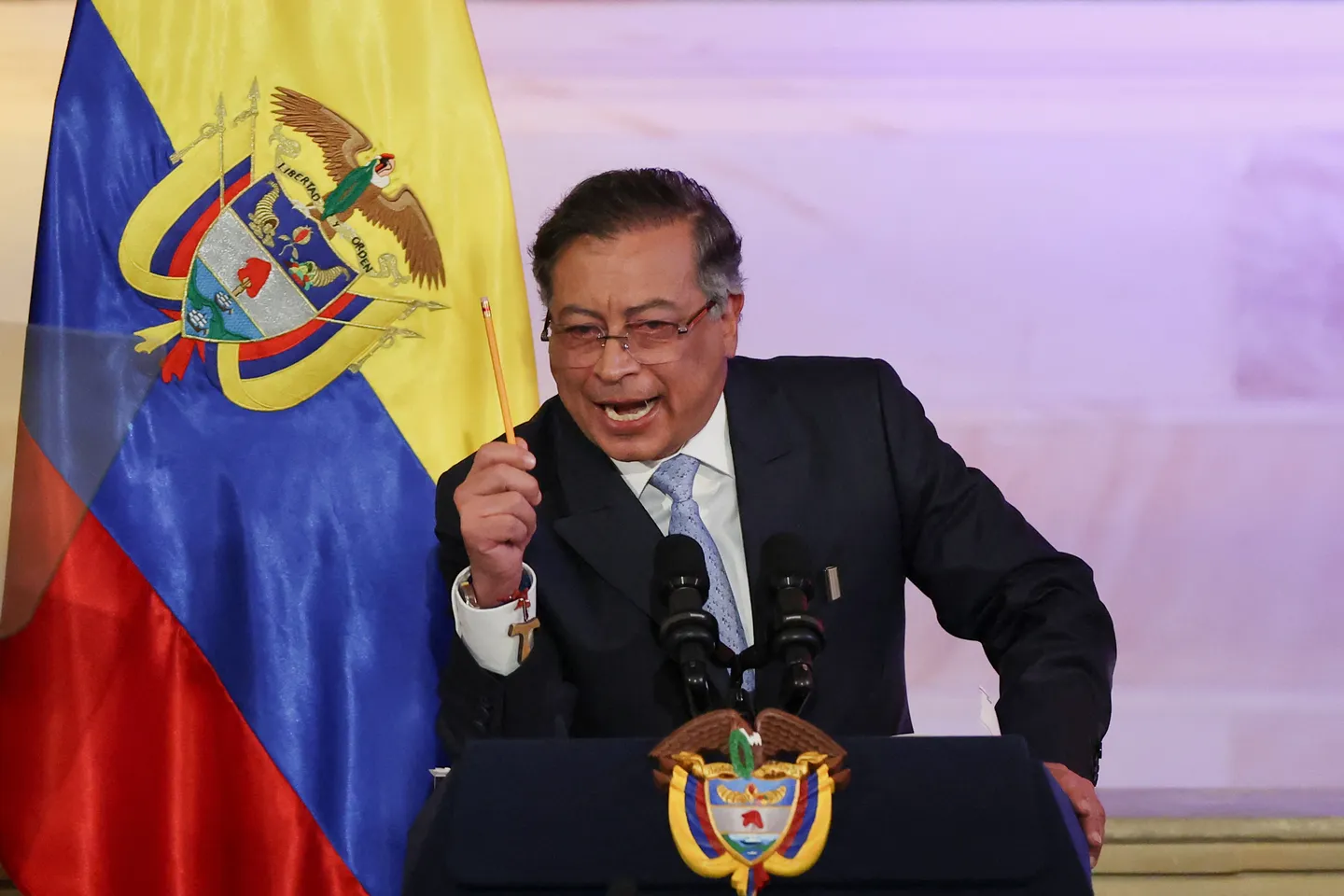
Gustavo Petro, Colombia's first leftist President, who rose to power on a platform of significant social and economic change, aiming to address deep-seated issues of inequality, poverty, and the climate crisis, opposes "a violent dismantling of the Venezuelan state," even as Bogota, historically a close partner of Washington and a "Major Non-NATO Ally," hosts several US military bases.
Observers of Latin America suggest that while the US might require Colombia for any successful military action against Venezuela, it is also exerting considerable effort to build a case against Petro individually.
"What has happened at the end of the Trump administration is really a dispute that's political between two heads of state, Trump and Petro, who has been on the opposite side of arguments about migration policy, about the war in Gaza... and now, of course, the strikes in the Caribbean," Elizabeth Dickinson, interim deputy director for Latin America at the International Crisis Group, tells TRT World.
"[So], what the US policy has been toward Colombia is essentially to sanction Petro personally, directly… putting him on the Clinton list, the OFAC sanctions list, but to send a message clearly that the United States does not have a problem with Colombian institutions, regional authorities, the private sector, etc," she adds.
Dickinson was referring to the Department of the Treasury's Specially Designated Nationals and Blocked Persons List (SDN list), also known as the Clinton list, which is maintained by the Treasury's Office of Foreign Assets Control (OFAC).
Colombia's policy towards US-Venezuela tensions has evolved significantly under President Petro, who took office in 2022. Petro shifted towards re-establishing diplomatic ties with President Nicolas Maduro's government in Venezuela, emphasising dialogue and regional cooperation over confrontation.
Petro in US crosshairs
This stance differs from past Colombian governments that supported US attempts to isolate Maduro, including recognising in 2019 opposition’s Juan Guaida as the country’s president.
In the ongoing US-Venezuela tensions under Trump's second term, Colombia has positioned itself as a mediator, opposing US military escalation.
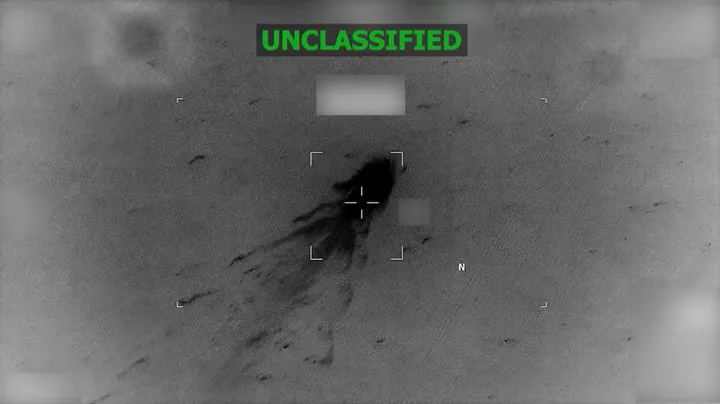
While many Latin American countries, including Brazil, Mexico, Chile, and Nicaragua have criticised the US for strikes on alleged drug boats in the Caribbean, resulting in over 80 deaths, Petro has slammed US military build-ups near Venezuela as disrespectful to Latin America and suspended specific intelligence cooperation with the US over such actions.
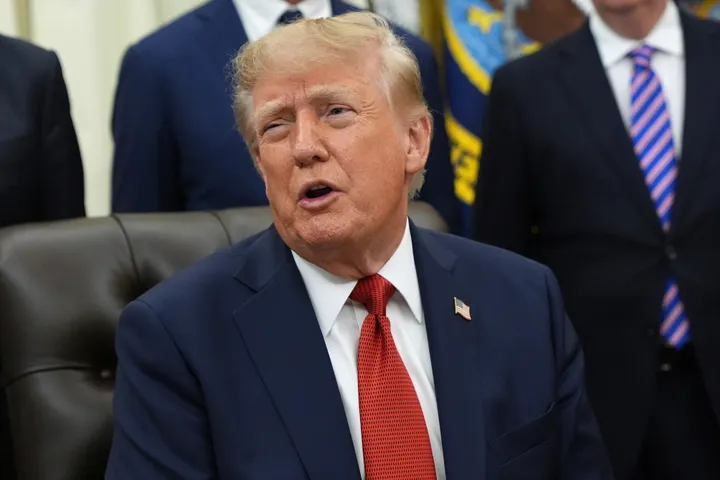
That, in turn, has prompted the US Treasury to sanction Petro and his "support network" while the US President Donald Trump and his Secretary of State Marco Rubio have called him a "lunatic," mirroring their aggressive stance against Venezuela’s President Maduro.
Petro has also proposed multilateral talks to de-escalate US-Venezuela tensions, including the involvement of China, Mexico, Ecuador, Chile, Australia, and the US, potentially hosted in Pearl Harbor, reflecting broader regional unease, echoed by bodies like the Community of Latin American and Caribbean States.
And last week, Petro called for a power-sharing deal between Maduro’s government and opposition as a peaceful way out of the nation’s crisis that he said could "open paths to democracy, without undue pressure."
"I oppose solutions that are not negotiated and that attempt to achieve the victory of one sector through the extermination of the other," the Colombia leader added.
But why has Washington spotlighted Bogota amidst rising tensions with Venezuela, even though Colombia wasn't the only nation opposing the US strikes in the Caribbean?
"Colombia sits at the centre of that operation [against Venezuela]. The United States cannot carry out sustained aggression against Venezuela without the Colombian border, Colombian airspace, and Colombian military cooperation," Jenaro Abraham, a political scientist and professor of Latin American politics at Gonzaga University, tells TRT World.
Abraham suggests the US aims to distance Colombia from its president, a view akin to Dickinson's.
"The sudden easing of tariffs on major Colombian exports signals continued support for the Colombian state, while the simultaneous escalation of targeted sanctions against President Gustavo Petro signals punishment and isolation of the president himself," Abraham adds.


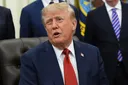
"The intent is not to discipline Colombia — it is to detach Colombia from Petro at the precise moment the United States mobilises against Venezuela."
Disrupting the Colombian economy would be catastrophic to Washington's plans for Venezuela, as Colombia serves as the backbone of its counterinsurgency operations, notes Abraham, adding, the US decided to find this workaround to target President Petro himself instead of Colombia as a whole.
"The US has chosen a workaround: protect the Colombian state and its economic elite while suffocating the head of government," Abraham explains.
Enter 'The Tiger'
Although the US hasn't actively pursued a Petro ouster as it does with Venezuelan President Maduro, the Trump administration's dreams for Colombia could become true in the form of a far-right presidential hopeful — Abelardo de la Espriella.
De la Espriella, who calls himself "El Tigre" ("The Tiger"), is among the three frontrunners to be the country’s next president in the May 2026 election. Petro is constitutionally barred from running for a second term.
"El Tigre" has stated his liking for Argentina’s right-wing President Javier Milei and is in favour of restoring ties with Israel, which were severed by Bogota over Israel’s genocide in Gaza.
De la Espriella has also closely aligned himself with US President Trump. In recent weeks, he stated, "I defend the same values as Trump."
"De la Espriella — a far-right media personality turned political candidate — has built his campaign on open admiration for Trump, promises to militarise the border, and explicit support for US intervention in Venezuela," Abraham notes.
"He has stated repeatedly that Colombia should cooperate fully with Washington's agenda, reverse Petro's peace policies, and 'restore order' in the region through force rather than diplomacy," he adds.
Abraham emphasises that the far-right politician, if voted to power, could convert Colombia "into the operational anchor of US aggression against Venezuela."
"By isolating Petro during the Venezuelan crisis, Washington accelerates the political conditions for a successor who will not question intervention, who will not block troop movements or overflights, and who will not call for peace negotiations when the United States wants war. The Venezuelan crisis is the driver — the isolation of Petro and the elevation of Abelardo De la Espriella are the mechanisms," Abraham adds.
Concerns in broader region
Colombia's opposition to US actions in the Caribbean is notable. Experts say there's regional concern about Washington's renewed military interference in politics.
Brazil's President Luiz Inacio Lula da Silva has rejected the idea of a US ground invasion, stating that political issues should be resolved through dialogue rather than weapons, while defending Latin America as a "zone of peace."
Mexican President Claudia Sheinbaum has reiterated her country’s historical stance against foreign intervention, expressing opposition to invasions and favouring peaceful negotiations between the US and Venezuela.
President Gabriel Boric of Chile has also voiced concerns over US military deployments in the Caribbean, rejecting any armed actions that threaten regional stability and advocating for Latin America to remain a peaceful region.
In contrast, right-leaning governments such as Argentina and El Salvador have expressed support for US actions.
"The US pressure in the Caribbean against Venezuela has raised a lot of concern, not just in Colombia, but throughout the broader region, about the return of direct US military interference in regional politics," Dickinson of the Crisis Group says.
"Whether you're on the right or the left, whether you align with Trump's policies or not, that is something that I think many Latin American countries are quite allergic to, given the long-standing history of US interference in regional policy," she adds.