Israeli hospitals shift operations underground amid fears of Iranian retaliation: report
Hospitals nationwide have suspended elective treatments, discharged non-critical patients, and moved essential departments to protected spaces.
Israeli hospitals shift operations underground amid fears of Iranian retaliation: report
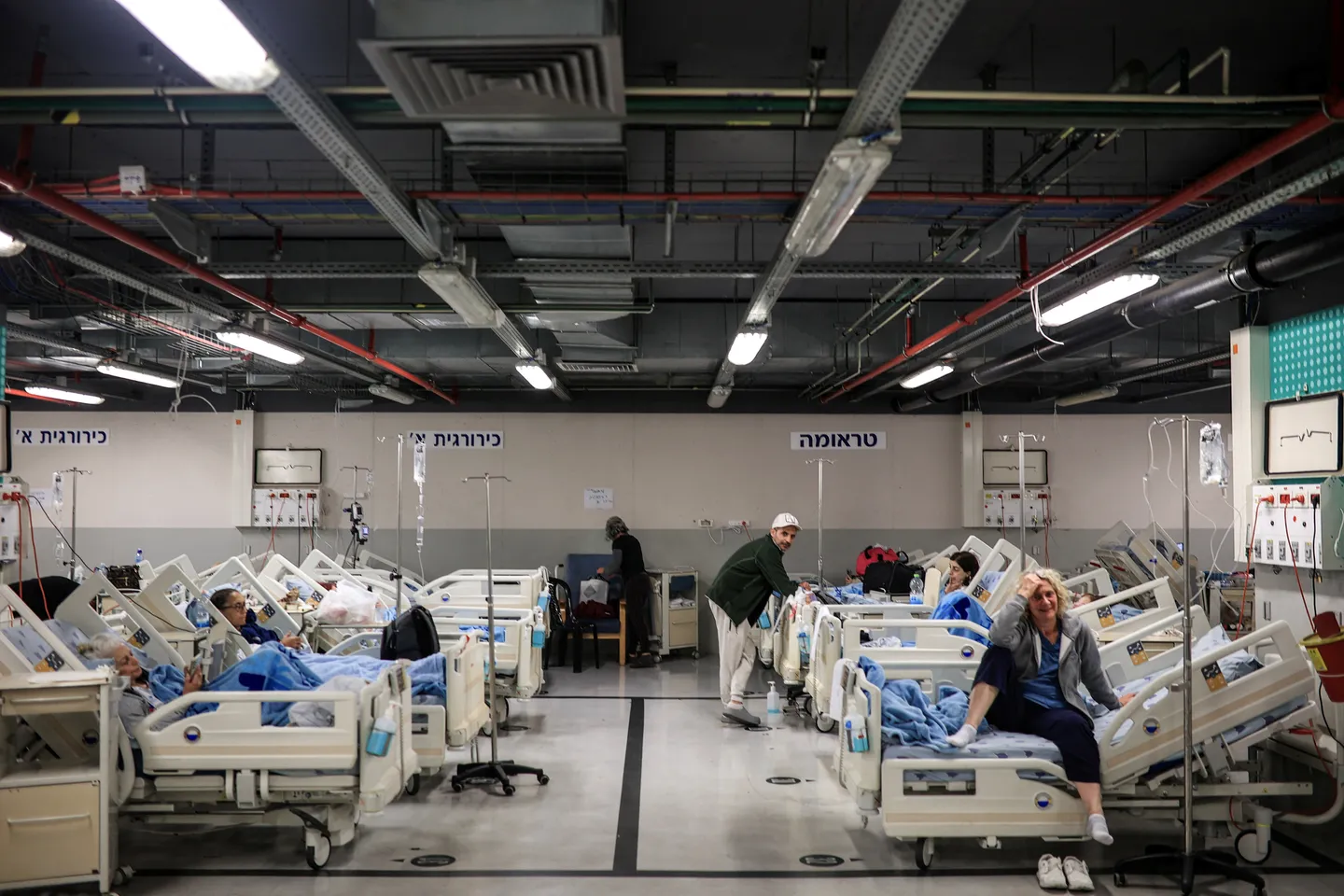
Ichilov Hospital staff and patients shelter in an underground parking area in Tel Aviv amid fears of an Iranian response to Israeli strikes.
June 13, 2025

Hospitals across Israel have entered emergency mode and begun relocating critical operations to fortified underground facilities, as the country braces for a potential large-scale Iranian response to Tel Aviv’s deadly air strikes on Friday morning, Haaretz has reported.

The nationwide shift includes the cancellation of non-essential procedures, early discharge of stable patients, and the activation of secure underground departments, the Israeli newspaper said.

According to the report, hospitals in northern Israel—including Emek Medical Center in Afula, Bnai Zion in Haifa, Poriya in Tiberias, and Galilee Medical Center in Nahariya—initiated emergency protocols early on Friday, transferring key units to fortified spaces.

In central Israel, Tel Aviv’s Ichilov Hospital cleared its Sami Ofer parking area to begin operating its underground emergency facility as part of a pre-established emergency plan.

Emergency status

Israel has declared a special emergency status across the civilian front, citing concerns over a possible imminent missile and drone assault from Iran.

Citizens were instructed to remain near bomb shelters, while schools were closed nationwide and Israeli airspace was temporarily shut down.
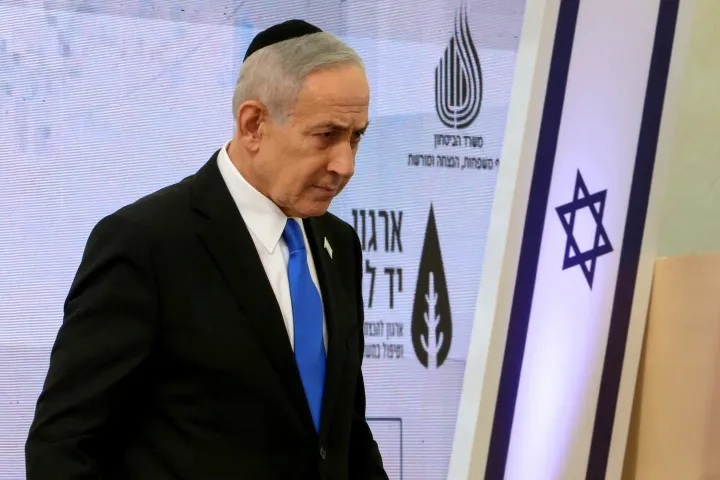
Air raid sirens sounded across the country as Defence Minister Israel Katz confirmed the strikes and warned that a retaliatory attack was likely in the immediate term.

He declared a special state of emergency nationwide.

The Israeli air strikes, launched early on Friday, reportedly targeted Iranian military and nuclear infrastructure, setting off explosions in Tehran.

Iranian state media claimed the attack killed the commander of the Revolutionary Guard Corps and several top nuclear scientists.

The strikes mark a serious escalation in the long-standing shadow war between Israel and Iran, threatening to push the conflict into a broader regional confrontation.
RelatedTRT Global - What to know about Israel’s massive strikes on Iran

SOURCE:TRT World & Agencies
Explore
Iran executes man accused of spying for Israel and another over Daesh link
Iran’s Defence Supreme Council signals a wartime shift in power
Iran-Israel tensions may spark wider war, warns Turkish intelligence academy
Iran warns US will be held accountable for attacks on nuclear sites in future talks
Israel vows to stop Iran from rebuilding nuclear programme, threatens renewed conflict
Iran says it won’t abandon uranium enrichment, stresses nuclear programme is peaceful
Ideology over insight: How strategic blindness left Iran exposed
Satellite photos suggest Iran attack on Qatar air base hit geodesic dome used for US communications
Iran says nuclear cooperation depends on IAEA ending 'double standards'
Saudi crown prince meets Iran’s foreign minister in first visit since the 12-day war with Israel
US has scheduled Iran talks after strikes and ceasefire — Trump
Israel attempted to assassinate Iran president: Tehran
Iranian missiles directly hit 5 Israeli military bases in12-day war — radar data
Iran's Khamenei makes first public appearance since clash with Israel
Iran reopens most airports and airspace after ceasefire with Israel
After suspending cooperation with IAEA, what’s next for Iran and its nuclear programme?
Pentagon says US air strikes 'degraded' Iran’s nuclear programme by up to two years
A timeline of Iran's thorny relationship with the IAEA
Iran’s president orders country to suspend cooperation with UN nuclear watchdog IAEA
To be (nuclear) or not to be: Iran’s NPT dilemma after US strikes