 Yousra Samir Imran
Prime Minister Andy Burnham made several promises to Britain at this year’s Labour Party conference in Liverpool earlier this month. It was the first time he addressed the annual conference as Prime Minister, a role he has held since late July 2026.
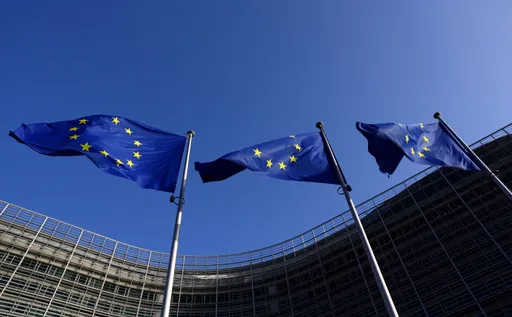
Among those pledges were a new National Care Service to provide free care for the elderly, the nationalisation of water and energy, affordable housing, a fairer vote in elections, and mending trade relations with the EU post-Brexit.
A ‘new direction’ for Britain, Burnham called it, drawing ‘a line on a decade of division.’ However, just how he plans to heal Britain’s widening chasm of racial division, he did not say.
After a depressing decade of Brexit, COVID-19 and a succession of prime ministers, six of whom resigned before completing their terms, it is understandable that Britons are feeling optimistic.
When it comes to Burnham’s promises of a better economy and improved healthcare and social welfare, I am hopeful too.
But we cannot ignore the elephant in the room: right now, as a Muslim and person of colour, Britain does not feel like a particularly welcoming place.
It was therefore disappointing that Burnham did not explain how he intends to tackle rising anti-Muslim hatred, xenophobia and far-right racism in his first conference speech as Prime Minister.
In his speech, Burnham referenced his temporary break from politics in 2017, prompted by his frustration over class and regional inequalities.
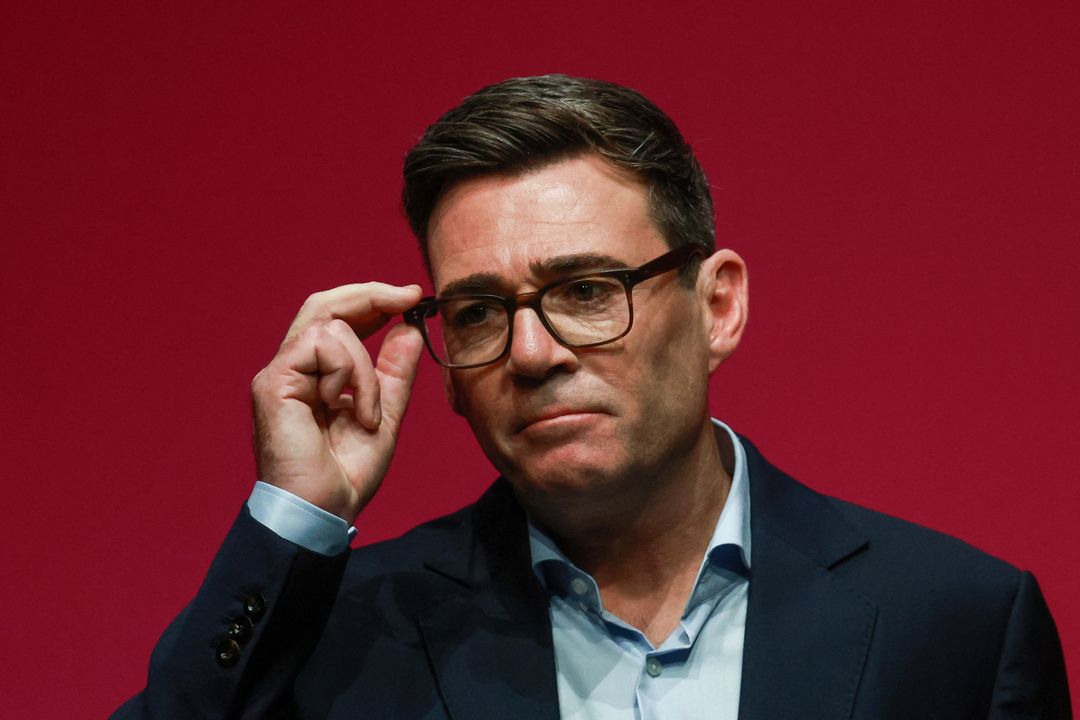
While he rightly addressed those inequalities, his speech fell short by failing to acknowledge the discrimination faced by Muslim communities and other ethnic and religious minorities, or explain how his government intends to tackle it.
As Burnham delivered his speech, anti-Muslim hatred, attacks on immigrants and attacks on mosques continued to fuel fear across Britain.
The far-right's argument that such attacks are a consequence of people not being listened to can never justify violence.
Climate of fear
Over the past year, there has been, on average, one attack on a mosque every five days in Britain.
Exclusive data shared by the British Muslim Trust with ITV last month shows that cases involving arson, violence and premeditated mass-casualty plots against mosques have risen from 3.7 percent to 23.5 percent over the past year.
Manchester, where Burnham was recently mayor, was described by ITV as an ‘Islamophobia hotspot’, with local Muslim residents telling the broadcaster that they feel like ‘moving targets’.
Other ethnic and religious minorities have also faced threats and violence.
In September, Greater Manchester police arrested two men suspected of planning an attack targeting a religious community in Manchester, a year after the fatal attack on Heaton Park Synagogue in the same area.
Last month, far-right anti-immigration protesters blocked roads and intimidated people along Britain's coast, some wearing black balaclavas, in an effort to prevent asylum seekers from being processed.
One protester even slashed a boat used for emergency response in the English Channel. Despite police restrictions and a ban on balaclavas, protesters returned to Dover, the country's main port, last Saturday.
And yet, against this backdrop of fear, intimidation and violence, Burnham's speech offered no clear strategy to confront anti-Muslim hatred and the wider problem of xenophobia.




The country's prosperity cannot be measured by economics alone. There can be no prosperous Britain while it is a xenophobic Britain.
Muslim organisations in Britain say they are hopeful that their communities will be better listened to following Burnham's announcement of a devolution plan. The proposal would decentralise power, giving local leaders greater authority to address problems within their communities.
This is a potentially welcome development, particularly for communities that have long felt overlooked by national policymakers.
However, the benefits for British Muslims would largely be indirect. Devolution alone does not constitute a concrete government strategy to combat anti-Muslim hatred and racism.
The government did take some concrete steps to address anti-Muslim hatred.
It has adopted a non-statutory definition of anti-Muslim hostility, introduced a Faith Security Training Scheme and committed up to £4 million to programmes tackling anti-Muslim hatred.
It has also made up to £40 million available through the Protective Security for Mosques Scheme for 2026–27, funding measures including security personnel, CCTV and perimeter protection.
These measures are welcome, particularly at a time when Muslim communities face growing threats.
But their effectiveness will depend on implementation and whether Muslims feel safer in their everyday lives.
The government has also committed to appointing a Special Representative on anti-Muslim hostility, although the position remained unfilled six months after the announcement.
I can think of plenty of prominent Muslims with long track records in community engagement and backgrounds in policymaking and politics who would suit the role.
According to British Muslim news outlet Hyphen, government insiders say the recruitment process has been delayed. International human rights organisations such as Amnesty International have warned that Islamophobic attacks in Britain are reaching ‘emergency levels’.
The government's failure to fill the post raises serious questions about how urgently it is treating the problem.
A safe Britain for everyone
If part of Burnham's political strategy is to win back Labour's Muslim vote, a possibility given the visibly Muslim female candidate the party has put forward for this week's London by-election, then British Muslims like myself will be watching closely.
We will be looking for concrete measures, particularly funding to improve security at mosques, the adoption of a robust definition of anti-Muslim hostility and meaningful action against far-right racism.
As Britons, our concerns go beyond the rising cost of living.
We also want to live in a country where we feel safe, where we are not treated as moving targets because we wear a hijab, a turban or a beard, or because of our ethnic or religious identity.
Burnham's vision of a ‘Britain for everyone’ must include a concrete strategy to make the country safe for everyone, regardless of ethnicity or creed.
That is what we needed to hear from our new Prime Minister at last week's Labour Party conference.