 Zeynep Conkar
Israel’s genocidal war in Gaza and other occupied territories is the outcome of a century-old political project built on colonial and racial foundations to erase the very idea of Palestine, experts said at the Gaza Tribunal on Friday.
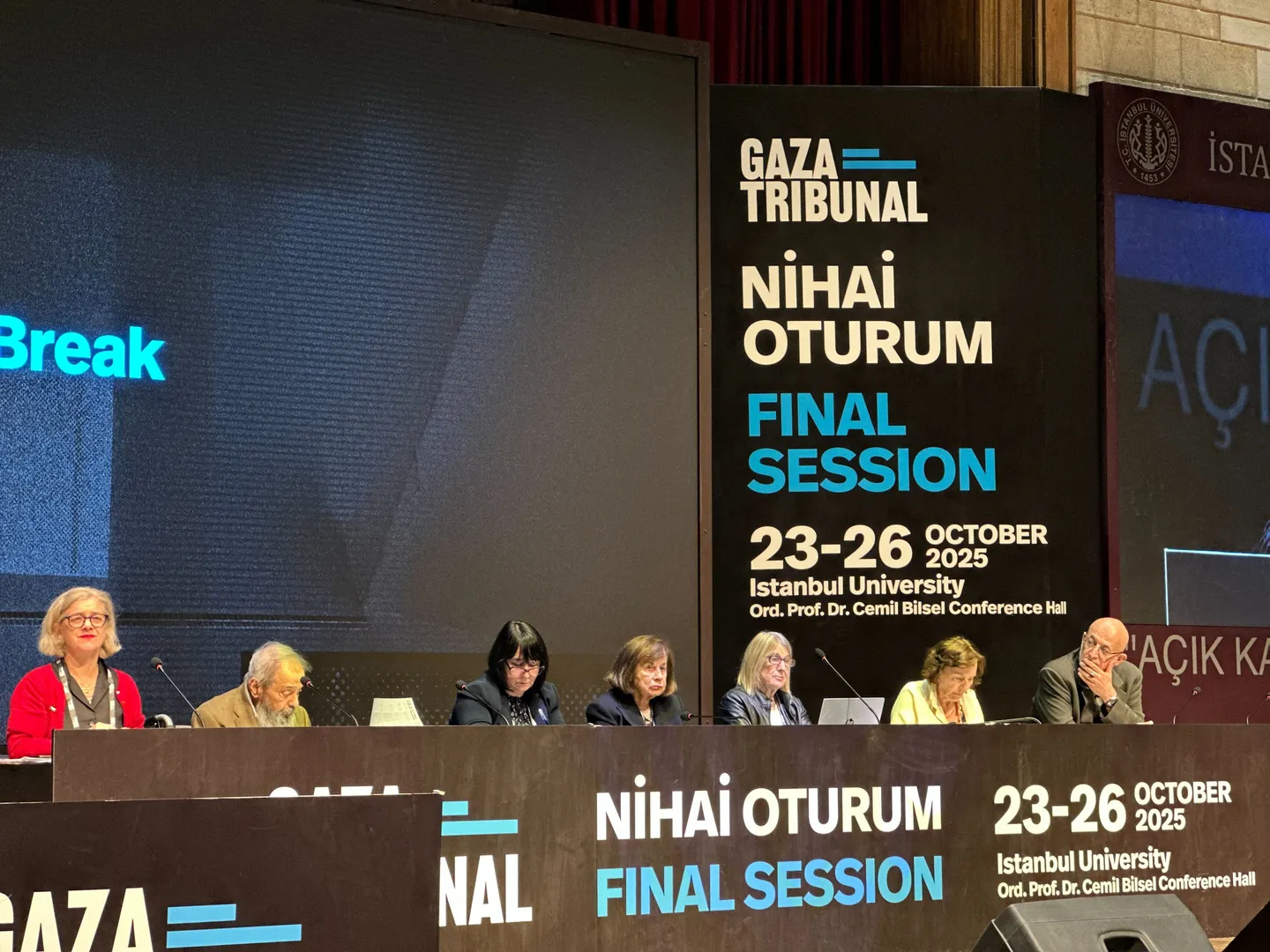
The Gaza Tribunal, an independent people’s tribunal dedicated to ending genocide in Gaza and advancing the Palestinian people’s right to self-determination, is holding a four-day session at Istanbul University.
A panel titled ‘Hearings: Root Causes’ analysed the ideological and structural forces that experts said made the genocide in Gaza possible.
The people’s tribunal, chaired by former UN Special Rapporteur Richard Falk and attended by jurists, scholars and survivors, is laying out a moral and historical case that panellists argue international institutions have long neglected.
TRT World is at the Tribunal to report from the scene.
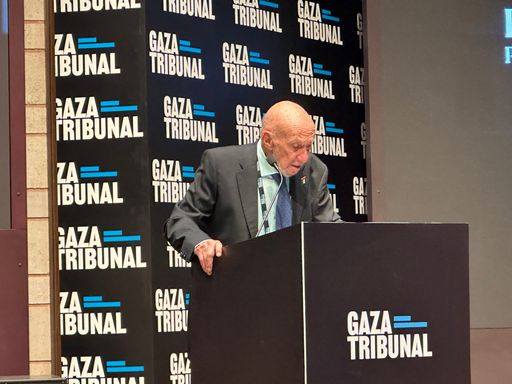
Two experts – Lana Tatour and Jeff Halper – spoke about what they called the dual pillars of that project: Zionist racial ideology and settler-colonial structure.
Among the other speakers were historian Avi Shlaim, legal scholar Rania Muhareb, and historian Ussama Makdisi, each offering perspectives on the deeper roots of the ongoing crisis.
Zionism as racial ideology
According to Tatour, a lecturer in development at the School of Social Sciences, UNSW Sydney, understanding the link between Zionism and racial domination is essential to addressing the root causes of the ongoing violence.
“There is recognition of genocide, and there are accounts of the dehumanisation of Palestinians as a core element,” Tatour told the hall.
“Yet they do not address Zionism as a form of racism, nor do they name Zionism as the racial ideology that drives the colonisation of Palestine and the genocide in Gaza. This omission, I believe, is something the jury should take note of and rectify.”
Tatour traced the continuity of violence to ever-present racialised narratives.
She cited public statements by Israeli officials, describing Palestinians as “human animals,” “children of darkness,” or calling for a “second Nakba,” and said such rhetoric is not aberrant but stems from a century-long political project that frames Palestinians as inferior.
“The partition plan, the British mandate, the mass expulsions of 1948, the occupation after 1967, the siege of Gaza; they all rely on treating Palestinians as less civilised, as an inferior race,” Tatour said.
“Racialisation and racist classification are core to the Zionist movement’s ideology and practice.”
Tatour also foregrounded the role of Western powers, media and corporations in enabling the campaign.
“The annihilation of Gaza has been justified, supported and facilitated by Western powers and Western media.”

“It relies on anti-Arab, anti-Muslim and anti-Palestinian racism and on the attribution of more value to Jewish life while disregarding Palestinian life,” Tatour explained.
Settler colonialism as the system
Jeff Halper, an Israeli anthropologist and director of the Israeli Committee Against House Demolitions, pressed the Tribunal to shift the lens from discrete crimes to the political system that spawns them.
“The crimes of which Israel is accused, from plausible genocide to war crimes and crimes against humanity, cannot be addressed only as isolated offences,” Halper told the Tribunal.
“For justice to be advanced and to ensure these crimes never happen again, the political and ideological system from which they emerge must also be dismantled.”
Halper put settler colonialism at the centre of his analysis.
“Settlers displace or eliminate the indigenous population, take control of its lands and replace the native population with a settler one. In Zionism, this process is known as Judaisation.”
He traced a continuous pattern from pre-1948 planning for transfer and expulsion through the mass displacements of 1948 and 1967 to present-day policies that concentrate Palestinians into enclaves.
“Since 1947, Israel has seized territory, and today some 90 percent of Palestinians in historic Palestine are confined to roughly 12 percent of the land, in seventy disconnected enclaves,” Halper said.
“That loss of land and attempts to erase Palestinian presence compel people to resist. Where resistance exists, pacification becomes the central project, and pacification, when total, shades into genocide.”
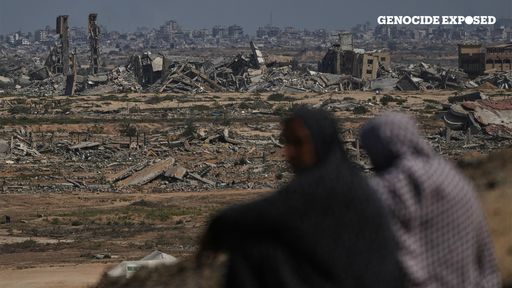
Halper also urged a legal rethink: “Colonialism is not easily adjudicated under existing international law the way occupation or specific war crimes are. The Tribunal must therefore hold the Zionist settler-colonial system itself to account, because it is the source of the crimes you are investigating.”
He called for expanding legal categories to capture cultural and structural forms of destruction, arguing that demolitions of homes, schools, libraries and cultural institutions amount to facets of genocide that current conventions fail to fully encompass.
As the Tribunal continues, jurors will weigh testimonies that aim to move beyond incident lists to expose an ideological and systemic blueprint, in hopes of producing a historical record and a moral judgment.
On Saturday, the jury will deliver its final verdict, a document supporters say could shift how the world understands responsibility and impunity in Palestine.