 Murat Sofuoglu
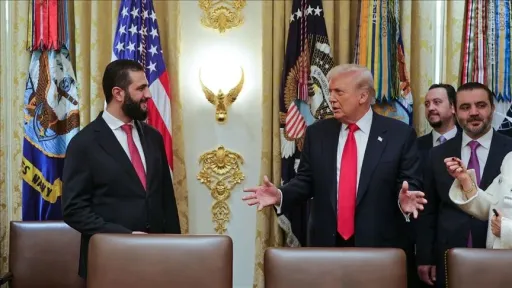
US President Donald Trump has threatened Nigeria with potential US intervention to protect the country’s Christians from attacks linked to terror groups such as Boko Haram, ISWAP (Daesh West Africa Province), and Al Qaeda-affiliated groups.
Trump’s threats worried not only Nigeria, a West African nation with the continent’s largest population, which has long allied with Washington to combat terror groups, but also other countries in a volatile region that has faced foreign interventions and political instability for decades.
“If we attack, it will be fast, vicious, and sweet, just like the terrorist thugs attack our CHERISHED Christians,” wrote Trump on his Truth Social, using his classic bold threatening language.
In line with his claim, Trump quickly designated Nigeria as a ‘Country of Particular Concern’, which could lead to sanctions against the country.
The Nigerian leadership denies that Christians specifically suffer from attacks, and analysts say that the country’s Muslims have been targeted by Boko Haram and ISWAP more often than non-Muslims.
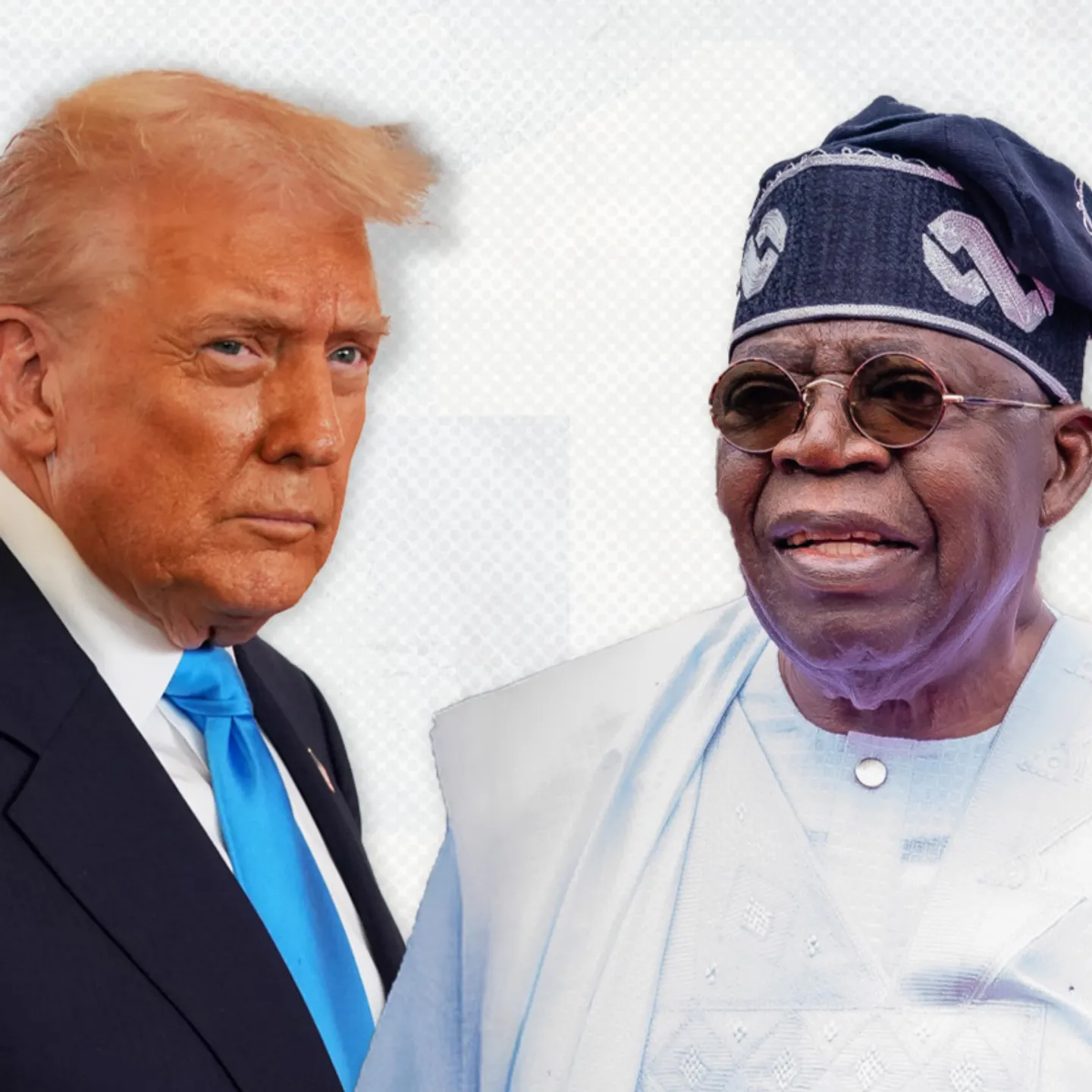
“The characterisation of Nigeria as religiously intolerant does not reflect our national reality, nor does it take into consideration the consistent and sincere efforts of the government to safeguard freedom of religion and beliefs for all Nigerians,” wrote Nigerian President Bola Tinubu, a Muslim, on X, in reaction to Trump’s accusation against the country.
While the Nigerian state has welcomed the US assistance against insurgent groups, it has also categorically demanded that the Trump administration respect the country’s sovereignty and territorial integrity.
Intimidating an ally
Experts warn that US intervention in West Africa could open a Pandora’s Box across a volatile region, where recent military coups with anti-colonialist motives from Guinea to Burkina Faso, Mali, and most recently Niger, have established a new geopolitical reality against ECOWAS (the Economic Community of West African States).

ECOWAS is a union of largely pro-Western states, in which Nigeria has played a critical role from the West African group’s founding in 1975 to the present, hosting its headquarters in its capital, Abuja.
"Attacking Nigeria will have serious repercussions on the American agenda in West Africa,” Abdi Samatar, a professor of geography at the University of Minnesota, tells TRT World.
“There is no specific area where the so-called anti-Christian terrorists are located. Nigerian gangs are equal opportunity thugs: both Muslims and Christians are similarly targeted,” he says.
Almost half of the Nigerian population is Muslim, while around 45 percent are Christian, with at least 300 different ethnic groups residing across the country’s various regions.
These ethnic groups do not necessarily share the same faith; for instance, the Yoruba population is divided almost equally between Islam and Christianity, with followers of both religions living side by side in the north.
The pressure on the Nigerian government to address its security challenges is justified, but framing the situation as a “Christian genocide” is misleading and risks deepening existing divisions, Darren Kew, Dean of the Joan B. Kroc School of Peace Studies at the University of San Diego, tells TRT World.
"It deepens religious divides and implies that the US is siding against Muslims rather than targeting specific insurgencies," he says, echoing experts who warn that a US intervention could destabilise Nigeria’s social fabric and the region’s fragile politics.
But Yunus Turhan, an expert on sub-Saharan Africa, says a direct American military intervention in Nigeria is unlikely.
However, he cautions that if such an intervention were to occur, it could destabilise the entire West African region, which overlaps with the Sahel, a vast area stretching from Eritrea to Senegal and already plagued by armed groups and ethnic conflicts.
“It's important to remember that Nigeria is a key partner in US regional security initiatives. Any action that disrupts intelligence sharing and operational coordination would restrict the Nigerian government's military capabilities against armed groups,” Turhan tells TRT World.
Nigeria, one of Africa’s largest economies, with its port city of Lagos serving as a key hub for goods across the region, maintains close ties not only with Western nations but also with China, Russia, and India.
This means any US intervention would likely draw the attention of other non-Western powers, potentially disrupting the regional balance.
“With a population exceeding 220 million, any military intervention in Nigeria could trigger mass displacement and migration, resulting in not only military but also significant economic and social consequences,” Gokhan Kavak, an expert on West Africa region, tells TRT World.
‘A power vacuum’
In recent years, Nigeria’s regional dominance has been challenged by the Alliance of Sahel States (AES), formed in 2023 by Mali, Niger, and Burkina Faso — three West African nations with anti-Western governments.
According to Turhan, while the AES has already altered the region’s geostrategic balance, any unilateral US move against Nigeria could push other African states to align with the alliance, undermining Abuja’s economic, political, and military influence through ECOWAS.
Even more concerning, Turhan warns that a potential power vacuum within Nigeria’s military could expand the reach of terror groups such as Daesh in the Greater Sahara (ISGS) and Al Qaeda–linked JNIM (Jama’at Nusrat al-Islam wal-Muslimin), both active across the Sahel and West Africa.
Similarly, Kavak cautions that a US intervention could inadvertently enable groups like Boko Haram, ISWAP, and various criminal gangs already operating in northern Nigeria to expand southward, destabilising neighbouring countries such as Benin, Togo, and Cameroon.
“In this sense, a US intervention justified under the pretext of ‘protecting Christians’ could easily escalate into a broader regional crisis,” Kavak tells TRT World.