 Kazim Alam
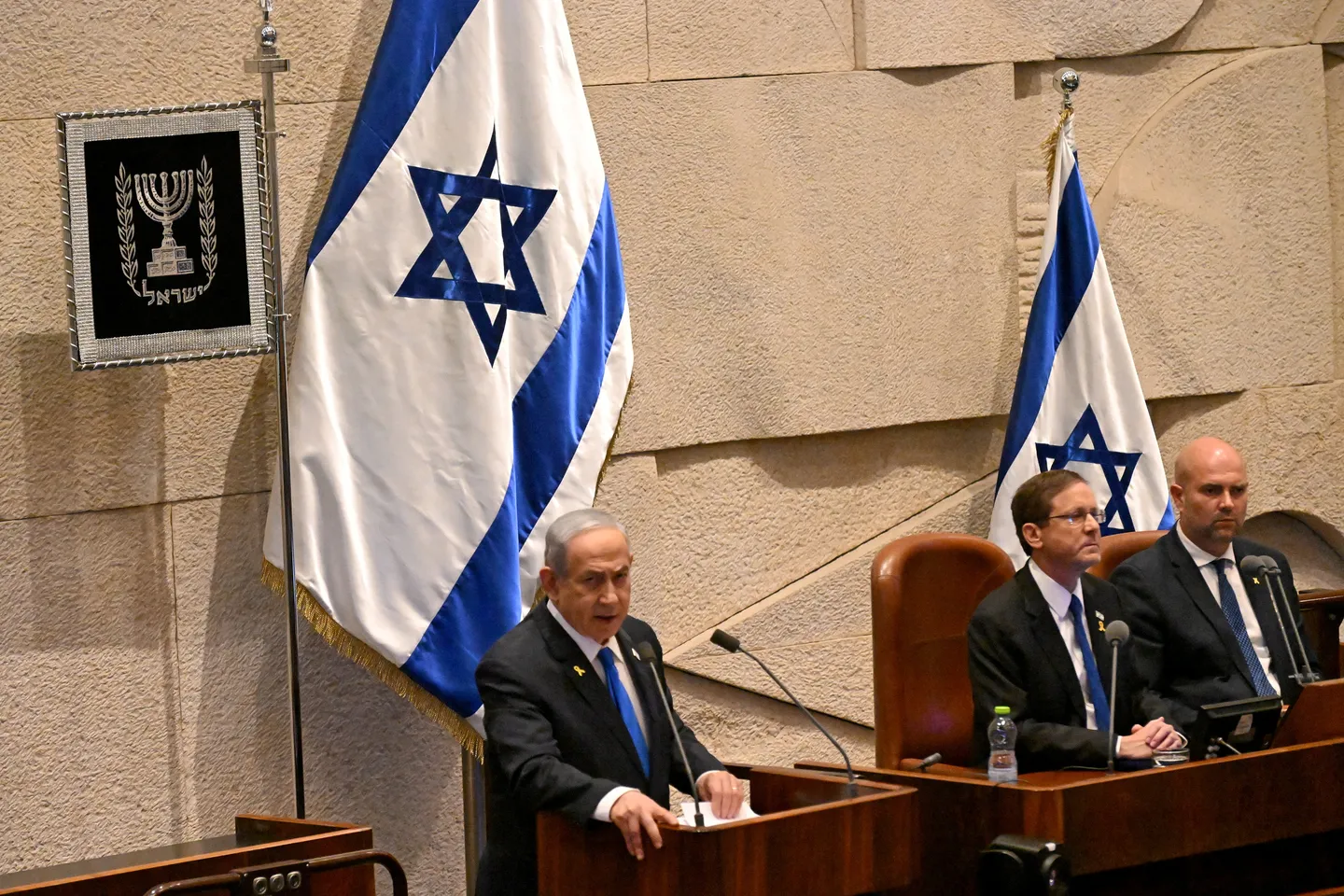
The Israeli parliament is in advanced stages of passing a bill that would reinstate the death penalty for “terrorists” convicted of murdering Israeli citizens.
Analysts say the proposed legislation is biased: the law is explicitly drafted to target Palestinians in Israel as well as throughout the occupied territories, while shielding ‘Jewish’ Israeli perpetrators from the death penalty.
Championed by far-right National Security Minister Itamar Ben-Gvir among others, the proposed law mandates capital punishment for acts committed with the goal of “harming the state of Israel and the national revival of the Jewish people in its land”.
The law is carefully worded to carve out a religious and ethnic exemption.
It ensures that Jewish settlers or soldiers who kill Palestinians – often under the guise of “self-defence” in the occupied territories – face no consequences.
As Jewish terrorists cannot be accused of harming the “national revival of the Jewish people”, the death penalty will apparently come into play only when Palestinian citizens of Israel go on trial for alleged acts of terrorism.
“The wording seems to exclude Jewish Israeli perpetrators, particularly settlers,” Gokhan Batu, a Levant studies analyst at the Ankara-based Centre for Middle Eastern Studies, tells TRT World.
“I’m not convinced this approach will strengthen Israel’s security or deter future attackers… If anything, it might fuel further tensions,” he says.
Israel abolished capital punishment for ordinary murder in 1954, retaining it only for exceptional offences, such as Holocaust- and genocide-related crimes, treason, and certain violations under emergency regulations inherited from the British Mandate.
There has been only one judicial execution in Israel’s history, that of Nazi war criminal Adolf Eichmann in 1962, after he was captured in Argentina.
Batu says the national “restraint” has been deliberate. Israel’s security establishment believes that executions would offer no real deterrent effect and might instead intensify cycles of violence, he says.
He refers to the 2016 case of Sergeant Elor Azaria. In Hebron, Azaria shot an already-neutralised Palestinian, 21-year-old Abdel Fattah al Sharif, in the head while he lay motionless on the ground.
The execution-style killing was captured on video.
“Despite clear evidence, he was convicted of manslaughter rather than murder and sentenced to just 18 months in prison, of which he served only nine months before receiving early release,” Batu says.
“His case revealed a profound moral and disciplinary crisis within the Israeli army and society,” says Batu, who was living in Israel at the time.
Under the proposed law, Azaria’s act would never trigger the death penalty. The intent clause – harming the national revival of the Jewish people – would not apply in this case. Sharif, the victim, was Palestinian.
Terrorism versus resistance
Nasir Qadri, an Istanbul-based legal scholar and international-law practitioner, calls the wording of the proposed law a legal sleight of hand.
“The proposed bill’s formulation of terrorism… constructs a legally protected class of perpetrators engaged in an enterprise prohibited under international humanitarian law,” he tells TRT World.
“By designating occupation forces and settlers as the subjects of protection, rather than civilians, the statute redefines ‘terrorism’ to criminalise resistance and to immunise colonial domination,” he says.
Qadri refers to settler rampages after October 7, 2023, to point out the uneven application of existing laws in Israel.
“During attacks in and around towns such as Huwara and Qusra, settler mobs burned homes and killed Palestinians amid army presence. Prosecutions did not proceed under terrorism provisions,” he says.
Similarly, armed settlers killed Palestinians in May 2024, while the area was declared a ‘closed zone’. Charges, when brought at all, were framed as public-order or property offences, not terrorism, he adds.





In contrast, a Palestinian who throws a stone at a soldier can and is charged under military orders that can now potentially carry the death penalty, Qadri says.
This different treatment violates the provisions of the International Covenant on Civil and Political Rights – a multilateral treaty that commits nations to respect the civil and political rights of individuals – about the equality before the law and a fair and impartial tribunal, he says.
Discriminatory application of the death penalty also violates global human rights treaties that prohibit “capital punishment on racial or national grounds”, he adds.
The bill’s architecture rests on Israel’s two-tier legal system: civilian courts for Jewish citizens, military tribunals for Palestinians.
“This configuration violates the Geneva Conventions 64–78, which obligate an occupying power to administer justice impartially,” Qadri says.
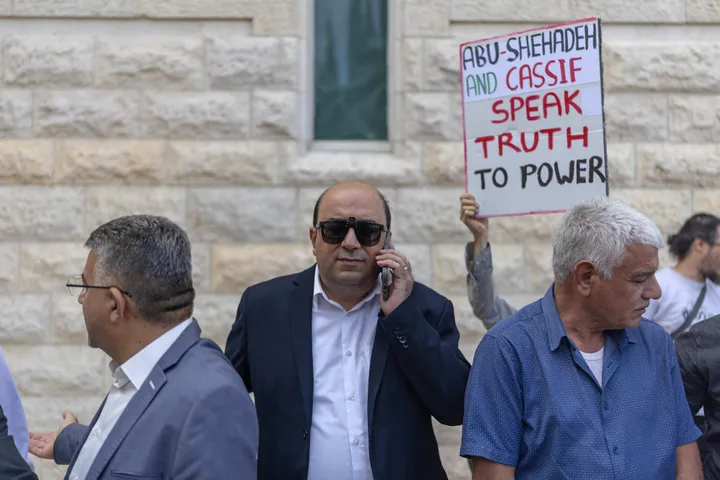
Yair Dvir, the spokesperson for B’Tselem, the Israeli human-rights group, is highly critical of the legislative move.
“This law, which was written explicitly so that it would apply only to Palestinians, joins long-standing legislation and policies of the Israeli regime that impose apartheid across the territory from the Jordan River to the sea,” he tells TRT World.
For years, Israel has maintained “a facade of democracy and compliance with international law”, Dvir says.
But under the current government, those masks appear to have been removed, he says.
The enactment of apartheid laws – whose sole purpose is to “maintain Jewish supremacy” and “continue the repression and control of Palestinians” – is becoming a “declared policy”, he says.
‘Judicially sanctioned’ killings
The human cost of racially motivated laws in Israel falls heaviest on Palestinian youth.
“The foreseeable social effect is deepened grievance among Palestinian youth, who already experience occupation as a total closure of civic space,” Qadri says.
“UN trend reporting shows that escalatory punitive practices correlate with heightened cycles of confrontation rather than durable de-escalation,” he adds.
In an occupation where “punitive death signals the foreclosure of lawful avenues of redress”, the capital punishment bill risks transforming a political conflict into a juridically sanctioned elimination, he says.
Reports say Israel is also holding up to 300 Palestinians from Gaza on suspicion that they participated in the October 7, 2023, incursion. They languish in criminal detention without any trial, even though Israel says it plans to prosecute them.
Overall, about 6,000 people are currently facing indefinite imprisonment without trial as Israel classifies them as “unlawful combatants”.
“Legality here functions as theatre, converting violence into ordinance and discrimination into jurisprudence. Far from deterring terrorism, the bill institutionalises terror as policy,” Qadri adds.
The debate over the proposed law is unfolding under the shadow of recent revelations from the Sde Teiman military detention camp, where reports of the rape of Palestinian detainees have sparked outrage.
Batu says the case of Yifat-Tomer Yerushalmi, the Israeli military's ex-top lawyer, arrested for leaking the video of Palestinian detainees being raped by Israeli soldiers, raises doubts about whether the courts can impartially judge Palestinians in upcoming trials.
“These developments reinforce the perception that accountability is applied in Israel unequally, along ethnic and political lines,” he says.