 Abhishek G Bhaya
Serhiy Kuznetsov, the Ukrainian national accused of involvement in the 2022 Nord Stream pipeline explosions, is set to be extradited from Italy to Germany to face charges of “anti-constitutional sabotage” after a ruling by Italy’s top appeals court last week.
But his lawyer, Nicola Canestrini, says the responsibility for the suspected operation may lie far higher than the man now facing prosecution — and that Ukrainian President Volodymyr Zelenskyy or his military commanders must publicly acknowledge any orders they may have given to carry out the suspected sabotage.
In an exclusive interview with TRT World, Canestrini argued that Kuznetsov’s case has evolved into a politically charged test of how Europe navigates the blurred lines between wartime actions and peacetime justice.
He warned that the proceedings risk placing frontline Ukrainian officers in the dock for decisions made “under military orders” at a time when Ukraine was resisting Russia’s “full-scale invasion.”

Canestrini contended that any role Kuznetsov, a serving Ukrainian military officer at the time of the Nord Stream blasts in 2022, may have played in the alleged plot cannot be viewed in isolation.
“If he carried out the attack, then he did so because he was ordered to — he was, for sure, a captain in the Ukrainian army,” he said.
The Italian lawyer said the case places Zelenskyy in a politically delicate position. “Mr. Zelenskyy has a difficult decision to make — and he is making it,” he noted, arguing that the Ukrainian leader must defend his soldiers “even if this does not please Germany,” a stance that could carry political or military consequences for Kiev and its ambition of joining the European Union.
The sabotage of the undersea pipelines that carried natural gas from Russia to Europe had caught the leaders and diplomats off guard. Initially, the blame was placed on Moscow, but a probe by European investigators revealed a Ukrainian hand in it.
Canestrini says the attack was probably carried out under military orders, and therefore, responsibility should be acknowledged at the appropriate level.
“If he (Kuznetsov) did it under orders, somebody needs to take responsibility,” he said. “I don’t care if Mr. Zelenskyy or others in the chain of command are under pressure not to admit something that does not please German allies. But if they ordered it, they should stand up for it.”
A sabotage and a scapegoat
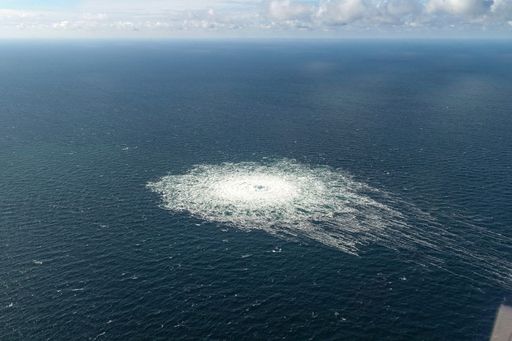
Widely labelled by Moscow and Western governments as sabotage, the September 2022 Nord Stream explosions crippled the pipelines, cutting off most Russian gas flows to Europe. The blasts escalated the Ukraine conflict and sparked an energy squeeze across the continent.
No state or group has claimed responsibility, and Kiev has repeatedly denied any involvement.
Russia sought a UN Security Council–mandated international investigation, but the proposal failed, winning only three of 15 votes. Denmark, Germany, and Sweden launched national probes, all calling the explosions deliberate.
The Swedish and Danish investigations closed in February 2024 without identifying perpetrators, while Germany’s inquiry continued, naming seven suspects, including former members of a Kiev-based diving school, one of whom has since died.
In November 2023, an international investigation identified Colonel Roman Chervinsky, a former commander in Ukraine’s Special Operations Forces, as the primary coordinator of the Nord Stream sabotage.
Following last week’s ruling by Italy’s Court of Cassation, Kuznetsov is set to be extradited to Germany within days. However, Canestrini sees the case as far more than a criminal proceeding. He argued that Germany is prosecuting a Ukrainian “military officer” for actions tied to resisting Russia’s full-scale war, making Kuznetsov, in his words, “a scapegoat.”
“My client feels like a scapegoat because of the political pressures surrounding this case,” Canestrini said.



Giving a glimpse into the legal argument that will take shape in the court, the lawyer said, “Germany has historically had close ties with Russia and significant financial interests in Nord Stream. While supporting Ukraine politically and militarily, Berlin now faces the paradox of prosecuting a Ukrainian officer for resisting Russia.”
Canestrini said German authorities face a legal contradiction. “I think they will find it very difficult to justify prosecuting somebody they know cannot be prosecuted,” he said, noting that immunity for combatants acting under military orders has been “rooted in international customary law for 170 years.”
He pointed to history for context. During World War II, Nazi forces committed massacres across Italy, and the victims’ families sought compensation. “They asked Germany to compensate for the damages caused by its soldiers,” Canestrini said.
“And guess what? Germany enjoyed the same immunity that is now being denied to my client.”
Kuznetsov’s arrest and Kiev’s silence
Kuznetsov’s arrest on August 21 this year was sudden and dramatic. He had checked into a glamping site near Rimini with his wife and two children for a short holiday. As is routine in Italy, his passport details were automatically transmitted to the Carabinieri – the country’s national military police and one of its main law-enforcement agencies.
Later that night, officers arrived at the site and detained him on the basis of a European arrest warrant issued by Germany. The former Ukrainian military officer — whose ID documents confirming his rank and service were included in the Italian court papers — was taken to a high-security prison in northern Italy, where he has remained since.
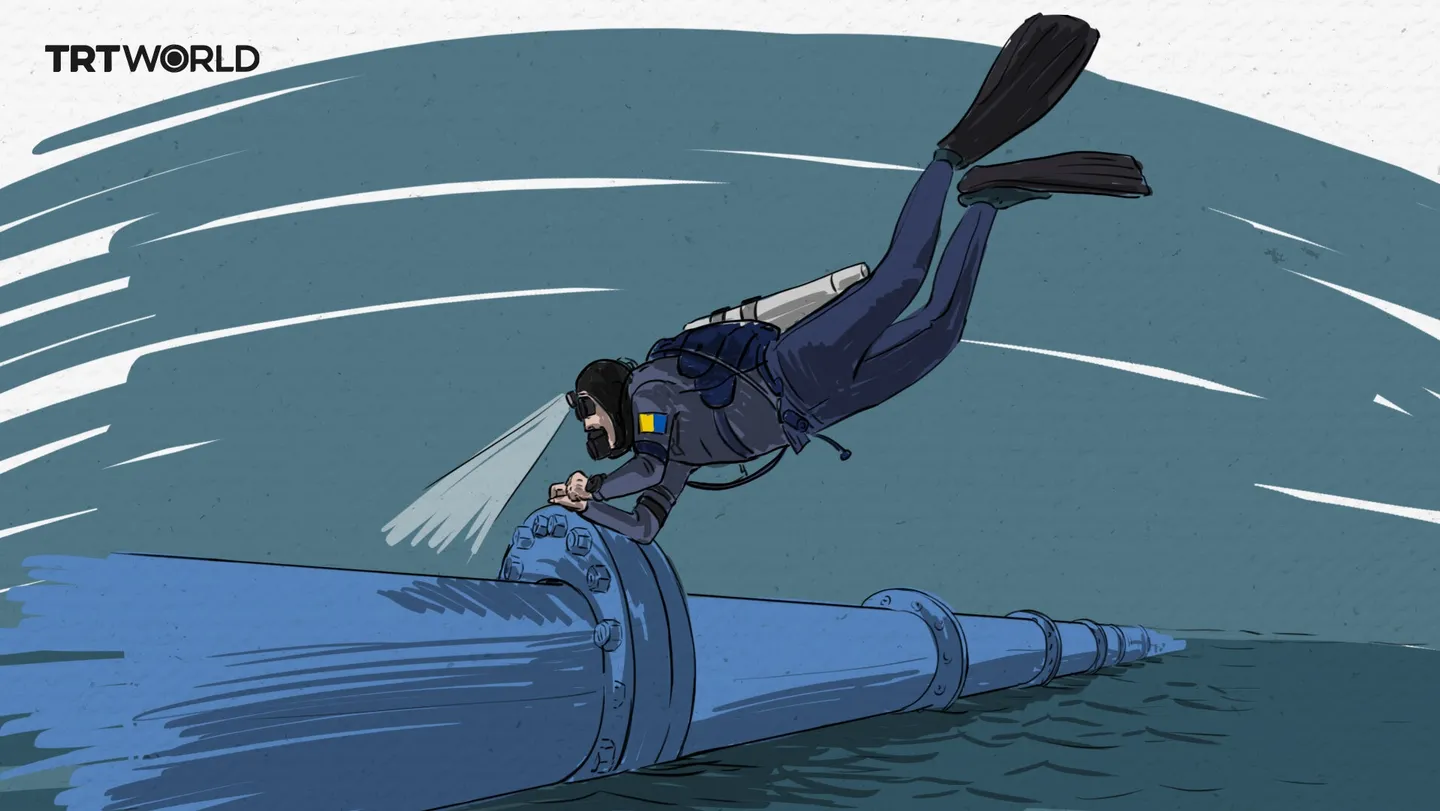
The suspect, Kuznetsov, is accused of leading a group of people who planted devices on the pipelines near the Danish island of Bornholm in the Baltic Sea, according to a statement issued by the German prosecutor's office in August.
According to Canestrini, Kuznetsov, a former military officer, volunteered to rejoin the Ukrainian military when Russia launched its military operation in 2022. Canestrini argued that if indeed Kuznetsov was involved in the Nord Stream blasts, the most likely conclusion is: “He acted under orders.”
The Italian lawyer said his client has been distressed not only by the arrest but by what he sees as abandonment by Kiev. “The Ukrainian government knows exactly where he was every day of September 2022,” he said. “So, if he's innocent, why don't they say it? If he did it, why don't they say it? That’s his question.”
Canestrini criticised Kiev for its silence. “Either Ukraine should provide political cover for its soldier, confirm he was not involved, or state if he went rogue and acted independently. The lack of transparency fuels conspiracy theories and undermines the rule of law,” he noted.
When asked whether his client had admitted any role in the Nord Stream blasts, Canestrini stressed that the Italian proceedings were concerned solely with extradition, not with determining guilt or innocence.
“He (Kuznetsov) has consistently denied any wrongdoing. When he first appeared in court in August 2022—before I became involved in the case—he denied everything,” he said. “I explained to him that Italy is not judging the merits of the accusations, so there is no point in making statements about guilt or innocence here.”
Zhuravlyov: A contrast in Poland
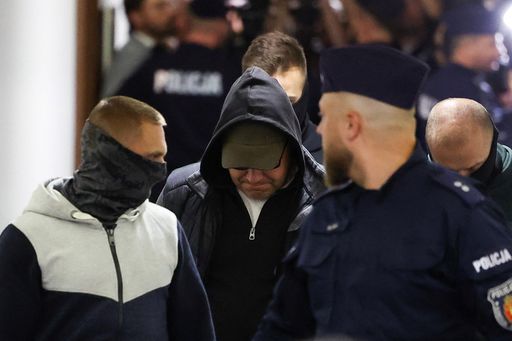
A month after Kuznetsov’s arrest in Italy, another Ukrainian national, Volodymyr Zhuravlyov, was detained by Polish police near Warsaw. A deep-sea diving enthusiast living in Poland since before the beginning of the 2022 Russia-Ukraine military conflict, he too was wanted by Germany in connection with Nord Stream.
But unlike the Italian courts, the Polish judiciary took a very different stance. Last month, the Polish courts denied Germany’s extradition request, leading to Zhuravlyov’s release after 17 days in custody.
Polish Judge Dariusz Lubowski delivered a striking justification in the judgment: if Ukraine had carried out the attack, it would have been a “justified, rational and just” act of self-defence against Russia’s “bloody and genocidal attack.”
The judge argued that what might be viewed as sabotage in peacetime could constitute a legitimate military operation during war. He questioned Germany’s jurisdiction and declared that depriving Russia of gas revenues — billions paid by Germany — could be considered lawful resistance.
Canestrini noted that the Polish judgment is an important legal and moral benchmark. “If another European judicial authority — usually considered reliable — has recognised the military nature of this operation, we will use that in our case because it directly supports our line of defence in Germany.”