 Sabena Siddiqui
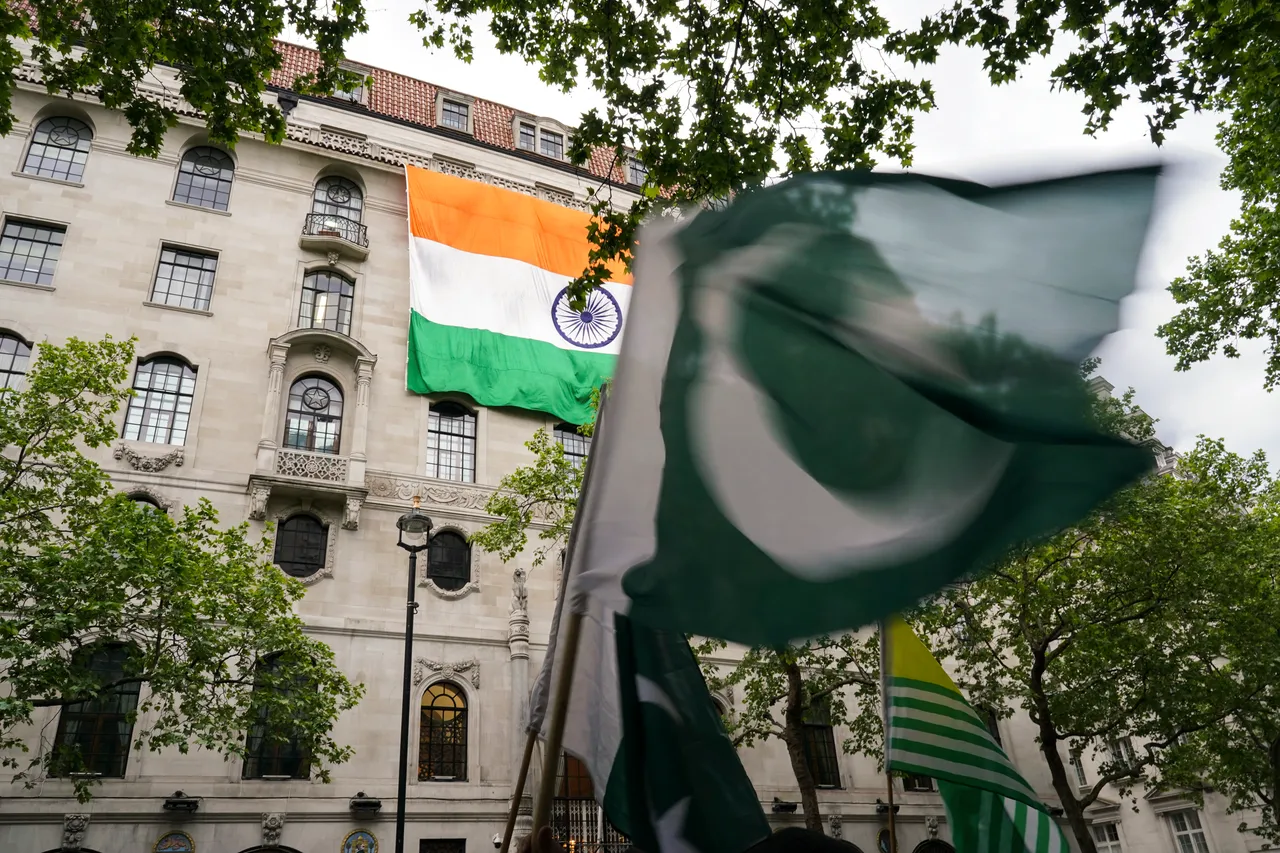
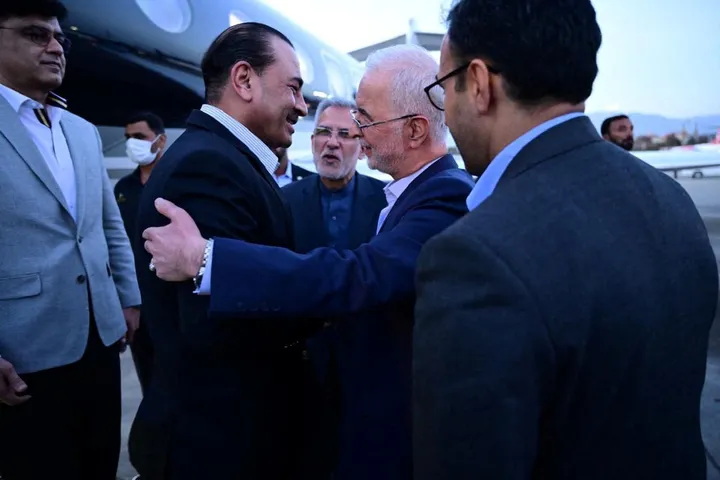
Marking the first high-level contact between officials from New Delhi and Islamabad since May 2025, a handshake between India’s Foreign Minister Subrahmanyam Jaishankar and Pakistan’s Speaker of the National Assembly Ayaz Sadiq has ignited debate over whether the ice is beginning to thaw.
Coming across each other at the funeral of former Bangladeshi Prime Minister Khaleda Zia in Dhaka last month, Jaishankar and Sadiq had exchanged brief pleasantries. While such interactions are routine at international gatherings, what made this informal encounter notable is the hardline posture adopted by New Delhi lately.
Ever since the four-day military conflict in May, a tense standoff has persisted between the two neighbours, and India has been steering clear of social greetings even at sports or cultural events.
This confrontation, which unfolded between May 7 and 10, 2025, marked the sharpest military exchange between the two countries in recent years.
What began as cross-border aerial hostilities quickly escalated into a wider, though still time-bound, conflict before a fragile pause was secured. The brief but intense nature of the standoff has since raised the threshold for any future military engagement, making subsequent diplomatic signals all the more scrutinised.
Therefore, the first images of the incident, shared on the official X account of Bangladesh’s Chief Executive, Dr. Muhammad Yunus, quickly fueled speculation.
Symbolism matters in diplomacy, and it seemed like New Delhi was reconsidering its public disengagement strategy.
Though the Indian government issued no statement on the matter, Pakistan’s National Assembly Secretariat later confirmed the exchange, pointing out that Jaishankar had “personally walked over to the Speaker” and “introduced himself during a handshake.”
History repeats itself
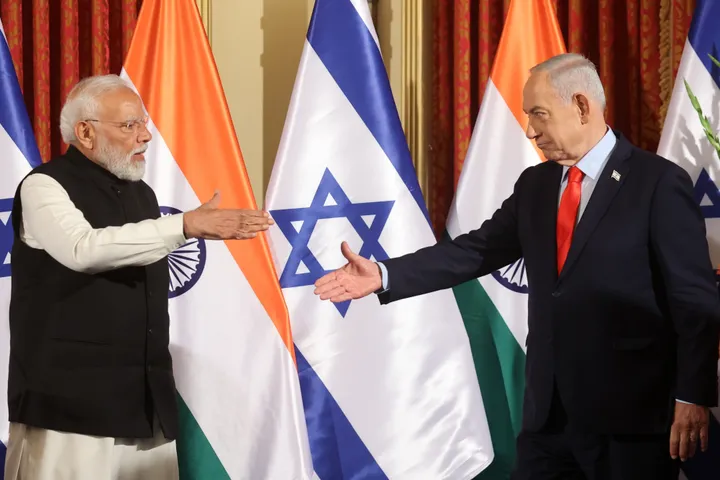
Curiously, this gesture rekindles memories of another historic handshake. In 2002, Pakistan’s President Pervez suddenly walked over and shook hands with Indian Prime Minister Atal Bihari Vajpayee at the opening ceremony of the 11th SAARC Summit in Kathmandu, Nepal.
A classic icebreaker of that time, Musharraf’s gesture brought New Delhi and Islamabad back from the brink of war, just weeks after the December 2001 Indian parliament attack. Notably, though that handshake did not lead to talks, it helped keep diplomatic channels open amid a serious crisis.
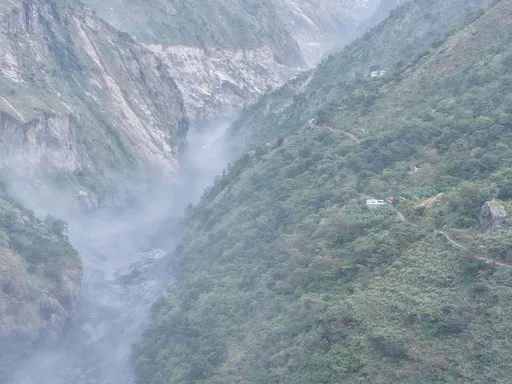
Unfortunately, over the decades, Indo-Pak ties have mostly remained in a state of flux due to the unresolved Kashmir dispute. Having three claimants, with India controlling 55 percent, Pakistan 30 percent, and China around 15 percent, Kashmir remains the root cause for instability in a nuclear region.
At various times, both sides have tried peace efforts, like the failed Agra Summit in 2001, when Musharraf visited India and ended his trip abruptly, or Vajpayee’s visit to Lahore in 1999, when he signed the Lahore Declaration with PM Nawaz Sharif, followed by the Kargil war shortly after. In a fixed pattern, every calm phase is followed by a storm.
In retrospect, 2025 was a particularly challenging year for Indo-Pak ties.
Blaming Pakistan for the Pahalgam attack on April 22, India immediately placed the 1960 Indus Waters Treaty in abeyance, despite the absence of any such provision in the treaty, a point later upheld by the Permanent Court of Arbitration (PCA) in the Hague.
Then, New Delhi further downgraded diplomatic ties by closing down the main border transit point.
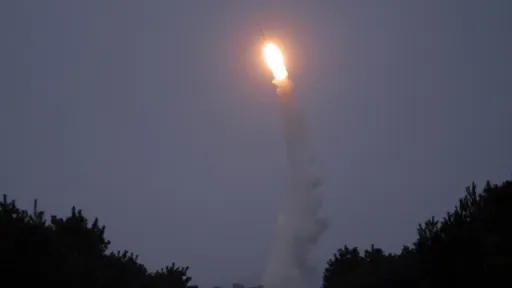
And even though Islamabad kept offering an independent probe on the Pahalgam incident, New Delhi suddenly launched Operation Sindoor, a military offensive involving cross-border strikes and air operations along the Line of Control.
As risks of nuclear escalation grew due to rapid tit-for-tat strikes on May 10, US President Trump diplomatically intervened and announced a ceasefire between India and Pakistan, which New Delhi accepted even though it denied seeking American assistance. Pakistan, on the other hand, welcomed Washington’s positive role and later nominated Trump for the Nobel Prize.

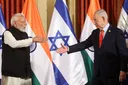

Ultimately, this episode helped improve US-Pak relations, which remain on a high. For New Delhi, the unsettling outcome was the clear boost to Islamabad’s geo-strategic standing after this episode.
Within months, Pakistan and Saudi Arabia signed a Strategic Mutual Defence Agreement (SMDA), and Islamabad moved ahead with several key defence deals with other partners.
Complicating the region further, simmering Indo-Pak frictions also brought Dhaka under Islamabad’s influence, and Kabul under New Delhi, as reflected in Pakistan’s stepped-up defence outreach and political engagement with Bangladesh, and India’s intensified diplomatic coordination, security assistance, and development partnerships with Afghanistan.
Can India and Pakistan move forward?
Tensions remain so high that containing the fallout may not be easy if war breaks out again. Most probably, even the Trump administration may not wish to get involved, given New Delhi’s unappreciative stance towards US mediation.
Therefore, there is no harm in being cautiously optimistic about the Dhaka handshake. It is quite possible that behind the scenes, efforts are underway to lower tensions to manageable levels.
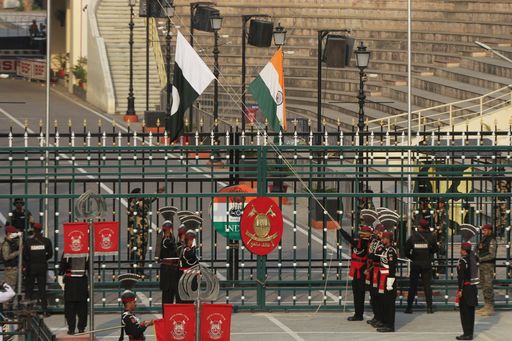
As former Pakistani ambassador Masood Khan has argued, it is unlikely that Jaishankar acted without clearance from the BJP leadership. This suggests that the handshake was not accidental theatre, but a deliberate recalibration by New Delhi.
He also recalled that India had rejected US efforts to get both sides to hold talks in another country in May 2025.
So what can have changed now? A seasoned diplomat like Jaishankar is unlikely to lower his guard with a senior Pakistani official without a calculated purpose.
First, the Indian media said that Pakistan wanted “to amplify what was a courtesy handshake.” Then, after reaching home, Jaishankar complained about terrorism and hinted at ”bad neighbours” in India’s West. Ostensibly, this could be intended to balance the impact of the handshake.
P.K Balachandran, a senior Indian journalist, is of the view that the Indian EAM’s cordiality towards Pakistan was a signal for Dhaka that had drifted away from India, to show that New Delhi was making up with Islamabad.
Noting that India and Pakistan exchanged lists of nuclear installations and prisoners [a three-decade-old practice] around the same time, Balachandran writes that this “pretence” would continue in “small installments” until Bangladesh became amenable.
According to him, this trend would not survive in the long term as the ruling party in New Delhi relies on stoking up tensions with Pakistan to win elections.
Nevertheless, back-channel contacts between India and Pakistan have proved effective in the past, and though the divergences are only growing, resuming talks at this juncture could help de-escalate regional tensions.
In a region where miscalculation remains the greatest threat, even a handshake can be a meaningful start.