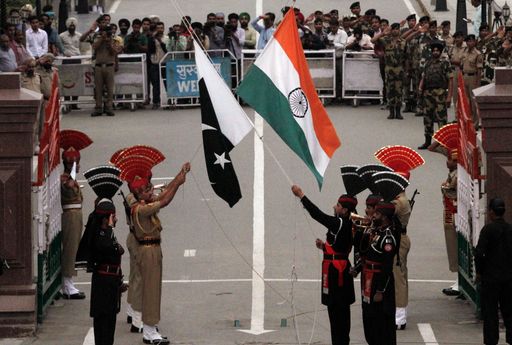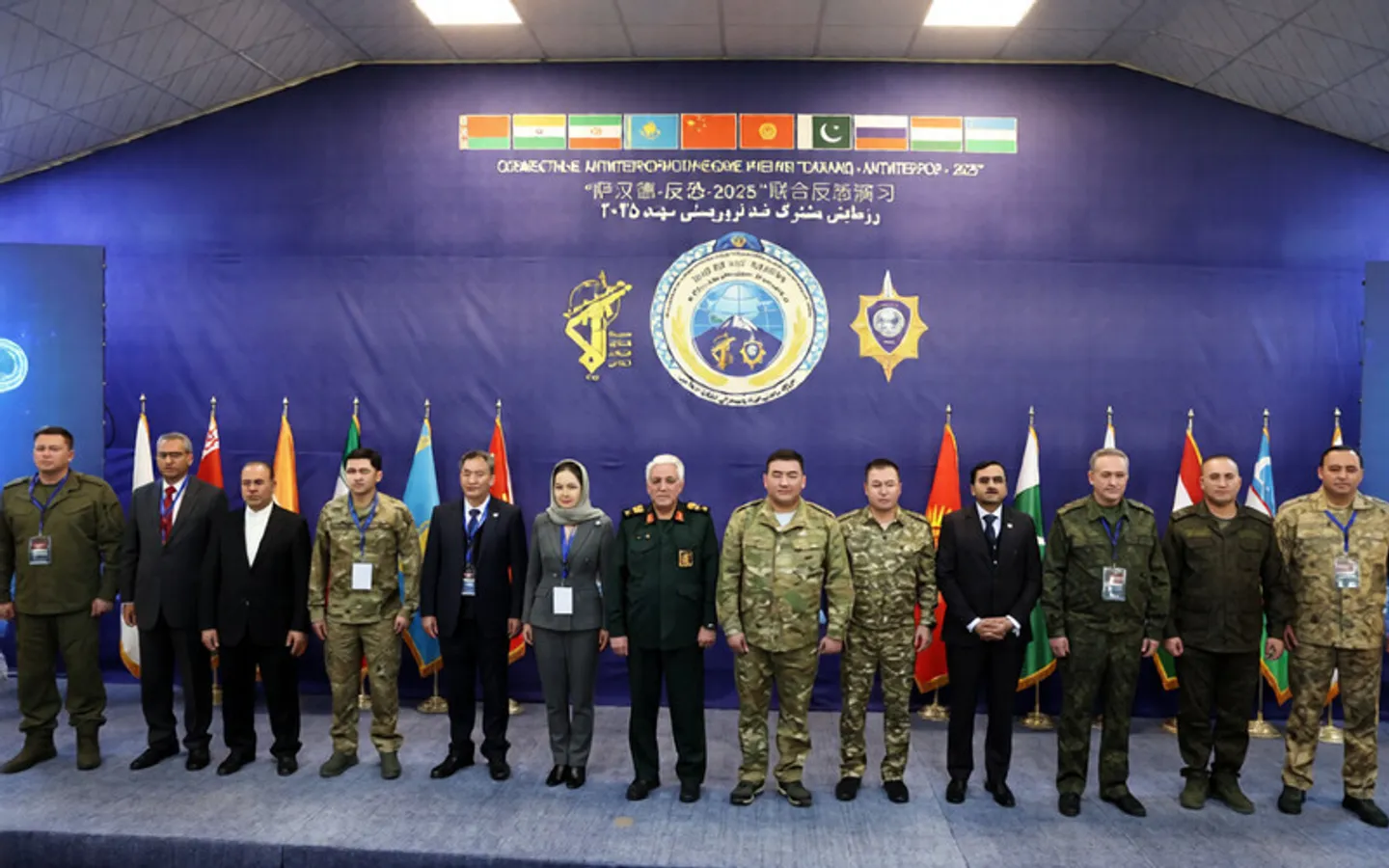
Arch rivals India and Pakistan are sharing the same field in Iran this week for the ongoing Sahand 2025, a Shanghai Cooperation Organisation (SCO)-led counterterrorism drill hosted by Tehran in a rare moment of parallel, peaceful coexistence at a time when relations between New Delhi and Islamabad remain frozen.
But despite the optics of both militaries on the same field, analysts on both sides say the exercise reflects institutional obligation, not a thaw.
The Sahand 2025 joint anti-terrorism drill began in Iran’s East Azerbaijan province earlier this week and is set to wrap up on Friday. All 10 SCO member states - Iran, China, Russia, India, Pakistan, Kazakhstan, Kyrgyzstan, Tajikistan, Uzbekistan, and Belarus - are participating.
The SCO anti-terror exercises began in 2003, aimed at enhancing regional counterterrorism cooperation among member states. Pakistan and India joined the Eurasian organisation in 2018, participating alongside other members in drills designed to improve operational coordination, intelligence sharing, and responses to cross-border threats.
A mere calendar commitment
Pakistani analysts stressed that participation in Sahand 2025 does not signal any departure from the sharply deteriorated bilateral environment.
The SCO is a forum where the calendar of events binds both India and Pakistan — they have to attend and cannot stay away,” Asif Durrani, senior Pakistani diplomat and a former ambassador, told TRT World. “Given the tense relations, the two countries are unlikely to engage in bilateral interactions.”
The exercise should not be read as even symbolic cooperation, opines Anum A Khan, Associate Director at the Center for International Strategic Studies (CISS), an Islamabad-based think tank.
Like Durrani, she emphasised to TRT World that both nations are participating out of an institutional obligation rather than for any “meaningful bilateral security engagement”.
“These are routine drills. At times, such institutional mechanisms withstand bilateral frictions, at other times they may not,” she explained, adding that India has previously politicised the SCO platform by raising bilateral disputes to “hijack consensus and undermine the organisation’s core mandate of regional security cooperation”.
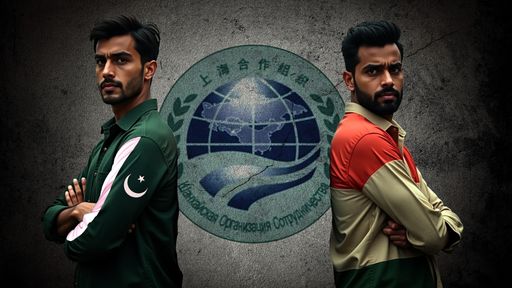
Indian analysts, however, note that even routine participation offers limited professional value on counterterrorism — an issue central to both countries’ security concerns.
“The SCO anti-terror exercise allows Indian and Pakistani militaries unique mutual familiarisation,” Swaran Singh, geopolitical commentator and a professor of international relations at New Delhi-based Jawaharlal Nehru University, told TRT World.
Given that terrorism remains the bone of contention in India–Pakistan tensions, this exercise carries significance, he opined.
“Last decade has seen India pursuing a Pakistan policy based on ‘terror and talks can not go tougher’ axis. With this backdrop, Indian and Pakistani forces coming together on issue of terrorism carries great significance,” he shared.
Veteran Indian diplomat and former ambassador Talmiz Ahmad told TRT World that India views its presence in the Eurasian bloc through a wider geopolitical lens.
“India’s main interest in joining the SCO is connectivity with Central Asia, especially for energy and trade diversification as Pakistan blocks direct access,” he noted, adding that New Delhi is also interested in counter-terrorism due to “spillover threats”.
He added that the SCO’s origins, rooted in managing extremism across Eurasia, remain highly relevant for both South Asian rivals.
We are members of the same organisation and obviously we participate, irrespective of Pakistan's presence, he shared.

‘Drills cannot bridge political chasms’
From an academic and security perspective, the drills are unlikely to shift the underlying hostility between the two neighbours.
“Sadly, operating alongside one another has not appeared to build trust or confidence,” Christopher Clary, a South Asia security scholar and assistant professor of political science at the University at Albany told TRT World.
“The political problems that animate the relationship are bigger than any combination of multinational exercises can bridge.”
Former Pakistani ambassador Maleeha Lodhi echoed this view.
“There are no channels, direct or indirect, to suggest that the ice will break between Pakistan and India. The war of words continues and tensions remain high,” she told TRT World.
Indian diplomat Ahmad agreed, noting that despite both sides taking part in the drill in Iran, the prospects for any bilateral exchange remained virtually nonexistent.







“What happens on the ground we won't know — details may not be released — but I am sure the hosts (in this case, Iran) will ensure the two sides don't directly interact”.
Why Pakistan and India still value the SCO
While Sahand 2025 may not affect Pakistan’s India policy, both New Delhi and Islamabad see the SCO as a critical diplomatic platform for broader regional engagement.
The organisation is “significant for Pakistan with four nuclear powers, Iran and the Central Asian states,” Durrani noted. “Since Pakistan joined the SCO, its relations with Russia and Central Asia have improved considerably.”
Analysts also highlight the SCO’s counterterrorism agenda as a space where Pakistan and India participate routinely irrespective of political tensions.
The member states participate to improve their counter terrorism capacity and share lessons from their experiences in fighting the menace, Dr Bilal Zubair, Director Research at CISS told TRT World, adding that multilateral cooperation is normal in military diplomacy while sharing examples of similar instances like Peace Mission 2018 and CENTRE 2019.
For Pakistan, he said such drills will not change existing tensions “unless India agrees to comprehensive dialogue” on key bilateral issues including Jammu and Kashmir.
He emphasised that the drills should not be seen as shaping a “new security architecture in the region.”
India’s strategic calculus: Iran, Central Asia and autonomy
Indian analysts emphasise that New Delhi’s participation is rooted in its broader strategic interests, not in managing Pakistan.
For Singh, the drills provide India continuity in counterterror cooperation and familiarity with regional militaries.
They are an opportunity for India, he said, to deepen engagement with Iran, a longstanding strategic partner.
“This becomes an especially great opportunity for Indian armed forces given that Iran has lately experienced serious military confrontations with the United States and Israel which have critical lessons for India,” he added.
Ahmad noted that India’s involvement in SCO counterterrorism drills also fits into a longer institutional history.
Like others, he reiterated that this is not the first time India and Pakistan are participating side by side; both have joined earlier SCO and RATS (Regional Anti-Terrorist Structure) counter-terrorism exercises.
“The SCO originated from early Chinese efforts to settle its borders with Russia and Central Asia and manage the spillover of extremism from Afghanistan in the 1990s.”
He added that India, a relative latecomer formally admitted in 2017, views such exercises as useful for maintaining engagement with Central Asia and for participating in regional counterterrorism initiatives whenever the opportunity arises.
Can SCO ease mistrust?
Despite periodic joint participation from Peace Mission 2018 to Sahand 2025, experts say the SCO cannot substitute for direct diplomacy.
Clary argues that “professional behaviour in multinational settings” has never translated into confidence-building.
Lodhi and Zubair agree that without a political shift, drills cannot de-escalate a relationship strained by disputes over Kashmir, cross-border militancy and broader strategic distrust.
Sahand 2025 underscores a sad reality: India and Pakistan continue to operate in parallel inside a shared multilateral space, even as bilateral tensions remain at their worst in years.
The SCO may be one of the few remaining forums where the two sides still show up in the same room, but analysts across Islamabad and New Delhi agree that multilateral choreography has not and cannot substitute for political dialogue.
For now, cooperation remains procedural, not transformational and Sahand 2025 changes little in the region’s most entrenched rivalry.