 Ozcan Akinci
In an era of rapidly shifting alliances and intensifying great-power competition, the Eastern Mediterranean has once again become a central arena of strategic realignment.
Long shaped by maritime trade routes, energy corridors and geopolitical fault lines, the region is now witnessing the emergence of new security architectures that operate alongside, and in some cases outside, established alliance frameworks.
Among these, a trilateral defence cooperation mechanism involving Greece, the Greek Cypriot Administration (GCA) and Israel has evolved beyond occasional joint exercises into a more systematic partnership.
This alignment is distinguishable not only by its procedural depth, but also by its development largely through bilateral and trilateral agreements that do not fully integrate with NATO’s standard transparency, oversight and information-sharing mechanisms.
The political narrative accompanying this shift has also grown more emotive. Greek and Greek Cypriot media have increasingly portrayed the trilateral alignment as a bulwark against Turkish influence in the region.
Statements by GCA Defence Minister Vasilis Palmas defending closer military cooperation with Israel, encapsulated in his assertion that “peace is always secured through strength”, have gained significant traction in domestic debate.
Parallel commentary in Greek Cypriot and allied media has framed the burgeoning security partnership with Israel and Greece in highly charged terms, portraying Tel Aviv as a strategic guarantor against Ankara’s influence and, at times, as a protector of the island’s interests.
Such rhetoric, while targeted at domestic audiences, risks deepening regional misperceptions and further complicating Türkiye’s longstanding calls for de-escalation, transparent dialogue, and confidence-building measures to foster genuine stability in the Eastern Mediterranean.
Recent developments provide concrete evidence of a deepening operational alignment.
Greece’s procurement of advanced systems from Israel, including PULS multiple rocket launchers and layered air and missile defence technologies, underscores a shift toward integrated, capability-enhancing partnerships.
Simultaneously, the GCA’s move to deploy Israel-origin air defence systems signals a willingness to blend strategic doctrines and equipment profiles across national boundaries.
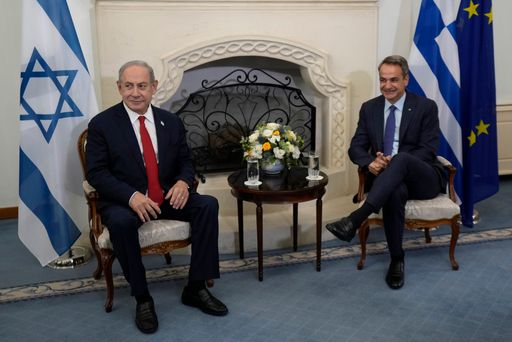
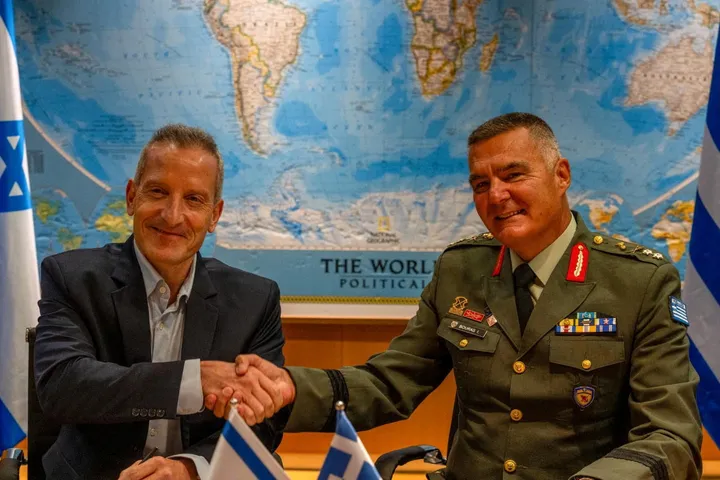
Adding further operational weight to these developments, Greek, Israeli and Greek Cypriot military officials signed a joint action plan for defence cooperation in December, setting the stage for expanded air and naval exercises in the Eastern Mediterranean in 2026.
According to Greek military sources, the plan encompasses joint training, naval and air drills, and the transfer of tactical know-how from Israel to Greece and the GCA, a tangible step toward deeper operational alignment that extends beyond political statements alone.
This reflects a broader trend toward bespoke bilateral/trilateral arrangements with niche partners like Israel, whose defence industry targets the Eastern Mediterranean as a priority for exports and strategic links.
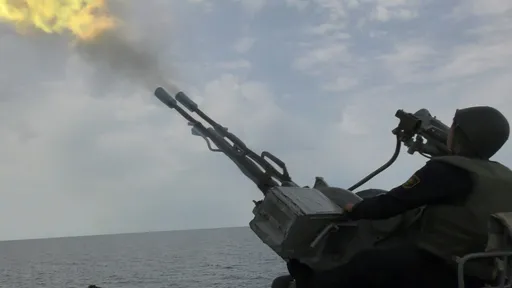
Joint training initiatives in unmanned aerial systems (UAS) and maritime surveillance have intensified in recent years, with Greek-Israeli forces focusing on interoperability in congested waters.
Informal GCA-Israeli cooperation on UAS and electronic warfare has also been reported, often bypassing formal NATO channels.
While these enhance situational awareness for energy infrastructure and maritime traffic, they raise concerns over data ownership, intelligence sharing, and command authority in crises, further highlighting risks of fragmentation outside alliance structures.
NATO’s southern flank and the coordination gap
The trilateral nexus poses significant challenges to NATO’s southern flank, where information asymmetries already stem from divergent threat perceptions and unresolved disputes.
Bilateral/trilateral arrangements bypassing alliance mechanisms create parallel intelligence, procurement, and planning channels.
This undermines NATO’s integrated air/missile defence (shared early warning, interoperable structures) and maritime domain awareness.
The EU faces similar issues in synchronising its Common Security and Defence Policy (CSDP) with NATO, as non-standard partnerships with external suppliers add complexity.
As one Euractiv analyst noted, “the EU wants geopolitical strategy and technological sovereignty, but practical alignments often diverge from institutions.”

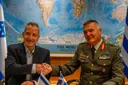


Greece and the GCA thus act as intermediaries between European frameworks and Israeli networks, yielding short-term gains but fostering opaque integration beyond oversight.
Israel’s role in this trilateral nexus extends beyond that of a mere supplier.
Over the past decade, Tel Aviv has pursued an increasingly sophisticated form of defence diplomacy, using technology exports to build geopolitical influence and networks.
However, this form of diplomacy is often viewed as opportunistic, exploiting regional rivalries to build enduring dependencies rather than balanced partnerships.
Israeli defence firms embed their products in national architectures across Europe, Asia, and the Americas, creating long-term dependencies in maintenance, updates, training, and intelligence, establishing institutional footholds that go beyond simple arms sales.
In the Eastern Mediterranean, Israel’s engagement anchors its presence in EU/NATO-adjacent structures, providing not only commercial but strategic visibility along critical corridors.
The resulting network of unmanned systems, surveillance, and air defences intersects Greek/GCA operations and European frameworks, often complementary, yet competitive with broader regional cohesion.
Türkiye’s strategic calculus
Türkiye’s position in this evolving landscape is complex. As a NATO member with significant conventional and unmanned capabilities, Ankara maintains enduring security interests across the Eastern Mediterranean.
Any parallel architecture, especially one involving advanced surveillance, air defence integration, and missile capabilities, introduces strategic ambiguity into Ankara’s calculations.
From Ankara’s perspective, the real challenge is not merely the introduction of advanced capability clusters but whether they align with alliance cohesion and predictability.
Türkiye has consistently emphasised regulated security corridors, transparent military cooperation, and institutionalised crisis management mechanisms.
In contrast, bespoke defence partnerships risk creating a fragmented architecture where private firms and bilateral arrangements shape operational realities more than multilateral institutions do.
Regional stability depends on transparent communication channels and shared understanding of intent and capacity, particularly amid overlapping maritime claims, energy competition, and unresolved disputes.
The Greek–GCA–Israeli defense nexus exemplifies the dilemmas of 21st-century alliance politics. States seek to optimise their security portfolios by combining traditional alliances with bespoke partnerships that deliver rapid technological advantage.
Yet when operational integration occurs outside formal oversight mechanisms, it complicates collective defence structures.
The issue is not one of legality but of coherence.
NATO and the EU have invested heavily in building interoperable, transparent and resilient security systems. These depend on shared doctrines, standardised procedures and mutual trust. Parallel security architectures, even among friendly states, risk diluting these foundations.
For the Eastern Mediterranean, the path forward is not disengagement but institutional alignment.
Defence cooperation will continue to expand. The real challenge is ensuring that it does so within frameworks that reduce misperception, enhance predictability and reinforce collective strategic planning.
As NATO and EU partners navigate these waters, transparency and shared strategic understanding must be the priority, because in regions where history, geography and great-power competition intersect, ambiguity is destabilising.
The emerging Greek-GCA-Israeli security axis is a test case for modern alliances adapting to networked defence and fluid geopolitics.
In the Eastern Mediterranean, where history, geography, and great-power competition intersect, the real priority is institutional alignment, transparency, and shared understanding to prevent destabilising ambiguity.