The International Court of Justice (ICJ) has ruled that Israeli allegations that the United Nations Relief and Works Agency for Palestine Refugees in the Near East (UNRWA) is infiltrated by Hamas were not substantiated.
In a landmark advisory opinion delivered on Wednesday, the court affirmed Israel's obligations to facilitate humanitarian relief in the occupied Palestinian territory — particularly through UNRWA — and not to impede its operations.
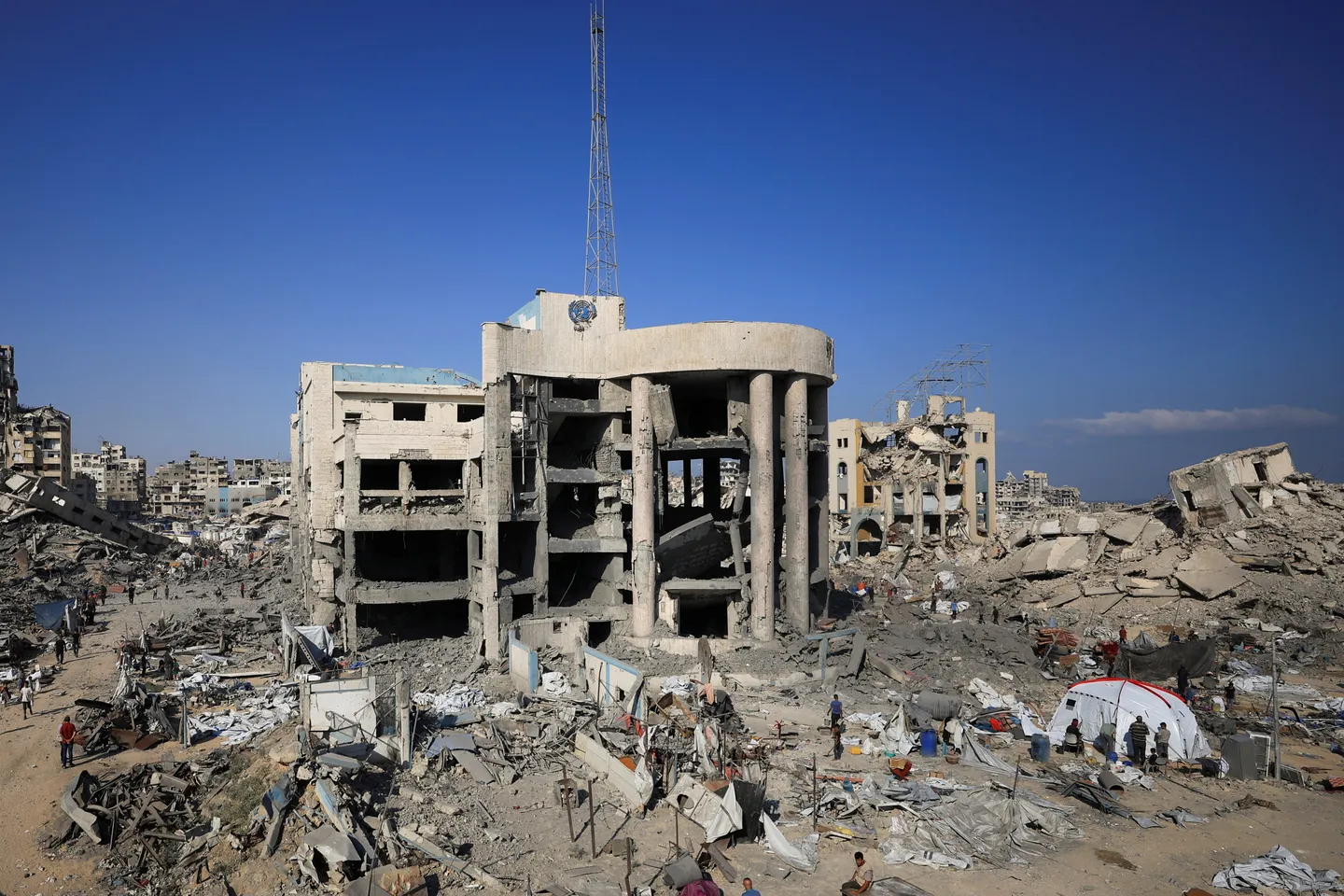
The court highlighted UNRWA's "indispensable role" as a provider of humanitarian aid in Gaza, stressing the agency's "unique and sustained connection" with the population that enables it to deliver assistance "in a safe and dignified way".
It further noted that "in the current circumstances, it is not possible to replicate the capacity of the United Nations, acting through UNRWA, to ensure that the population of the Gaza Strip is adequately provided for".
Rejecting Israeli claims that UNRWA lacks neutrality, the court underscored that such allegations were unproven.
The UN General Assembly had asked the International Court of Justice (ICJ) last year to give an advisory opinion on Israel's legal obligations after the country effectively banned the UN agency for Palestinian refugees — the main provider of aid to Gaza — from operating in the territory.
Advisory opinions carry significant legal weight, but they are described as "non-binding" since there are no direct penalties attached to ignoring them.
Unilateral decision
The proceedings predate the current fragile US-brokered Gaza ceasefire agreement, which took effect on October 10 and aims to end Israel’s two-year genocidal war in the Palestinian enclave.
The court emphasised in its Wednesday ruling that, as a member state of the United Nations, Israel is obliged to facilitate UNRWA's work, including beyond immediate humanitarian relief, by allowing the agency to provide essential services such as healthcare and education.
The ruling comes amid Israeli legislation that has restricted UNRWA's ability to deliver food, medicine, shelter and educational materials to Gaza and the occupied West Bank since March, and which has forced the closure of UNRWA schools in occupied East Jerusalem.
The court found that Israel is not entitled to unilaterally decide on the presence and activities of UN agencies in the occupied territory.
The ICJ also condemned the so-called "no-contact policy", which prohibits Israeli officials from communicating with UNRWA, saying it undermines the agency's operations and endangers its personnel.
The court called for an immediate end to the obstruction of humanitarian aid and demanded accountability for attacks and abuses against UN staff and facilities.
UNRWA reiterated that all restrictions on its work must be lifted immediately to allow humanitarian aid to reach those in need and to protect its personnel and operations in line with international law.

Unsubstantiated allegations
Earlier this month, a US judge, too, had dismissed a lawsuit accusing UNRWA of providing funding that enabled the Palestinian resistance group Hamas's October 7, 2023, cross-border raid on Israel.
Judge Analisa Torres of the Federal District Court in Manhattan ruled that the UN agency is protected by immunity as part of the United Nations.
The suit — filed on behalf of roughly 100 Israeli plaintiffs, including survivors of the attack, the estates of those killed, and at least one hostage — alleged that UNRWA allowed the Palestinian resistance group Hamas to divert funds for its own use.
The plaintiffs claimed UNRWA paid local employees in cash and required them to convert it through Hamas-affiliated money changers, generating millions of dollars in additional revenue for the group.
The UN agency has faced repeated allegations by Israel of links between its staff and "militant groups", claims it has consistently denied, citing a lack of evidence.
Citing the allegations — though they were not substantiated — some Western politicians and countries called for defunding UNRWA, despite the vital work it has done for decades for Palestinian refugees.
For its claims, Israel provided a list of 100 alleged "militants" but could not give proof to substantiate the allegation despite UNRWA's repeated requests.
"The agency has requested on numerous occasions cooperation from the Government of Israel by providing information and evidence to substantiate the accusations made against UNRWA," the agency said in a document responding to Israel's allegations.
"To date, UNRWA has not received any response, nor has the Government of Israel shared any evidence."
Established in 1949, UNRWA has served as a critical lifeline for Palestinian refugees, supporting nearly 5.9 million people across Gaza, the occupied West Bank, Jordan, Syria and Lebanon.
Nearly 2.4 million people in Gaza live completely dependent on humanitarian aid, according to World Bank data.