 Abhishek G Bhaya
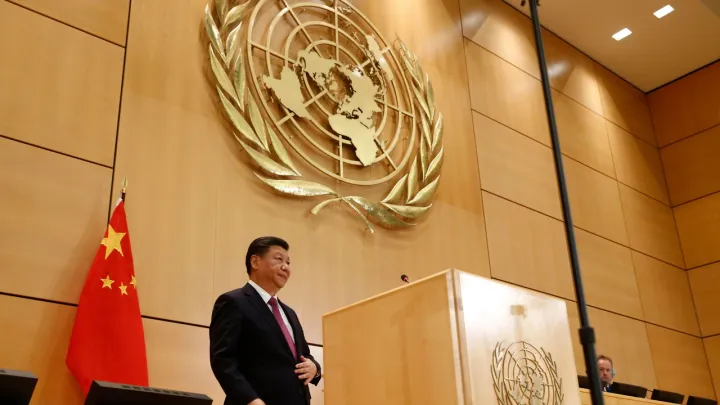
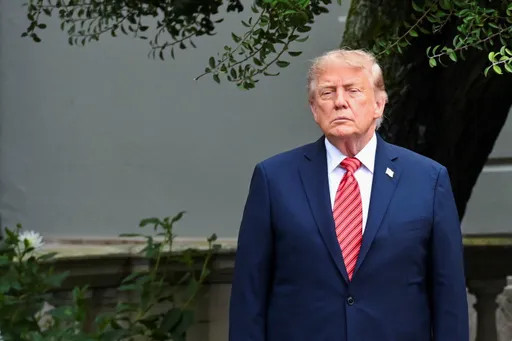
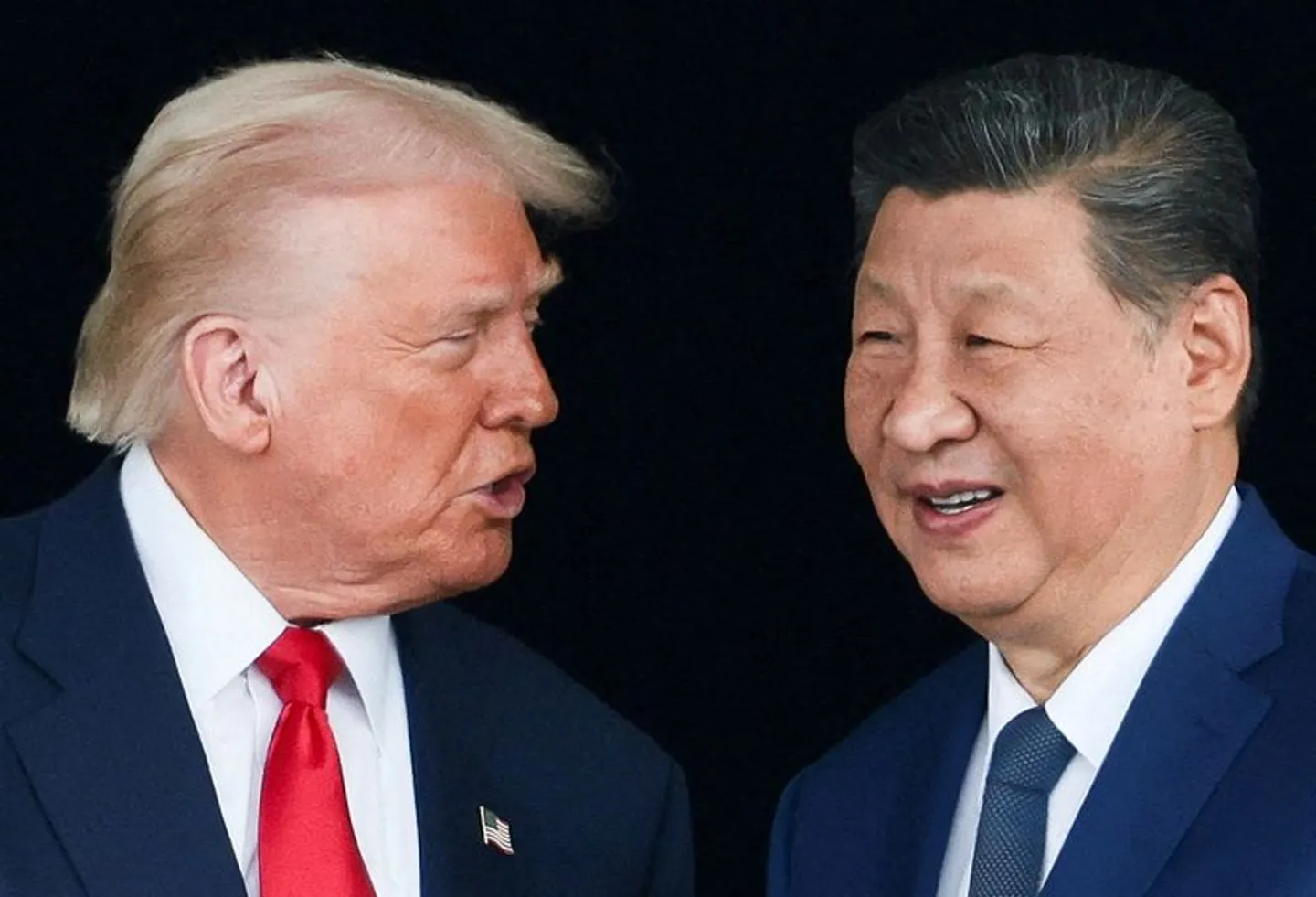
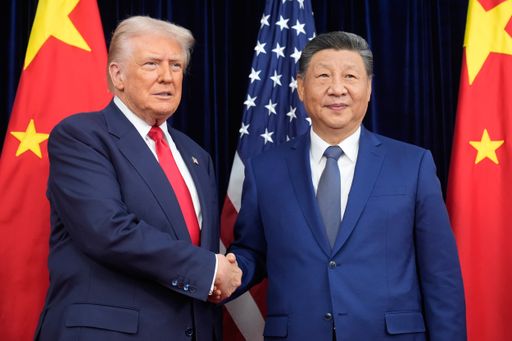
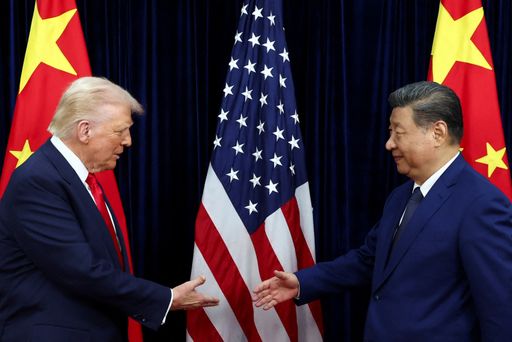
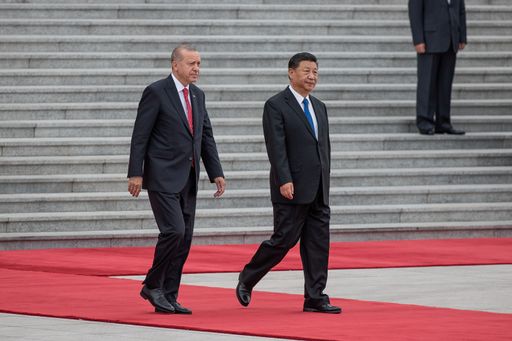
US President Donald Trump hailed his meeting with Chinese President Xi Jinping in Busan on Thursday as a “great success,” calling it a summit of the “G2” — a term evoking the idea of the United States and China as co-leaders of global affairs.
But while Trump’s choice of words signals a recognition of China’s growing economic and military clout, analysts say Beijing’s foreign policy and diplomatic framework remain anchored in having broader international participation on key global issues.
“Trump’s mention of the ‘G2’ concept indicates that he acknowledges the equal position of China and the US in his heart,” Jianlu Bi, a Beijing-based Chinese current affairs commentator, told TRT World.
“But China firmly safeguards multilateralism and advocates that global affairs should be jointly participated in by the international community, rather than being dominated by two countries,” he elucidated.
The meeting — the first face-to-face encounter between the two leaders since 2019 — yielded agreements on trimming fentanyl-related tariffs and ensuring the continued supply of critical rare earth minerals.
Trump described the hour-and-forty-minute dialogue as “amazing,” calling Xi “a tremendous leader of a very powerful country” and announcing plans to visit China in April.
“I thought it was an amazing meeting,” Trump told reporters aboard Air Force One after the talks, adding that the deal included China purchasing “tremendous amounts of soybeans and other farm products” — a politically resonant issue for his rural voter base.
But it was his post on Truth Social even before the meeting that caught the eyes of geopolitical analysts. Writing in his trademark style, Trump declared: “THE G2 WILL BE CONVENING SHORTLY!” — framing his meeting with Xi as a summit between the world’s two dominant powers responsible for setting the global agenda.
From Cold War 2.0 to G2: Revival or rhetoric?
The “G2” concept — short for “Group of Two” — originated in the late-2000s as an idea for the US and China to jointly steer global governance. Initially promoted by American economist C Fred Bergsten and strategist Zbigniew Brzezinski, it envisioned the world’s two largest economies collaborating to address challenges from financial instability to climate change.
The concept peaked during Barack Obama’s presidency, when Washington sought to engage Beijing as a “responsible stakeholder.” But it quickly lost momentum amid growing rivalry and Chinese scepticism.
Beijing saw the idea as a Western construct that risked imposing global burdens before China was ready, while Washington’s later pivot to containment — especially under Trump’s first term — buried the notion entirely.
In recent years, however, the discourse has increasingly revolved around the prospect of a “Cold War 2.0” between the United States and China — a reflection of escalating political tensions, trade frictions, and technological decoupling.

Analysts often frame this rivalry as ideological as much as strategic, with Washington seeking to preserve its global primacy and Beijing asserting a model of multipolar governance.
Even “a decade ago, Washington saw China as a potential co-leader in global governance. Now, the US consensus is that China is a rival, not a partner,” Hongda Fan, a professor at the Middle East Studies Institute of Shanghai International Studies University, China and a visiting scholar at the University of California, Berkeley wrote in an article titled “From G2 to Cold War 2.0: The changing US attitude toward China” published by The Diplomat last year.
In this backdrop, Trump’s revival of the “G2” label in 2025 marks a rhetorical departure from his earlier antagonism. Analysts suggest it reflects both a grudging acknowledgement of China’s resilience and a transactional recalibration of US-China relations.
Josef Gregory Mahoney, Professor of Politics at East China Normal University in Shanghai, described the remark as “quite provocative.”





“One wonders how other members of the G7 will interpret it,” Mahoney said. “But I think it represents a worldview that Trump likely holds now, given his inability to break China after breaking so many others — that maybe only China can go toe-to-toe with the US and hold its own,” he told TRT World.
Mahoney noted that Trump’s recalibration is driven as much by US electoral timing as by strategy, with the November 2026 midterm elections likely to be seen as a referendum on his administration.
“Many of the provisions will be suspended for a year, allowing Republicans to avoid too much economic pain while pretending they won concessions,” he observed, adding: “Trump ran out of time ahead of the Christmas shopping season and had to backtrack [on China].”
“China held the line and didn’t get forced into a bad deal, unlike South Korea and Japan. This is good for China but it’s also good for the world. China is better positioned now to be a driver of real global growth,” he added.
China’s perspective is more nuanced
In Beijing, the response to Trump’s “G2” framing has been measured but pointed.
Jianlu Bi noted that while the G2 idea originated “among the US political elites” it does not reflect China’s approach to global governance, which prioritises multilateralism.
“China adheres to the vision of building a community with a shared future for mankind, advocates that countries work together to promote global governance, and promotes the construction of a more just and reasonable international order,” Bi told TRT World.
He described the Busan meeting as a “significant moment of head-of-state diplomacy” that has “provided the world with a more hopeful outlook and a healthier heartbeat.”
“President Xi stressed that the two major economies must act as ‘helmsmen’ to ensure stability, emphasising that China's development and the US goal are not mutually exclusive,” he said.
“The leaders’ talks serve as the ‘compass and anchor’ for steering bilateral relations toward mutual prosperity and global responsibility.”
According to Bi, Xi emphasised that while differences between the two nations are inevitable, they should be managed constructively.
“In the face of risks and challenges, the two presidents, acting as helmsmen, should grasp the direction and steer the overall situation to ensure the stable sailing of the great ship of China-US relations,” he added.
“China’s development and revitalisation and President Trump’s goal of ‘Make America Great Again’ are not mutually exclusive... The two countries can fully achieve mutual success and common prosperity.”
While Trump’s declaration of a “G2” meeting may flatter Beijing rhetorically and diverge from China’s global governance vision, analysts noted that the optics of Busan — after years of tariff wars, decoupling, and pandemic blame — suggest a cautious thaw.
The rare earth accord, in particular, signals a mutual recognition that selective cooperation may serve both countries amid economic headwinds and mounting global uncertainty.