 Murat Sofuoglu
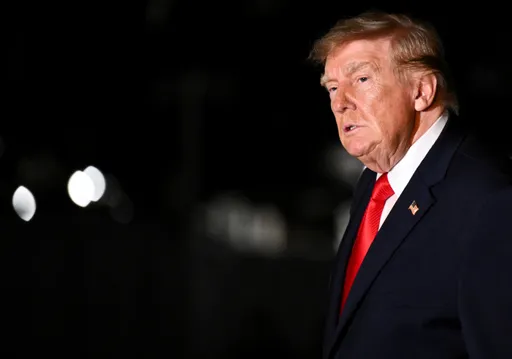
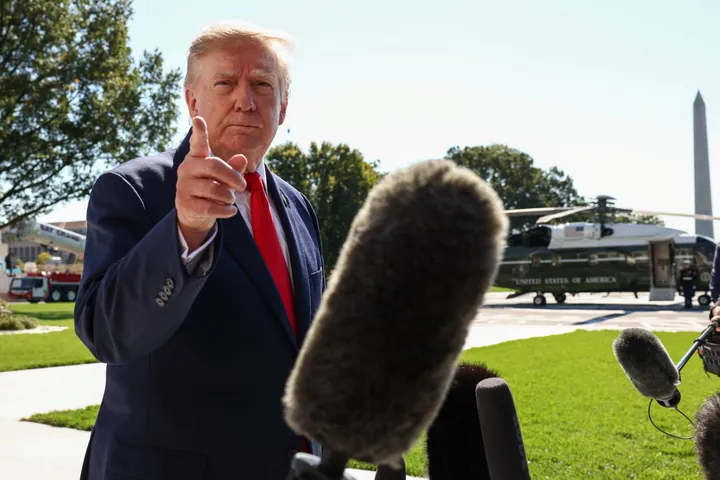
US President Donald Trump warned Venezuela’s post-Maduro Chavista leadership under interim President Delcy Rodriguez that if she fails to meet his demands, “she will face a situation probably worse than Maduro”, making clear that Caracas needs to alter its course.
During a press conference following Operation Absolute Resolve, Trump stated that Rodriguez will comply with his demands, including US oil extraction and severing ties with countries such as Russia, China, and Iran.
“We will run Venezuela,” he said.
American media published articles citing a CIA analysis suggesting that Rodriguez can persuade Venezuela’s ruling socialist elites that Chavismo, a left-wing populist movement, will continue to govern while complying with Trump’s demands.
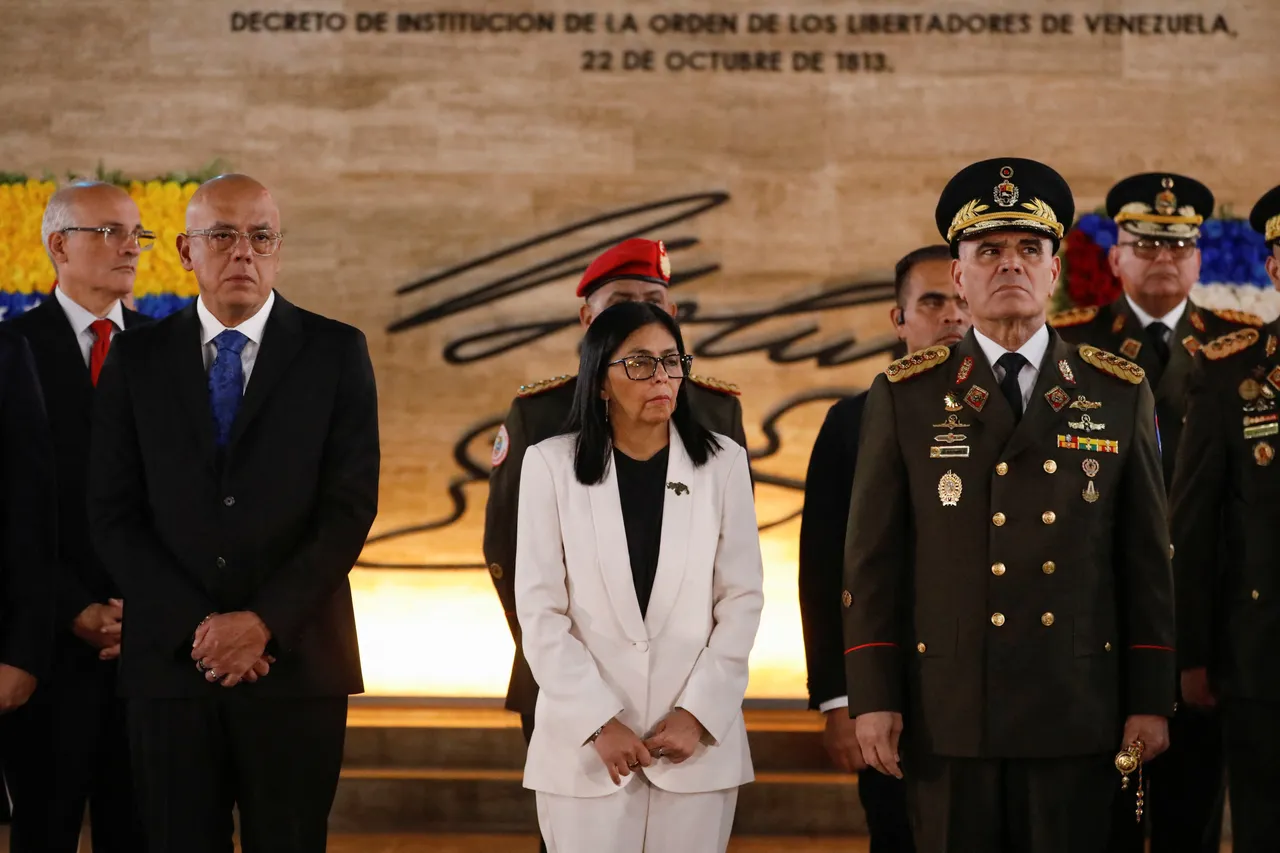
After Maduro’s ousting, the South American country, which boasts the world’s largest oil reserves, has been led by four key figures: Rodriguez, Defence Minister Vladimir Padrino López, Interior Minister Diosdado Cabello, and Jorge Rodriguez, the president of the National Assembly and the current president’s brother.
Analysts say that the focus is no longer on Maduro himself, but on the remaining pillars of power capable of reshaping the state from within. This strategy centres on controlling key institutions rather than dismantling them outright.
“In the absence of Maduro, the US wants to control the army and transform the Venezuelan government through the Rodriguez siblings. This is the fundamental American strategy," Mehmet Ozkan, a professor of international relations at National Defence University, tells TRT World.
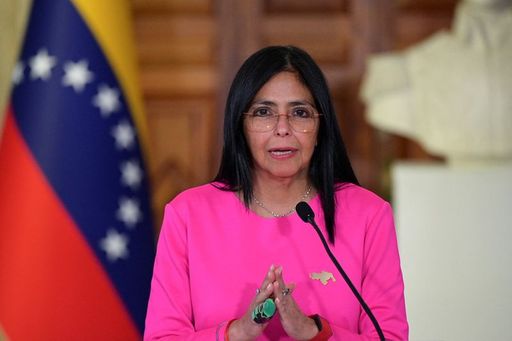
On January 5, following Maduro’s removal and her assumption of leadership, Delcy Rodriguez issued a conciliatory message to the Trump administration, inviting it to collaborate on “an agenda of cooperation oriented towards shared development within the framework of international law to strengthen lasting community coexistence”.
But it remains to be seen how Rodriguez’s message will resonate with the military brass, as Venezuelans have mourned more than 100 deaths, most of whom were security personnel, with pro-Maduro protests shaking the capital, Caracas.
The military is key
In this equation, experts say the most crucial element is how the Venezuelan security forces under Padrino and Cabello will act and respond to both US pressure and Rodriguez’s possible efforts to change direction to meet Trump’s demands.
“If the military leadership remains largely under Delcy Rodriguez's control and doesn't oppose the transformation in the country, the rest of the army establishment might feel that they will lose power and act through a military coup,” Ozkan says.
“In this scenario, further violence and problems await the US.”
While the Trump administration took Maduro out of the Venezuelan landscape, emerging signs show no indication that his security apparatus is likely to collapse anytime soon.
Last week, Defence Minister Vladimir Padrino released a video message stating that Venezuela will resist foreign military presence, signalling the security apparatus’s tough stance.
“In the short term, the key factor determining the behaviour of the security apparatus is the evolving relationship between the top command and the ruling political class,” Ozgur Korpe, a military expert who is also a visiting lecturer at the National Defence University, tells TRT World.
“Reliable signals indicate that military cadres are still an extension of the previous regime.”
Both Padrino’s message and some slogans delivered at the funeral of the officers who died in the US operation – “the blood spilled is not for revenge, but a cry for justice and power” – demonstrate that the Chavista security apparatus continues to operate because it is based on “institutional networks of relationships, not on individuals” like Maduro, according to Korpe.
But Korpe also draws attention to a critical dimension: a slightly different dynamic is at play in the lower and middle ranks of the military because significant discontent has accumulated there due to the economic crisis and harsh living conditions.
“Messages from exiled former officers expressing their readiness to return to the country suggest that the unhappiness in the lower ranks has the potential to produce a political outcome in the future,” he says.
Korpe suggests that lower and middle-level discontent typically lead to a political outcome when the top leadership's perception of internal threats, which are closely linked to social pressures depending on the economic crisis's progression, changes.
“In this case, it is possible for the top command to become more open to a controlled transition in order to protect its own interests,” says the military analyst, adding that one should not completely close the door to the possibility of a revolution from below.
“In a political geography with a revolutionary history like Latin America, such initiatives would not be surprising.”
What does collaboration mean?
Rodriguez’s reference to a possible collaboration with the Trump administration has led to different assessments.
The verb “to collaborate” has different meanings depending on interpretation, as some hard-core Marxists might see it as a break from the core ideology to comply with the demands of American "imperialism", a word Rodriguez initially used to describe Trump’s abduction of Maduro. But it might also mean a temporary settlement with a superpower.
"We prioritise moving towards balanced and respectful international relations between the United States and Venezuela,” Rodriguez also said, adding that "President Donald Trump, our peoples and our region deserve peace and dialogue, not war.”
Rodriguez faces a dilemma where she must maintain her ideological stance in line with the country’s anti-imperialist Chavista movement while allowing the Trump administration, through American oil companies, access to Venezuela’s extensive oil reserves.
“Everything depends on what is meant by the word collaboration,” Alfonso Insuasty Rodriguez, coordinator of the Inter-University Network for Peace, tells TRT World.
“She has stated that the door remains open to dialogue, in a clearly diplomatic tone, but she has also been firm on several substantive points: the legitimate president is Nicolás Maduro, he must return to the country, the aggression must cease, and steps must be taken to repair the damage caused,” Rodriguez, who is also director of the GIDPAD research group at the University of San Buenaventura, says.
Among many disagreements between the two states, “the oil issue emerges as a sensitive axis, the Achilles’ heel of this dispute,” he says, adding that Venezuela will continue to respect existing agreements with other countries, including China and Russia.
But Trump clearly stated that he wants to seize Venezuelan oil as the US military continues to patrol the Caribbean Sea, blocking oil shipments.
In a recent move, the US seized a Russian-flagged oil tanker linked to Venezuela, which has had strong relations with Moscow under Maduro's rule. Venezuela exports more than 90 percent of its oil to China.
Under continuing US pressure, the current leadership in Caracas seeks to de-escalate tensions with the US, whose highly specialised military apparatus, with technological supremacy, has “more than two centuries of experience in invasions, extraterritorial interventions and covert operations,” and is constantly receiving training in asymmetric warfare scenarios.
As a result, Rodriguez sees the interim president’s conciliatory statement toward Trump as “an exercise in high-level politics” aimed at easing the possibility of an armed confrontation, “without renouncing the foundations of the national project”, referring to Venezuela’s Chavismo movement.
“Under no circumstances does it imply accepting a co-government, nor, even less so, any delegation of power or strategic decision-making of the Venezuelan state to the United States,” Rodriguez says.
He also points out that the socialist paramilitary groups known as colectivos are coordinating with the armed forces to ensure political stability while international legal proceedings continue.
“There is cohesion; the cognitive war continues, aiming through rumours to break that cohesion — so far, unsuccessfully,” he says, referring to the newly installed National Assembly under Delcy Rodriguez’s brother.