 Murat Sofuoglu
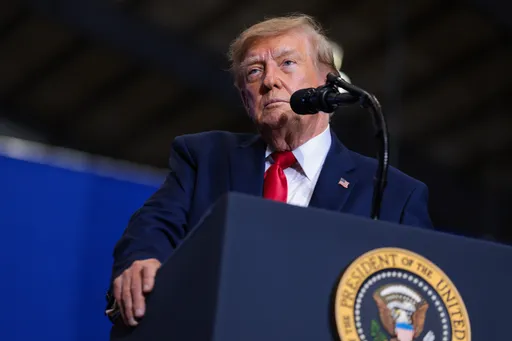
In 2019, when Donald Trump started talking about taking control of Greenland, an autonomous self-ruled region of the kingdom of Denmark, most saw it as mere rhetoric by the US President for domestic political gains to appease his MAGA base.
A year into his second stint at the White House, Trump has ratcheted up his demand for the takeover of the mineral-rich and strategically located island, citing it as imperative to US security.
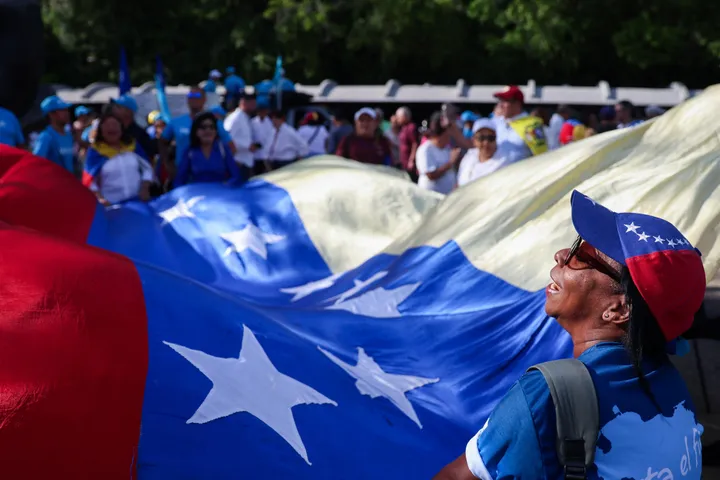
The rhetoric has only become shriller after the US military operation in Venezuela and the abduction of President Nicolas Maduro and his wife in the first week of January.
For analysts and experts, Trump’s words are no longer mere threats but the realisation of the long-cherished American dream of dominating the Western Hemisphere.
Copenhagen-based international security expert Muhammed Athar Javed says that Trump appears to be “serious” about taking over Greenland because he “very clearly stated that US national security interests lie in the occupation or annexation” of the world’s biggest island, strategically located near the Arctic region.
Trump claims that he wants to seize the island due to the increasing presence of Chinese and Russian vessels in the Arctic region.
“It’s so strategic,” Trump asserted on board Air Force One on Sunday. “We need Greenland from the standpoint of national security.”
Javed, for one, feels that “it just makes sense for Trump to take control of Greenland”, highlighting the fact that an operation would not require many resources because Denmark is a very small country.
“It cannot really compete with the United States,” Javed tells TRT World.
Over the past few days, the Trump administration has floated the idea of a military invasion to “buying” Greenland from Denmark, which has reacted angrily to the statements emerging from the White House.
Other experts also draw attention to the fact that Greenland – with a population of just 57,000 – could be the next after Venezuela because it will be an easy, costless win like Maduro’s capture from Caracas with “spectacular military action that delivers big headlines but avoids the boots on the ground quagmires”.
Return to old power politics?
NATO nations have thrown their weight behind Denmark – also an alliance member – and called on the Trump administration to respect the will of Greenland’s people as well as its sovereignty.
Trump’s officials have, however, explicitly told the world to back off.
During a recent interview, the White House deputy chief of staff Stephen Miller reasserted that Greenland should be part of the US, adding that “nobody is going to fight the United States over the future of Greenland”.
While taking over a territory by force from a sovereign nation like Denmark is a clear violation of international law – like Russia’s annexations of Ukrainian territories – Miller mocked what he referred to as “international niceties”.
“But we live in a world, in the real world…that is governed by strength, that is governed by force, that is governed by power. These are the iron laws of the world,” he added, hinting that the Trump administration is sticking to the might-is-right policy.
This power politics is not alien to the US leadership, which had earlier launched many invasions across the Americas – from Mexico to the Dominican Republic – acquiring much territory from different countries by either force or money, says Evren Kucuk, a professor of international relations at Kastamonu University and an expert on Nordic politics.

“The idea of buying Greenland appeared and disappeared in the US political agenda several times in the 19th century, but American policy makers did not find buying the island a worthwhile investment at the time,” Kucuk tells TRT World.
But for Trump - a real estate developer-turned politician – acquiring Greenland is definitely a worthy investment.
Given the fact that Denmark has already granted many privileges to the US to access the island’s sources, even allowing Washington to operate a military base on the remote island, some experts appear puzzled about Trump’s real intentions.
According to Javed, Trump is seeking “complete and comprehensive territorial control” of Greenland for the implementation of high-tech development. Many of the president’s rich friends – like Paypal co-founder Peter Thiel – have been eyeing the largely empty island for their crypto-empowered investments.



“Trump’s ambassador to Denmark, Ken Howery, was a co-founder with Thiel and Elon Musk of PayPal. Silicon Valley is awash with billionaires invested in one kind of networked venture or another. Greenland is high on most lists. Unlike Mars, occupying Greenland is doable,” wrote Edward Luce of The Financial Times.
How will Denmark respond?
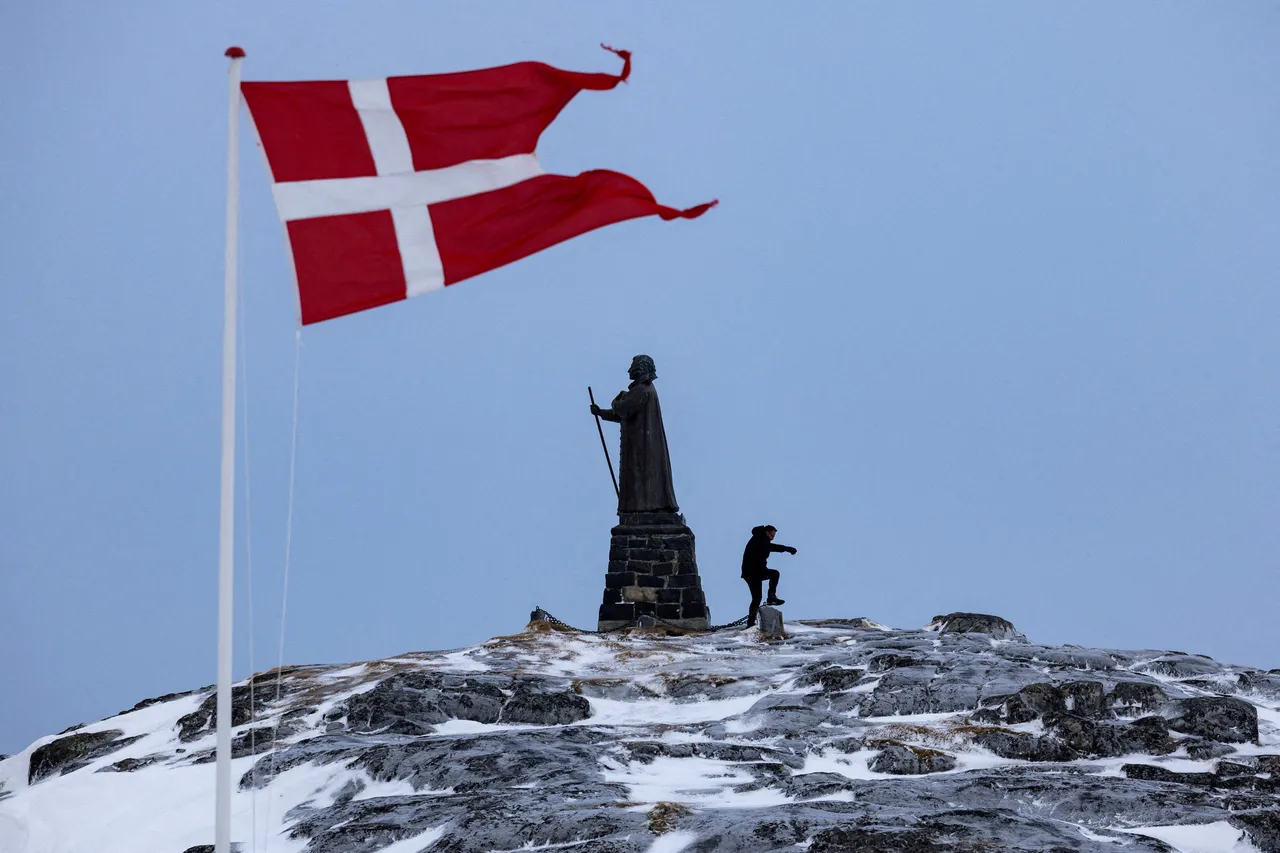
Denmark has repeatedly said it will not transfer Greenland’s sovereignty to the US under any circumstances, including Trump’s offer to buy it. Earlier, Washington acquired many of its large states like Louisiana, Florida and Alaska from France, Spain and Russia, respectively.
In December, Danish intelligence services classified the US as a security risk in its 2025 outlook report, accusing Washington of using its economic power to “assert its will” on the island and mentioning the Northern American state in its threats list alongside China and Russia.
Most recently, responding to the Trump administration’s escalation against Greenland, Denmark Prime Minister Mette Frederiksen issued a stark warning that “if the United States decides to militarily attack another Nato country, then everything would stop – that includes NATO and therefore post-Second World War security.”
Unlike Venezuela, which is led by an anti-American socialist government, Greenland is a democratically-led autonomous territory of a NATO state, says Denys Kolesnyk, a Paris-based political analyst and president of the MENA Research Centre.
Kolesnyk, however, finds it “difficult to imagine a US armed assault against a NATO ally”, which would put the alliance itself under unprecedented strain.
“[E]ven though the world has become much less predictable than two or three decades ago, such a move would put an end to NATO altogether and therefore empower Russia and China, which goes against US interests,” Kolesnyk tells TRT World.
When Denmark launched military exercises around Greenland to signal that the country is not open to any negotiation on the island’s political status, Trump ridiculed Copenhagen’s moves. “You know what Denmark did recently to boost security in Greenland? They added one more dog sled.”
While Javed, a resident of Denmark, does not think that the US takeover of Greenland will be the end of the Atlantic alliance, he concedes that it will lead to “cracks and fragmentation will start appearing,” reminding the fact “once a military alliance has been mistrusted and its own allies stand against each other, basically there is no more alliances.”
But Javed offers a pragmatic middle solution, which is a possible joint management of the island by the US and Denmark through an agreed framework of a joint monitoring system, to address growing tensions between the two NATO allies.
“The problem can be resolved by bringing a new amendment in the NATO constitution saying that Greenland can be jointly controlled by different countries on rotation,” he says, referring to Denmark and the US.
A US official, speaking on condition of anonymity, mentioned the formation of a Compact of Free Association with Greenland, which is a similar idea to what Javed offered.
However, for Denmark, facing such a threat from the US is challenging and presents a political dilemma, which has implications for the future of international security as well, he adds.
Growing rift between EU and US
The issue of Greenland has also increased tensions further between Brussels and Washington, which has charged the EU leadership in its recent National Security Strategy document with many failures – from not having “self-confidence”, to doing nothing to stop migration and not defending Western civilisation well enough.
At the end of the day, the island is part of the EU through Denmark, which warned the US not to act against its sovereignty. “The EU will continue to uphold the principles of national sovereignty, territorial integrity and the inviolability of borders,” said the EU’s foreign policy spokesperson, Anitta Hipper.
“Greenland belongs to its people. It is for Denmark and Greenland, and them only, to decide on matters concerning Denmark and Greenland,” said a recent joint statement by leaders of France, Germany, Italy, Poland, Spain, Britain and Denmark.
According to Kolesnyk, Trump’s push on Greenland, coupled with the recent intervention in Venezuela, has significantly increased tensions between the US and the EU.
“To put it in simpler words, it erodes trust between Washington and European capitals,” he says.
The EU could slap severe economic sanctions on the US, and even trigger Article 42.7 of the Treaty of European Union (TEU), a clause on mutual defence without undertaking military hostilities, says the Paris-based analyst.
“Such an event would push the EU towards more coordination, potentially a European army, and the understanding that Europe can only rely on itself,” he says, but he finds this scenario very unlikely.
But Gregory Simons, an independent researcher and a formerly Sweden-based academic, was blunt on Europe’s response to Trump’s increasing demands, seeing the EU as “a clear vassal of the US” because “they go along with most things the US does and says, such as the Gaza genocide.”
“The EU is spineless and powerless to do anything other than some hollow rhetoric and empty threats… Such as this slogan that this (the Greenland move) will end NATO, but fails to acknowledge that without the US, there is no NATO.”