A United Nations Environment Programme (UNEP) report has revealed that Gaza’s natural water resources are rapidly depleting, with 97 percent of groundwater failing World Health Organization (WHO) standards.
Seawater intrusion and nitrate pollution are driving contamination, threatening the health of Palestinians amid Israel’s continuous attacks in the territory, despite the October 10th ceasefire deal, according to data compiled by Anadolu Agency.
Israel’s over two-year genocidal war in Gaza has killed over 68,200 Palestinians, including 20,000 children, and devastated plant, animal, and agricultural life.
Thousands of displaced residents live in makeshift tents, struggling with food, water shortages, and toxic debris under constant bombardment.
The combined environmental and humanitarian crisis leaves Gaza facing catastrophic ecological collapse and severe risks for its surviving population.
Before the attacks, Gaza had three desalination plants, 292 groundwater wells, 54 water reservoirs and pumping stations, and six wastewater treatment plants.
By April this year, water storage capacity had dropped by 84 percent, and wastewater treatment facilities had become inoperable.
Hepatitis A cases rise 384-fold
The collapse of the sewage system, with only one toilet for every 360 people and one shower for every 2,400, has triggered a 36-fold increase in watery diarrhoea cases, a 24-fold rise in bloody diarrhoea, a 384-fold surge in Hepatitis A, and a resurgence of polio.
According to the WHO, acute respiratory infections and diarrhoea accounted for 99 percent of all diseases in Gaza this year.
UNEP satellite analysis shows that between October 2023 and May 2025, most of Gaza’s soil and vegetation were destroyed.
By May 2025, 97 percent of the tree cover, 82 percent of the annual crops, 95 percent of the shrublands, 89 percent of the pastures were wiped out, and 75 percent of the arable land became unusable.
Endemic plants wiped out
Gaza hosts 220 plant species, 140 bird species, and 30 terrestrial animal species.
Following the attacks, 90 percent of coastal dune vegetation, 80 percent of waterbirds around Wadi Gaza, and 70 percent of agricultural pollinators disappeared.
Fires and military activity have destroyed habitats of local species, including endemic plants such as Matthiola livida and Atriplex halimus, which can no longer be observed in the wild.
Some 67 percent of agricultural land was either directly bombed or used as temporary military zones.
Irrigation lines (80 percent), greenhouses (70 percent), and cold storage facilities (95 percent) were destroyed, forcing 85 percent of farmers to abandon production.
Poultry farming has almost completely halted.
In the attacks, 67 percent of agricultural land was directly bombed or used as temporary military zones. While 80 percent of irrigation lines, 70 percent of greenhouses, and 95 percent of cold storage facilities were destroyed, 85 percent of farmers were forced to abandon agricultural production, with poultry farming in particular coming to a near standstill.
Coastal infrastructure destroyed or unusable
Israel’s attacks destroyed or rendered 92 percent of the coastal infrastructure inoperable.
Damage to wastewater treatment plants resulted in the daily discharge of 130,000 cubic meters of raw sewage into the sea.
Bacterial and coliform levels in seawater reached 40-60 times the WHO limits.
During the 2024–2025 season, the number of fish species that could be caught dropped from 35 to nine, and fish stocks also declined by 50 percent.
As a result, 18,000 people who made a living from fishing lost their jobs.







Following the disruption of the salinity balance and oxygen levels in the seawater, algal blooms were observed along the Gaza coast, and 88 percent of seagrass (Posidonia oceanica) and 90 percent of shellfish have been destroyed.
Along the coast, 700,000 tonnes of debris, around 30,000 tonnes of metal waste, and petroleum residues have accumulated.
While part of this debris has directly entered the sea, it has altered the coastal morphology and accelerated erosion.
In some coastal areas, the shoreline has retreated by up to 100 meters (328 feet). This change has increased the interaction between groundwater and seawater, accelerating saltwater intrusion.
Over 60 million tonnes of debris
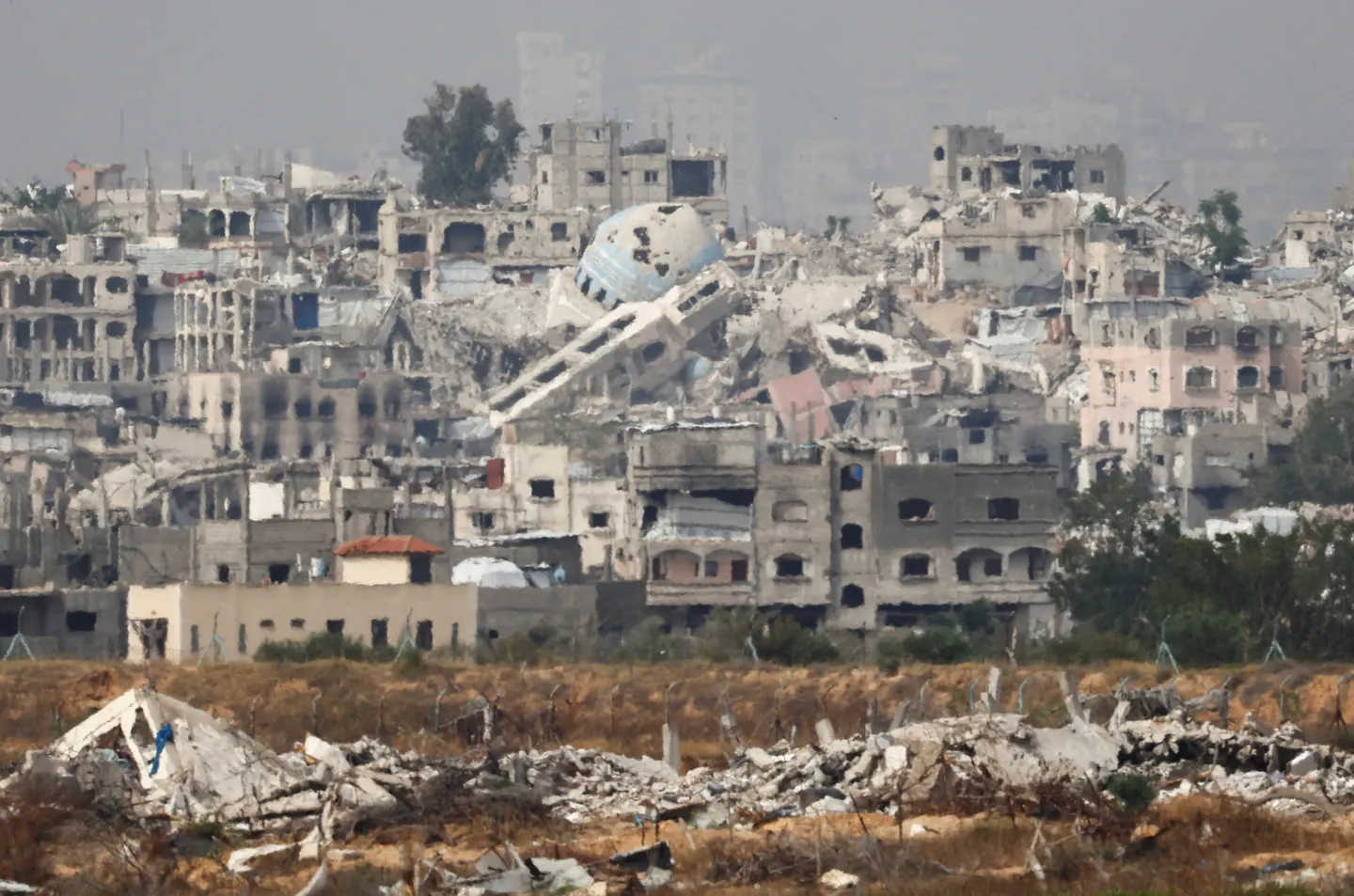
UNEP and the UN Satellite Centre (UNOSAT) data show that 78 percent of buildings in Gaza were destroyed or severely damaged.
The attacks generated 61 million tonnes of debris — 20 times the total from all conflicts between 2008 and 2022 — equivalent to 170,000 tonnes per square kilometre of Gaza’s area.
UNEP found that 11 percent of the debris contains asbestos, 8 percent heavy metals and toxic paint residues, and 3 percent burnt plastic and chemical waste.
Since October 2023, 90 percent of waste collection systems have collapsed, resulting in approximately 100,000 tonnes of medical, food, and chemical waste being left in open, uncontrolled areas.
Air pollution in Gaza surpasses measurable limits
Authorities have resorted to burning some waste due to capacity limits.
UNEP measurements indicate fine particulate matter (PM2.5) concentrations six to eight times higher than normal, reaching 60-100 times the WHO limits in some areas.
Targeted fuel depots created dense black smoke over Gaza for weeks, sometimes reaching Ashkelon in Israel and El Arish in Egypt, according to satellite images.
Use of banned weapons
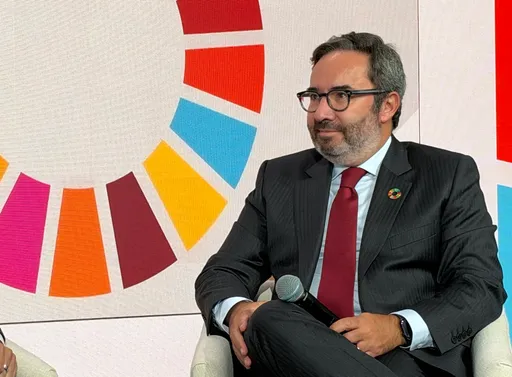
Abeer Butmeh, the coordinator of the Palestinian Civil Society Environmental Network, told Anadolu that the war has completely changed life for everyone in Gaza.
Butmeh said Palestinians rely on agriculture but cannot access farmland since the war began.
Although it is olive harvest season, they are unable to access their trees.
She noted that 94 percent of agricultural lands were targeted, leaving nearly all farmland damaged.
She added that Israel’s use of heavy metals and banned chemicals has long-term, often irreversible, effects on agriculture.
“We can see the effects of using these chemicals on agricultural areas by eye. So, we can see even if the trees still stand out, stand in the soil, we can see that a huge amount of trees are dry as a result of the weapons, as a result of the high salinity of the soil,” Butmeh said.
Butmeh emphasised that even the few untargeted areas are largely inaccessible due to evacuations.
Israeli restrictions prevent Palestinians from reaching these lands, halting agriculture almost entirely.
She added that wells in areas with displaced people are contaminated with faecal coliform bacteria due to leaking solid waste and untreated sewage.
Since the start of the war, Israel has deliberately targeted Gaza’s infrastructure, causing large volumes of wastewater to reach streets, tents, and the sea, Butmeh noted.
She noted that as a result of accelerated Israeli violence, whether by the Israeli forces or by the Israeli settlers, “there is no safe place even in the West Bank.”
“There are different challenges, environmental challenges in the Gaza Strip. Let me start with a population of a huge amount of solid waste without separation. So, the medical toxic waste, which is a toxic waste, is mixed with a huge amount of different types of waste and accumulated in front of the shelters and in the displaced areas. So you can imagine how the leaked wastewater harms the environment and the groundwater when it penetrates the soil,” Butmeh said.
She said that Israel is using water, food, and energy resources as a “war weapon,” adding that people in Gaza are trying to grow various crops in small patches of land between tents to secure food, while most rely on saline water.