 Sadiq S Bhat
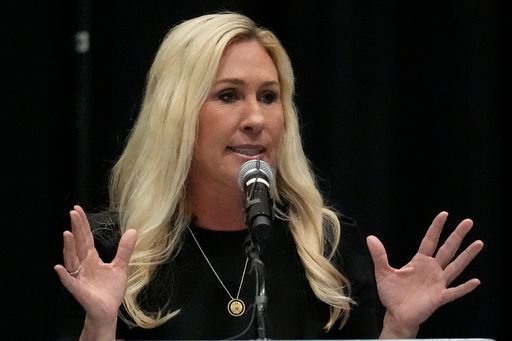
Washington, DC — For years, Representative Marjorie Taylor Greene of Georgia state embodied fierce devotion to the Make America Great Again (MAGA) movement.
She was a congresswoman who once was President Donald J. Trump's most vocal defender in the US Congress, rallying crowds with cries of "fight like hell" and fundraising off her loyalty to the president.
But in an astonishing turn this week, Greene has emerged as one of Trump's sharpest critics from within the Republican ranks, publicly demanding the release of long-sealed files related to Jeffrey Epstein, the deceased financier and convicted sex offender with deep ties to powerful figures.
The sharp clash has started a cascade of personal attacks, anonymous threats against Greene and her family, and a rare moment of introspection.
Greene, in a candid CNN interview on Sunday, declared she was done with the "toxic politics" that defined her rise.
The episode, unfolding just days before a much-awaited US House of Representatives vote on compelling the Justice Department to disclose the Epstein documents, has laid bare cracks in the MAGA camp.
At the moment, America's right-wing appears to be battling questions of loyalty, transparency, and the lingering shadow of Epstein's network, a scandal that has entangled Democrats and Republicans alike but poses a notable risk for Trump, who was friends with disgraced sex offender Epstein for years but said the two had a falling-out around 2007.
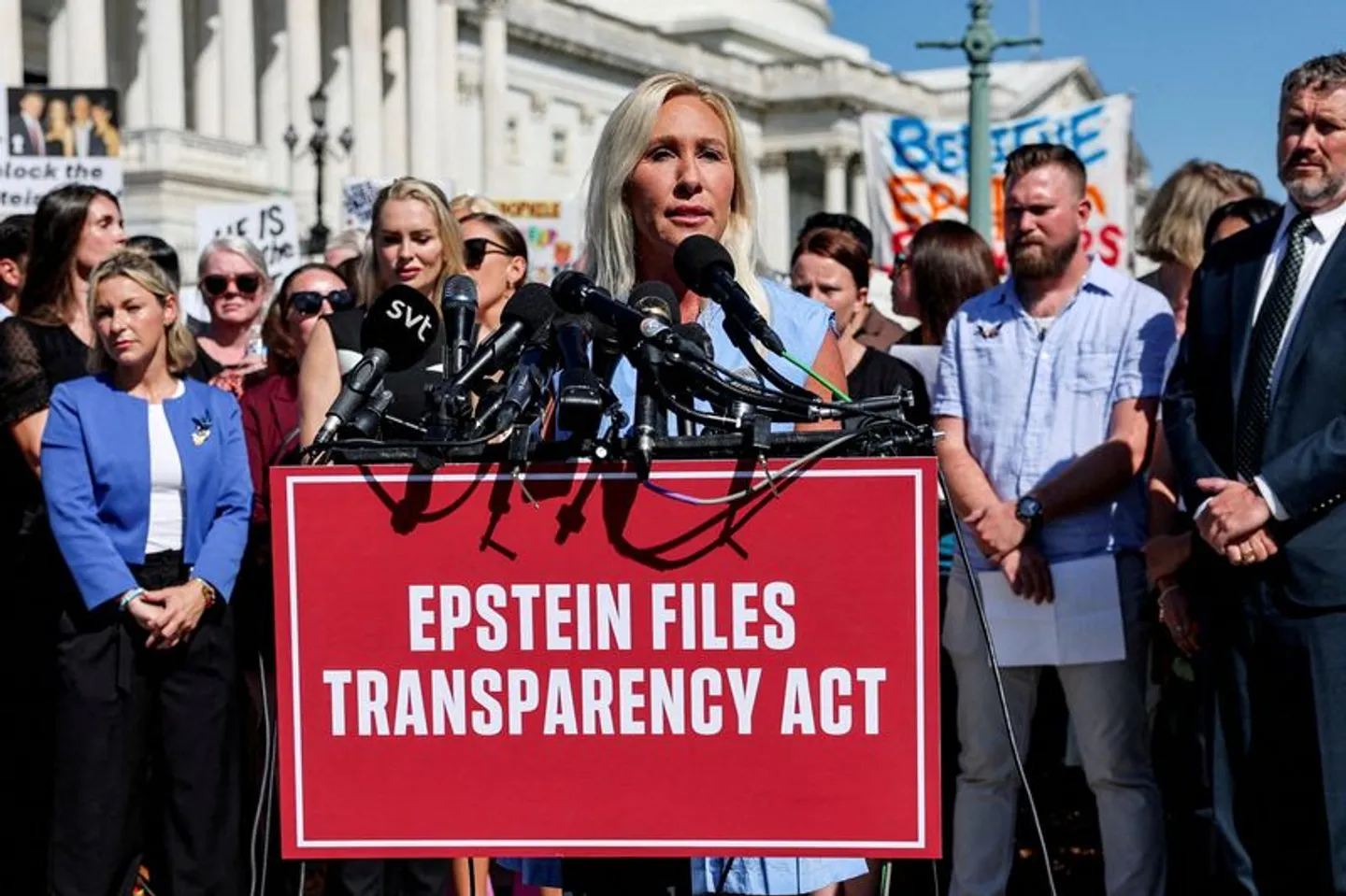
Greene's challenge began last month, when she became part of a discharge petition to force a vote on the files, bypassing top GOP leadership in a move that caught her allies off guard.
"The Epstein files MUST be released! Every name, every page, every connection... Americans deserve transparency," she posted on November 13.
The petition quickly garnered support from a bipartisan group of lawmakers, including several Republicans like Thomas Massie, Lauren Boebert, and Nancy Mace.
Trump, who has repeatedly dismissed the files as a "Democrat hoax" designed to smear him, responded with fury.
On Truth Social last Friday, he branded Greene a "wacky traitor" and a "ranting lunatic" who was "working overtime to try to portray herself as a victim."
Trump added that Greene is a "traitor" and "disgrace" to the Republican Party.
Swift tactical move
The vitriol escalated swiftly.
Greene reported harassment on Saturday, including hoax pizza deliveries to her home in Rome city, and those of her family members.
By Sunday morning, her construction company had received a pipe bomb threat.
And on Monday morning, police received a pair of e-mails "in reference to the threat of Assassination to Marjorie Taylor Greene's son," according to an incident report obtained by NBC News.
In a lengthy X post, Greene directly blamed Trump's words.
"I stood with President Trump when almost no one else would. I campaigned for him all over this country and spent millions of my own dollars helping him get elected. That's why being called a 'traitor' isn't just hurtful, it puts a target on my back and puts my life in danger. And it only divides our country even more," she wrote.
Trump dismissed the claims, saying that Greene was "not in danger because no one cares about her."






Yet, even as allegations swirled, the US President executed a tactical pivot.
In a statement late on Sunday, he urged House Republicans to "vote yes" on the discharge petition, calling the release of files a matter for Congress to decide.
The feud has now rippled beyond the two principals, and tension appears to be running high in the party.
For Greene, 51, the break marks a personal reckoning.
In her CNN interview with Dana Bash, her first major network appearance since the rift, she apologised for years of inflammatory rhetoric that had made her a pariah in Washington and a hero to the MAGA base.
"I would like to say, humbly, I'm sorry for taking part in the toxic politics; it's very bad for our country," Greene said. "It's been something I’ve thought about a lot, especially since Charlie Kirk was assassinated."
It was a far cry from the Greene of 2021, who filed articles of impeachment against President Joe Biden on his first day in office and suggested that California wildfires were caused by "space lasers" funded by the Rothschild family.
Her embrace of QAnon conspiracies and calls for a "national divorce" between red and blue states cemented her as the face of GOP's extremes.
Yet even then, cracks appeared.
She clashed with Speaker Kevin McCarthy over her committee assignments and drew rebukes from fellow Republicans for her vaccine scepticism during the pandemic.

Secret files revealed
Analysts see the current schism as a sign of bigger fractures ahead in the GOP as it hurtles toward the 2026 midterms.
With Republicans holding slim majorities in Congress, many think that such open bickering could drive supporters away.
Democrats, sensing opportunity after a long time, have stayed largely on the sidelines, though House Minority Leader Hakeem Jeffries praised Greene at the culmination of the recent government shutdown.
When asked by CBS Evening News if he found any Republican allies during the 43-day impasse, the Democratic leader replied: "Three words — Marjorie Taylor Greene."
Capitol Hill now stands on the edge of Wednesday's vote, the moment when the bipartisan HR 4405, the Epstein Files Transparency Act, could reveal decades of sealed history.
Should it pass, the Epstein files may unearth awkward truths for names on both sides of the aisle, including the sitting US President, whose star still casts a long light over the Republican universe.
For Greene, a shadow still hangs. In her X post, she ended with a plea for unity: "The toxic political industrial complex thrives on ripping us all apart but never delivers anything good for the American people, whom I love."
Whether her shift holds or folds, no one can yet say.