 Sadiq S Bhat
Washington, DC — The US House of Representatives has cleared the Epstein files bill in a 427 to 1 sweep after weeks of stalling.
The bill would force the Justice Department to publish all unclassified records tied to Jeffrey Epstein and Ghislaine Maxwell.
Every Democrat backed it, along with all but one Republican. The lone holdout was Clay Higgins of Louisiana.
No more sealed transcripts. No more private lists. Just files, in full view, within 30 days of its passage.
What happens next depends on the vote, the Senate, and the will to keep names unredacted.
How the vote reached the floor
This vote only exists because of a legislative manoeuvre.
A bipartisan discharge petition, led by Republican Thomas Massie and Democrat Ro Khanna, collected the required 218 signatures. It bypassed House leadership and forced the bill to the floor.
Adelita Grijalva of Arizona provided the decisive signature after joining Congress this month. Quiet but decisive, it tipped months of pressure into action.
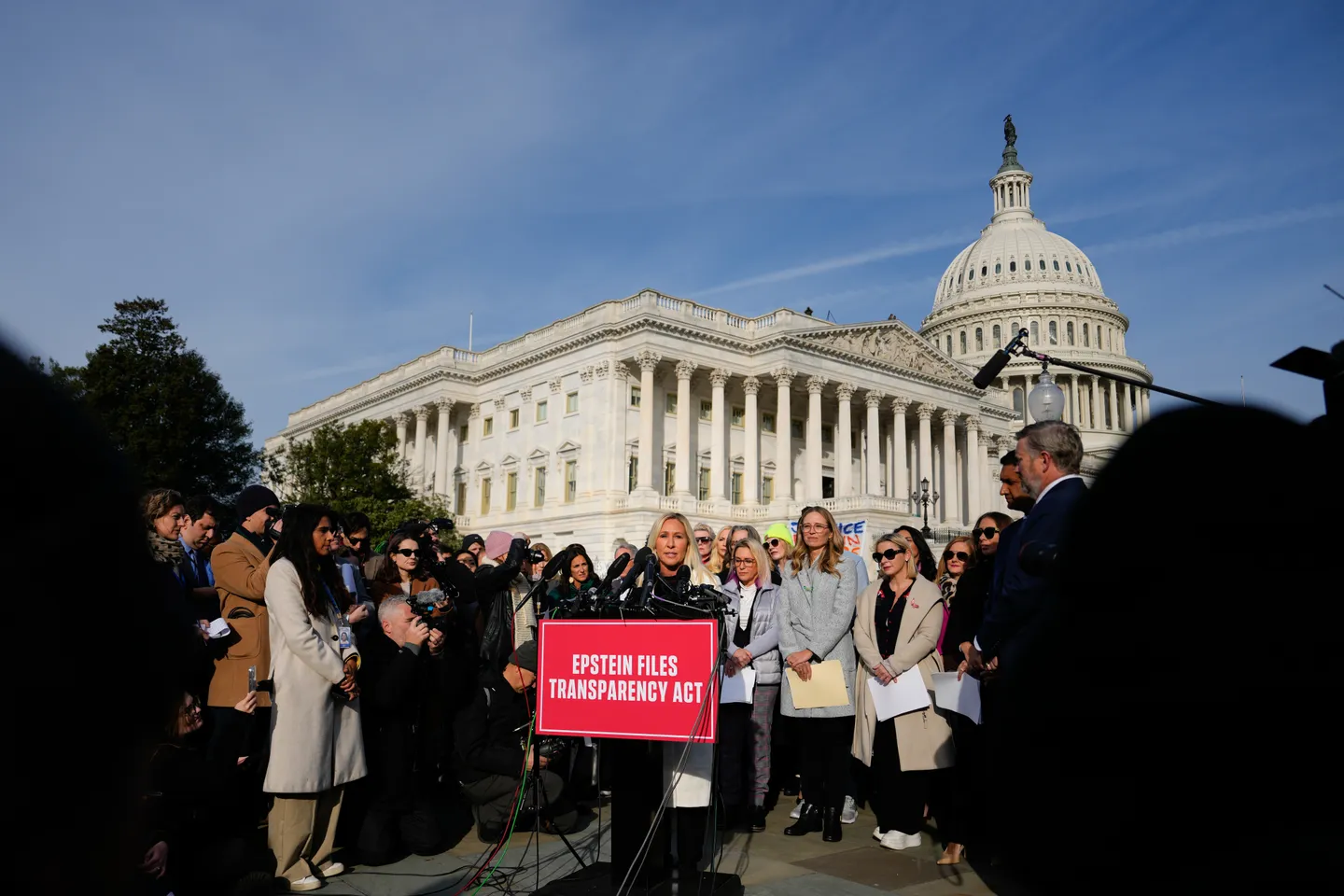
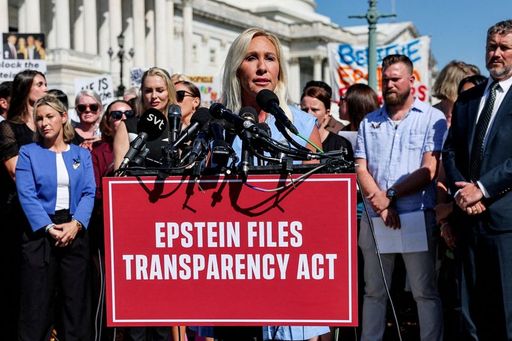
Firebrand Republican Congresswomen Marjorie Taylor Greene, Massie, and Massie stood together at a press conference this morning outside the US Capitol.
Some of Epstein’s victims stood beside them. “Today is the first day of real reckoning for the Epstein class,” Khanna said.
The term hints at influence, not just crime.
What the Bill would do
The Epstein Files Transparency Act orders the Attorney General to release every unclassified DOJ record related to Epstein.
That includes FBI documents, US Attorney correspondence, travel logs, flight manifests, internal emails, and investigative reports.
Redactions are only allowed if they protect victim identities or ongoing investigations. Not political reputations.
It is specific in language and scope and no longer allows quiet exemptions for powerful public figures.
A consensus in Congress
The bill has growing support across the aisle.
Massie predicts “100 or more” Republicans could vote for it. He wants a veto-proof majority. That would send a message even before the files appear. He also warns of delays.
“I'm concerned that now he's (Trump) opening a flurry of investigations, and I believe they may be trying to use those investigations as a predicate for not releasing the files. That's my concern,” he said.
Marjorie Taylor Greene told reporters she expects a unanimous vote.
What names could be exposed?
The files are said to include high-profile names.
Larry Summers is one of the several people whose connections are being alleged. The former Harvard president and Treasury secretary said yesterday he would step back from public commitments. Emails revealed he maintained friendly ties with Epstein long after his 2008 conviction for sex crimes.






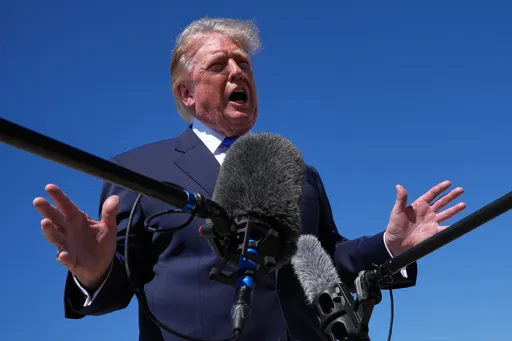
Trump has denied any wrongdoing and has not been charged with crimes tied to Epstein. During a press interaction with Saudi Crown Prince Mohammed bin Salman, Trump reiterated, “I have nothing to do with Epstein.”
The files may show who met Epstein, flew with him, or funded him.
Some may have known nothing. Others may have known enough.
Survivors demand accountability
Sky Roberts, the brother of the late Virginia Giuffre, one of Epstein’s most prominent accusers who died by suicide earlier this year, has urged US lawmakers to support the release of Epstein’s case files.
Congressman Khanna views the bill as a moral obligation. “There are a lot of other people involved who have to be held accountable,” he says.
He has urged Trump to meet with survivors. Some of them worry that the spectacle will overshadow the truth.
What could block it
Even a strong House vote does not guarantee the bill becomes law. The Senate remains uncertain.
Speaker Mike Johnson has raised concerns about protecting victims from exposure. “I’m not sure the discharge does that, and that’s part of the problem,” he said this week.
The bill’s backers point to clear victim safeguards in the text. They say the concerns are misdirection.
To pass the Senate, the bill needs 60 votes. That means 13 Republican votes from a chamber where the leadership is sceptical. Even if it makes it through, a veto could (in theory) stop it.
President Trump says he would sign the measure.
Even if signed, the Justice Department could delay implementation. They could claim national security concerns, redact, or run out the clock.
Advocates worry “searchable and downloadable” files may still hide the truth in plain sight.
Stakes for America
Khanna made it plain. “Once the files are released, I think it's going to shock the country.”
He added, “There are rich and powerful men who either abused these young girls or who have covered it up, and some of these people still are on corporate boards, they still have scholarships named after them, they have buildings named after them. And the American people are going to be shocked when they learn this. And what the survivors want is for these names to come out and for them to be held accountable.”
He ended with a line that cut through politics. “The facts need to come out, and whoever is caught up with it needs to be held accountable, Democrat or Republican.”
What today really means
This vote is not just procedural. It is a test of political will.
The Epstein Files Transparency Act will measure how far the US Congress is prepared to go in exposing the network around the late convicted financier.
Today’s result will set the tone for the next stage of the search for answers in one of America’s most guarded and troubling chapters.