 Murat Sofuoglu
As Hamas released all living captives and Israel set free nearly 2,000 Palestinian prisoners on Monday, the first phase of the Gaza ceasefire appeared to be on track amid growing hopes of enduring peace in the region.
In a day of fast-moving developments, US President Donald Trump addressed the Israeli parliament Knesset, before heading to Egypt, where he signed a crucial ceasefire document with Turkish, Egyptian and Qatari leaders.
While the world’s collective focus now shifts to the second phase, the biggest question will be about the future of Hamas, the Palestinian resistance group at the front and centre of the war since October 7, 2023.
The peace document signed at Sharm al-Sheikh has no reference to Hamas, though Trump’s 20-point peace plan, which calls for its disarmament and demobilisation, and the transfer of power to an international stability force.
As the ceasefire takes hold, Hamas fighters have emerged from hideouts to patrol the destroyed streets of Gaza, demonstrating that it remains a force to be reckoned with despite suffering staggering losses in the two-year war with Israel.
Formed in 1987 as an alternative resistance force to Fatah, Hamas continues to enjoy widespread support among Palestinians, according to a May poll.
The survey indicated that Hamas still enjoys more support than Fatah in both the occupied West Bank and Gaza, where it was elected to power in 2006.
According to the poll, an overwhelming majority of Palestinians are opposed to Hamas’s disarmament or the departure of its military leadership from Gaza.
A recent report suggests that even Trump recognises the need for Hamas to control parts of Gaza, at least temporarily, for the enclave’s security. "We gave them approval for a period of time," he told reporters during his flight to the Middle East on Air Force One.
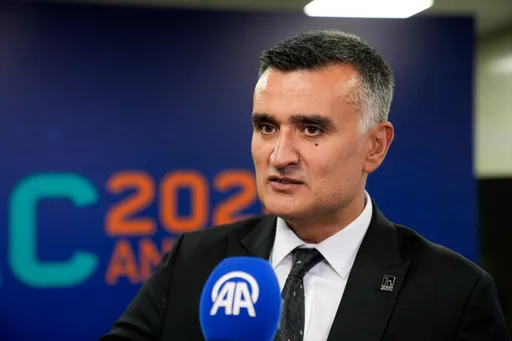
Luciano Zaccara, a Doha-based expert on the Middle East and Gulf, sees pragmatism in Trump’s comments.
“Israel and the US have been saying that Hamas should be totally out of the picture….But it seems that, at least, Trump realised that it is not 100 percent doable,” Zaccara tells TRT World.
Hamas is needed, at least for now
Even in remarks ahead of the peace summit in Sharm al-Sheikh, Trump suggested that Hamas might be needed to fill the security vacuum in Gaza, as close to two million seek to return to their homes in the devastated enclave.
“A lot of bad things can happen. So we want it to be….we want it to be safe…," Trump said, referring to Hamas’s post-conflict security role in Gaza.
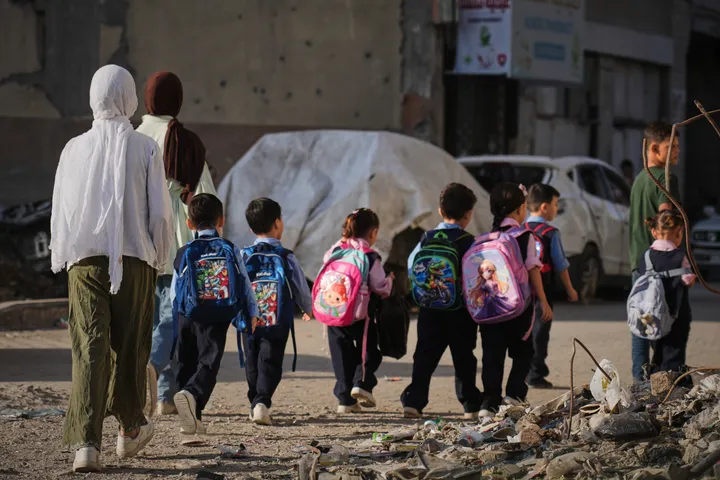
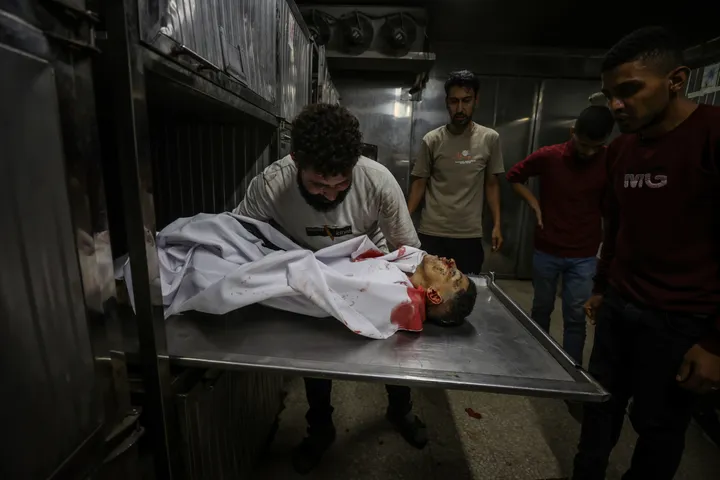





Zaccara explains that maintaining some Hamas presence and its local networks could help govern and rebuild Gaza, preventing the emergence of uncontrolled militias that might threaten the recovery process.
The biggest obstacle to an active Hamas role in Gaza, Zaccara feels, will be Israeli Prime Minister Benjamin Netanyahu, who declined Trump’s invitation to the Egypt summit, reportedly citing a Jewish holiday.
Netanyahu has faced pressure from his ultra-nationalistic and far-right allies to eliminate Hamas and take permanent control of Gaza. It would be unpalatable for him to “deal with Hamas on a daily basis”, Zaccara says.
Another point of contention going forward will be Trump’s plan for governing Gaza.
According to Zaccara, Hamas might agree with much of Trump's 20-point plan, but is unlikely to accept a non-Palestinian transitional government.
The way ahead
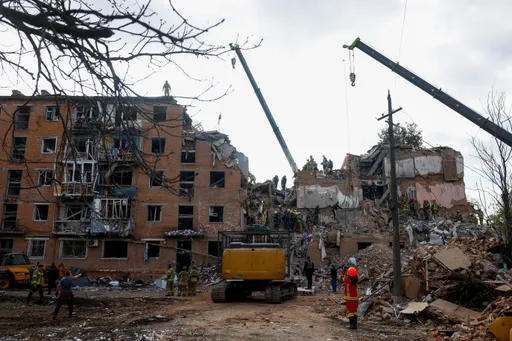
Ground reports from Gaza suggest that police, courts and basic municipal authority have largely collapsed after two years of Israel’s genocidal war, which has laid waste to the enclave.
Hamas has moved quickly to take control as armed clans compete for power grab across the Palestinian enclave. The Palestinian resistance group also killed 32 members of a “dangerous gang affiliated with a family in Gaza City”, and accused of collaborating with Israel.
Andreas Krieg, associate professor at King's College London and director of MENA Analytica, sees Hamas’s reassertion of control in areas vacated by Israel as a show of presence rather than a return to governance.
The best way forward for both Hamas and the Palestinian public interest is “to pivot from trying to govern to trying to survive politically,” according to Kreig.
In this perspective, Hamas needs to step aside for the time being and focus on meeting Palestinians’ daily needs – securing humanitarian aid, salaries, and basic services.
With a multinational peacekeeping force, potentially including troops from Arab and Muslim states, set to take charge of supervising the transition, the spotlight will be on how Hamas adapts to this changed scenario.
Krieg feels that new Hamas recruits might be more willing to join the proposed Palestinian police force than long-standing members of the group.
“For Palestinians more broadly, the fastest route out of chaos is a credible transition in which security is handled by a new, externally supported force with Arab and international backing,” he says.