 Kazim Alam
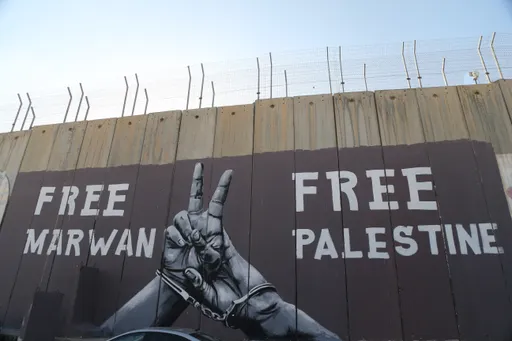
An international film festival has become the latest battleground in what critics describe as a systematic effort by Indian Prime Minister Narendra Modi’s government to suppress solidarity with Palestinians amid Israel’s genocide in Gaza.
The federal Ministry of Information and Broadcasting denied permission for the screening of 19 films scheduled at the ongoing International Film Festival of Kerala, including several acclaimed movies on Palestine, including Palestine 36, co-produced by TRT, Once Upon a Time in Gaza, and All That’s Left of You.
Authorities in the southwestern province of Kerala, however, defied the decision of the central government and have decided to proceed with screenings.
The central government did not cite any reason for its attempt to stop the screening of the films exploring Palestinian life under Israeli occupation.
Achin Vanaik, author and political analyst based in New Delhi, tells TRT World that the denial reflects the “systematic and behind-the-scenes determination” of Modi’s BJP party to suppress public expressions of support for Palestine.
He points to the government’s “consistent pro-Israel stance” since October 2023, as New Delhi continued arms supplies to Israel amid genocide and refused to criticise Tel Aviv’s actions in Gaza and the occupied West Bank amid rising civilian death toll.
The latest act of cultural censorship at the film event appears in line with a larger pattern of repression in India, where pro-Palestine voices are increasingly marginalised.
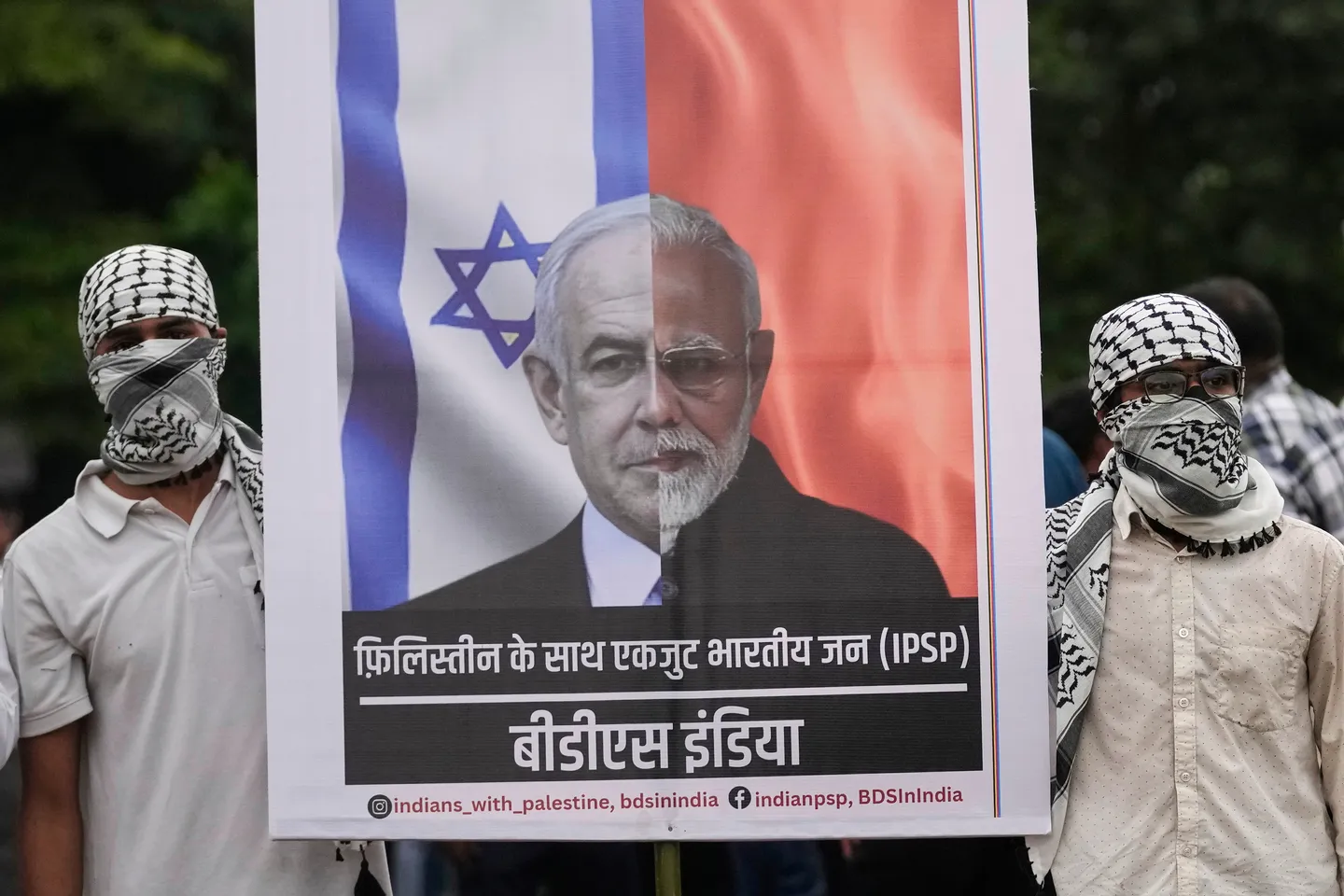
Since 2023, solidarity protests across the country have been routinely denied permission or dispersed, often under the pretext of maintaining law and order.
Symbolic acts like displaying the Palestinian flag, wearing the keffiyeh, or even social media posts have been treated as subversive.
In Hindutva-dominated online spaces, pro-Israel narratives have flourished, frequently equating Palestinian resistance with threats to India and amplifying anti-Islam tropes that link Indian Muslims to Hamas.
Vanaik describes this as part of the ideological alignment between Hindutva and Zionism.
“This repression is not so much the result of any pressure from Israel. It comes from the ideological kinship (the BJP) feels between Hindutva and Zionism as forms of a racist and exclusionary nationalism,” he says.
While Israel’s “foundational exclusivity” targets Palestinians, it aligns with Hindutva's anti-Muslim framework that views the Palestinian cause through a religious prism, he adds.
“(Hindutva’s) relationship to Zionist Israel is in certain ways that of a learner to a teacher,” he says.
India has traditionally supported a two-state solution. Its founding fathers, including Mahatma Gandhi and first Prime Minister Jawaharlal Nehru, unequivocally supported the cause of Palestine.
Even though India recognised Israel in 1950, its relations with the Zionist state remained lukewarm for the first four decades.
On the other hand, successive Indian governments forged close relations with the Palestinian Liberation Organisation (PLO) and its leader Yasser Arafat.
New Delhi established a full diplomatic relationship with Tel Aviv only in 1992. That was because India, at that time, sought closer ties with the US, a staunch backer of Israel, following the collapse of the Soviet Union. The Soviet Union was India’s close Cold War-era ally.




Policy U-turn on October 7, 2023
But the India-Israel bilateral relationship received a major upgrade under Modi’s government, with New Delhi becoming the biggest customer for Israel’s military equipment like radars, surveillance and combat drones and missiles.
Israel is the second-largest supplier of military equipment to India. More than 42 percent of all Israeli arms exports have gone to India since 2014, the year Modi came to power.
Relations between the two countries blossomed in the real sense after Modi's 2017 visit to Israel, which was the first by an Indian prime minister without a parallel stop in Palestine.
Modi enjoys a personal rapport with Benjamin Netanyahu, who is facing an arrest warrant by a global court for war crimes in Gaza, and calls him a “dear friend”.
In a policy U-turn on October 7, 2023, the Indian prime minister sent out a social media post labelling Hamas as “terrorists”. Modi designated the Palestinian resistance group as a terrorist organisation at once, marking a broader change in India’s foreign policy on the Israel-Palestine conflict.
Subsequently, India shied away from supporting a UN resolution for a ceasefire in Gaza and voted in favour of a resolution demanding the unconditional release of Israeli hostages.
New Delhi’s pro-Israel tilt has had consequences for dissent at home. For example, Vanaik highlights restrictions in BJP-ruled states where street protests for Palestine are stifled.
“(They) will not give permission (on university campuses) for even closed-door meetings among students and faculty or outside invited speakers to discuss the genocide taking place in Gaza,” he says.

There is widespread and growing censorship, he says, and the state is quick to use draconian anti-terrorism laws to “selectively target and punish dissent and criticism” of the Modi government.
For example, a 50-year-old man was arrested in April in the Indian city of Meerut merely for hoisting a Palestinian flag on the roof of his rented home.
Similarly, two businesspeople were arrested in the city of Lucknow in June for putting a Palestine sticker on their car. They remained in police custody for five hours as officials checked their mobile phones and accessed WhatsApp messages and call records.
In other instances, young activists have been imprisoned on false charges for criticising state policies while courts have become “more subordinated than in the past” to the executive, Vanaik says.
Meanwhile, hate speech from government supporters thrives unchecked, and major TV channels act as “enthusiastic drum beaters” for BJP policies.
While pro-Israel marches and hashtags like #IndiaStandsWithIsrael dominate social media, expressions of solidarity with Palestinians face backlash.
Vanaik warns that the government's actions exert a “demonstration effect” on people, intimidating them into silence. Meanwhile, diplomatic ties with Israel that prioritise military and economic gains influence cultural decisions like film screenings.
Though Israel may benefit from suppressed anti-Zionist views, Vanaik notes that the drive comes from within: Hindutva's ambition to forge a “proper and truly Hindu nation and state” that keeps Muslims and all kinds of democratic dissenters in their place.