 Kazim Alam
All that glitters, as the saying goes, is indeed gold. And sometimes controversial too. As Italians and the rest of Europe are finding out.
A single sentence inserted into a 2026 budget-related bill in Italy has ignited a trans-European firestorm in recent weeks, with the precious yellow metal at the front and centre of the issue.
Proposed by lawmakers from Prime Minister Giorgia Meloni's Brothers of Italy party, the draft law declared that the gold reserves currently managed and held by the Bank of Italy belong to the “people of Italy” instead.
If approved in its original form, the proposed measure would shift the control of gold reserves from the independent central bank to the elected government.
In a sense, it would turn Italy’s gold into political hard currency, potentially giving an incumbent government unprecedented power to use the bullion to fund populist measures.
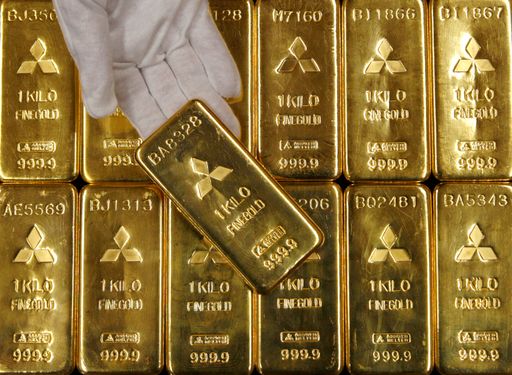
Italy owns an estimated 2,450 tonnes of gold, the world’s third-largest pile of bullion reserves, after the US and Germany. In dollar terms, this gold is worth roughly $300 billion, or 13 percent of Italy's GDP.
Despite the end of the gold standard more than five decades ago, most central banks around the world continue to own gold as part of their foreign exchange holdings. It works like a hedge in times of global financial crises, geopolitical turmoil, or system-wide uncertainty.
In theory, the innocuous change in the law would enable the Italian government to sell gold and use the windfall to pay down the national debt, fund infrastructure projects, or offer subsidies – temptations that any government might find irresistible in the run-up to a difficult election.
The Bank of Italy has guarded and rebuilt its gold reserves since World War II, when Nazi forces looted 120 tonnes during their invasion.
Unlike many countries, including Britain, that offloaded parts of their gold reserves during financial crises, Italy has refused to sell its bullion through numerous financial crises despite accumulating a huge pile of debt exceeding 140 percent of GDP.
Gold makes up nearly 75 percent of Italy’s official reserves, far above the eurozone average of 66.5 percent, serving as a safeguard against currency collapse.
Proponents framed the reclassification of gold ownership in patriotic terms, saying the measure is meant to shield the nation’s treasure from the central bank’s foreign shareholders, like French bank Credit Agricole and German insurer Allianz.
“Italy cannot run the risk of private investors claiming rights over the Italian gold reserves,” Meloni’s party said in an internal document. It insisted that gold reserves belong to “the Italian people” who have accumulated the precious metal over the decades.
For critics, however, the proposed change in the law was tantamount to monetising the family jewels to fund tax cuts or subsidies for immediate electoral wins.
Alberto Rizzi, a policy fellow at the European Council on Foreign Relations in Rome, tells TRT World the idea of outright transfer of gold reserves from the central bank to the government’s treasury is unrealistic.
“Italy's gold reserves are already by law a property of the Italian state,” he says, while pointing out that precedents for shifting control from central banks to treasuries are scarce.
“There are no precedents of Eurozone countries transferring the control of gold reserves from their central banks to the treasury,” he says.
Such moves crop up mainly in “emerging or developing economies” that use the proceeds of gold reserves sales to either buy hard currency or finance current account expenditures, he says.
A crisis buffer for future generations
The European Central Bank (ECB), which is the apex regulator of the monetary system in the countries with the euro as currency, also urged Rome to reconsider the draft provision in order to preserve the independence of the Bank of Italy.
“When carrying out the task of holding and managing gold reserves, neither the ECB, nor a national central bank… shall seek or take instructions from any government of a member state,” the ECB said.
Transferring gold from the central bank’s balance sheet would “circumvent the prohibition on central banks financing the public sector”, it warned.
Emiliano Rinaldi, a political economist from Italy, tells TRT World that the whole point of parking gold inside an independent central bank is to make it hard for politicians to use it when elections get closer.
“It’s a commitment device,” he says, while invoking the Odyssey, one of the two major epics of ancient Greek literature attributed to the poet and philosopher Homer.







Like Odysseus tying himself to the mast to resist the Sirens, central bank independence ties politicians’ hands against short-term populism, he says.
Any reclassification of gold reserves would untie Odysseus “while the Sirens are still singing”, he adds.
Even if Meloni's government swears off sales – as it has, repeatedly – the legal shift “builds the framework that would make it much easier for the next guy” to do exactly that.
Once it is established that gold is something the government can tap into, the debate shifts from “whether to sell it” to “how much and for what”, Rinaldi says.
“That pressure only ever runs one way. You dip into reserves during hard times, but you never top them back up when things are good because there's always something more urgent to spend on,” he says.
Rinaldi also grapples with generational ethics. Proponents tout “returning the gold to the people”, even though today’s voters would be consuming an asset built up over the decades by previous generations.
Therefore, consuming gold reserves today will deprive future Italians of a crisis buffer.
“Gold isn't about monetary returns. It's about optionality. It's insurance for when everything else falls apart: hyperinflation, banking crises, losing access to markets, even war,” he says.
Rinaldi proposes a middle path: affirm public ownership symbolically, but keep access “genuinely hard to touch”, akin to a locked pension fund protecting “future me from present me”.

Selling the family silver?
The market signal of a gold sale would be apocalyptic, experts agree.
Rizzi envisions a “devastating message”, comparable to “a family selling the house jewels to pay monthly bills or restaurant dinners”.
It would also shatter Meloni's hard-won image of fiscal conservatism, creating “doubts about the country's commitment to the common European currency”.
No euro member can unilaterally monetise its gold without ECB nod, Rizzi adds.
“Such a move would be a direct violation of the treaties establishing the European Union itself, which enjoys primacy over conflicting national laws, like Italy’s proposed law,” he says.
Before entering the monetary union, Italy had relied on its central bank to finance fiscal expenditure. In those days, the country would often print excess money that devalued its currency – a policy that “massively increased inflation and public debt”, he adds.
The saga appears to be defusing now.
Citing unnamed sources, the Reuters news agency said on December 11 that Rome had “resolved differences” with the ECB on the sidelines of a meeting of eurozone finance ministers in Brussels.
Quashing monetisation fears, the news report said Rome was not planning to transfer the gold off the Bank of Italy's balance sheet.
Nikos Kavalis, founding partner of Metals Focus consultancy, tells TRT World that a true control shift of gold reserves is “extremely unlikely”.
Such a move would have “profoundly adverse implications on the country’s perception among investors”, he says. Besides, it would clash with eurozone mandates for central bank independence.
“I don’t expect any sales from Italian gold reserves,” he says.