 Murat Sofuoglu
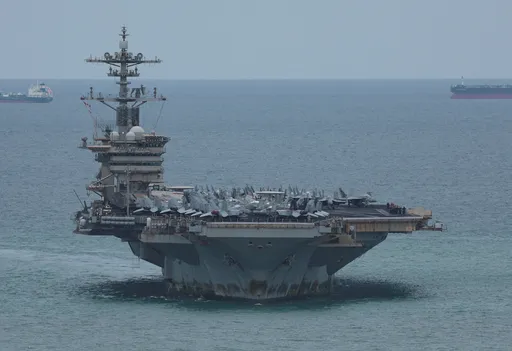
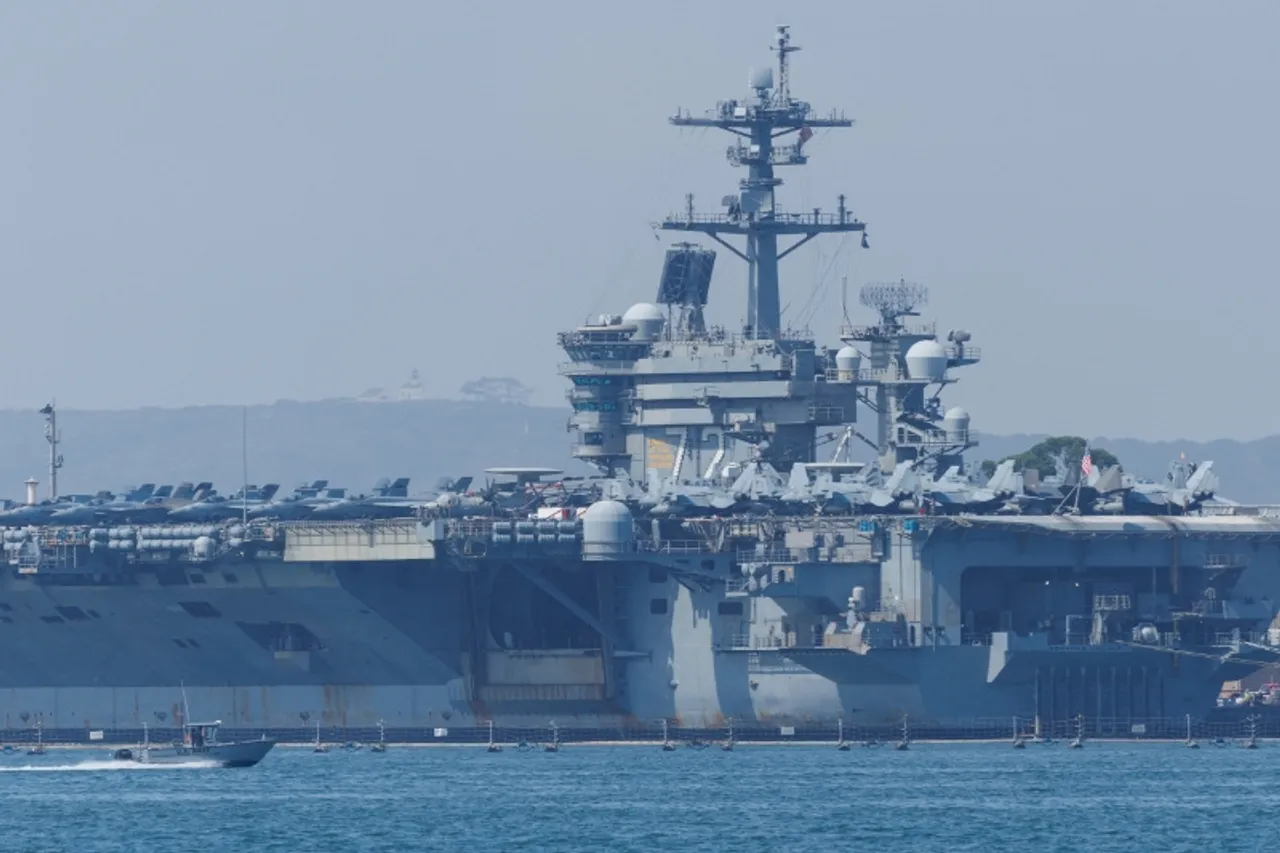
The volatile Middle East is teetering on the brink of yet another conflagration, with the US assembling a huge naval armada close to the Iranian coastline, even as President Donald Trump scales up his rhetoric against the leadership of the Shia-majority country.
While the US prepares for a possible attack on Iran, Tehran has vowed to retaliate with full force, while its Shia allies in the Middle East – from Iraq to Yemen and Lebanon – have signalled that they will not stand idle if Iran faces an American attack.
According to reports, the Trump administration is ostensibly seeking regime change in Iran, threatening to target both Supreme Leader Ali Khamenei and top leaders of the country’s hardline Revolutionary Guards. Analysts have also not ruled out the possibility of a US strike on Iran’s nuclear sites and other military capabilities like its large arsenal of ballistic missiles.
“We have a big force going toward Iran. I’d rather not see anything happen, but we’re watching them very closely,” Trump said last week, barely days after violent civilian protests rocked the nation facing a major economic crisis.
Analysts feel that the US military build-up was significant.
“The influx of US assets into the region means that it can conduct anything from a limited strike against specific targets to a fairly broad and sustained campaign,” says Joost Hiltermann, a special adviser on MENA at the International Crisis Group.
If the Trump administration chooses the latter, it can utilise “more sweeping objectives” to undermine Iran, referring to the possibility of wide-ranging US strikes on military bases and civilian infrastructure and even military generals.
A US attack will potentially lead to disarray within the current Iranian leadership, says Hiltermann, adding that the bigger question is: will Trump target the Supreme Leader or the entire leadership in Tehran?
The US has often used political assassinations as a tool for destabilisation across the world over the years. And many in the region fear that the Trump administration could use the same playbook in Iran.
“If it is the former, others within the system could attempt to consolidate control, given that Ali Khamenei is in his mid-80s and (talks of) succession has been on the horizon for years,” he tells TRT World.
“If it is the latter, it could certainly create a vacuum,” Hiltermann projects.
Iran has warned that any attempt to target Ali Khamenei would be seen as a declaration of war.
But in any case, Hiltermann believes that Iran will not simply roll over, and the US is also wary of this fact.
“Iran - and some of its non-state allies in the region - have warned that they will retaliate regardless of how substantial the US attack is. The dispatch of defensive systems to US bases and allies suggests that Washington does not see it purely as bluster,” Hiltermann adds.
Other analysts also do not rule out the possibility of the US inflicting heavy damage to Iranian military capabilities and its infrastructure – from oil-producing refineries to power plants and other energy facilities.
“The US military has capabilities to wreak havoc across Iran,” says Omer Ozgul, a former Turkish military officer and an expert on Iranian politics.
But the US does not have the capability to install a new regime and decide the future of Iran, Ozgul tells TRT World, citing the country’s complicated history and political structure.
What if Khamenei is assassinated?
In one of his most direct attacks on the Iranian leader, Trump recently called Khamenei a “sick man” and stressed that it was time for an end to his 37-year-long reign.

Experts, however, are of the view that even if the US manages to eliminate Khamenei, there is little possibility of a collapse of the post-1979 Iranian political system led by the supreme leader according to the Shia religious order.
“While the US might assume that the Iranian regime would collapse if Ali Khamenei were removed from power, as it happened in the case of Iraq’s Saddam Hussein or Libya’s Muammar Gaddafi, the leadership in Tehran would not cave in so easily,” says Oral Toga, a researcher at the Centre for Iranian Studies.
Iraq’s Baath regime collapsed following Saddam Hussein’s capture and execution by Iraqi courts functioning under the US occupation in 2003, and sowed the seeds of political chaos that has lasted for years.
In Libya, too, Gaddafi’s killing led to the collapse of the government and sparked a bloody civil war.
But analysts say that, unlike Libya and Iraq – whose borders were drawn by Western colonial powers – Iran offers a different story with a long history under different dynasties. The country’s current supreme Shia religious leadership formed after the 1979 revolution, which ousted the secular Shah rule formed after WWI.
Both Khamenei and President Masoud Pezeshkian have Turkic roots.
“Khamenei is not a secular leader; he is the religious head of Iran and his assassination might trigger things beyond any imagination,” Ozgul tells TRT World.
Other analysts agree with this assessment.
“In Iran, there are forces who are willing to resist to save the government no matter what the cost is,” says Fatemeh Karimkhan, a Tehran-based Iranian journalist, referring to both Shia ideology and groups like the Revolutionary Guards.
But analysts also underline that Iran’s fate might be dependent on what type of attack the US would launch, noting that air strikes without boots on the ground will have limited capacity to change anything fundamental in Tehran.
Under Khamenei’s authority, there is “a confederation” of different forces loyal to the 1979 Revolution, which would replace his possible absence quickly in the case of his assassination, according to Toga, an Ankara-based analyst.
“They have already prepared an internal security plan in the case of Khamenei’s assassination,” he tells TRT World.
The security plan has also been decentralised, allowing different pro-government groups to take their own initiative against anti-regime elements backed by the US. And this might lead to much bloodshed across Iran, Toga predicts.
What about a civil war?
Despite its Persian-speaking majority, Iran has a diverse population with at least 40 percent belonging to different non-Persian ethnic groups, which might play a role in the event of a US attack, according to analysts.
“The protests showed a deep divide between the state and society, with a willingness by security forces to use violence. That means that some form of internal unrest between the regime's hardline supporters and those opposed to it is unfortunately a possibility,” says Hiltermann.
“I don’t see a civil war possibility for Iran because there are no reliable opposition groups which could gather anti-regime elements behind a unified leadership,” says Toga, adding that opposition groups do not have recognised leaders who can lead the Iranian population against the current regime.
While some Western media outlets have pointed out Reza Pahlavi – the son of the ousted Shah of Iran – who had called on protesters to take to the streets against Khamenei’s rule early this month, as a possible alternative, analysts don’t see in him the ingredients of a true leader. Many see him as a figure too close to Israel’s Zionist Prime Minister Benjamin Netanyahu.
“Reza Pahlavi, even himself, is not looking forward to coming back to Iran,” says Karimkhan. While there are pro-monarchy supporters in Iran, they are not as many as projected, she says.
“They are much less in number and in ability.”