 Yousef Al Ibrahim
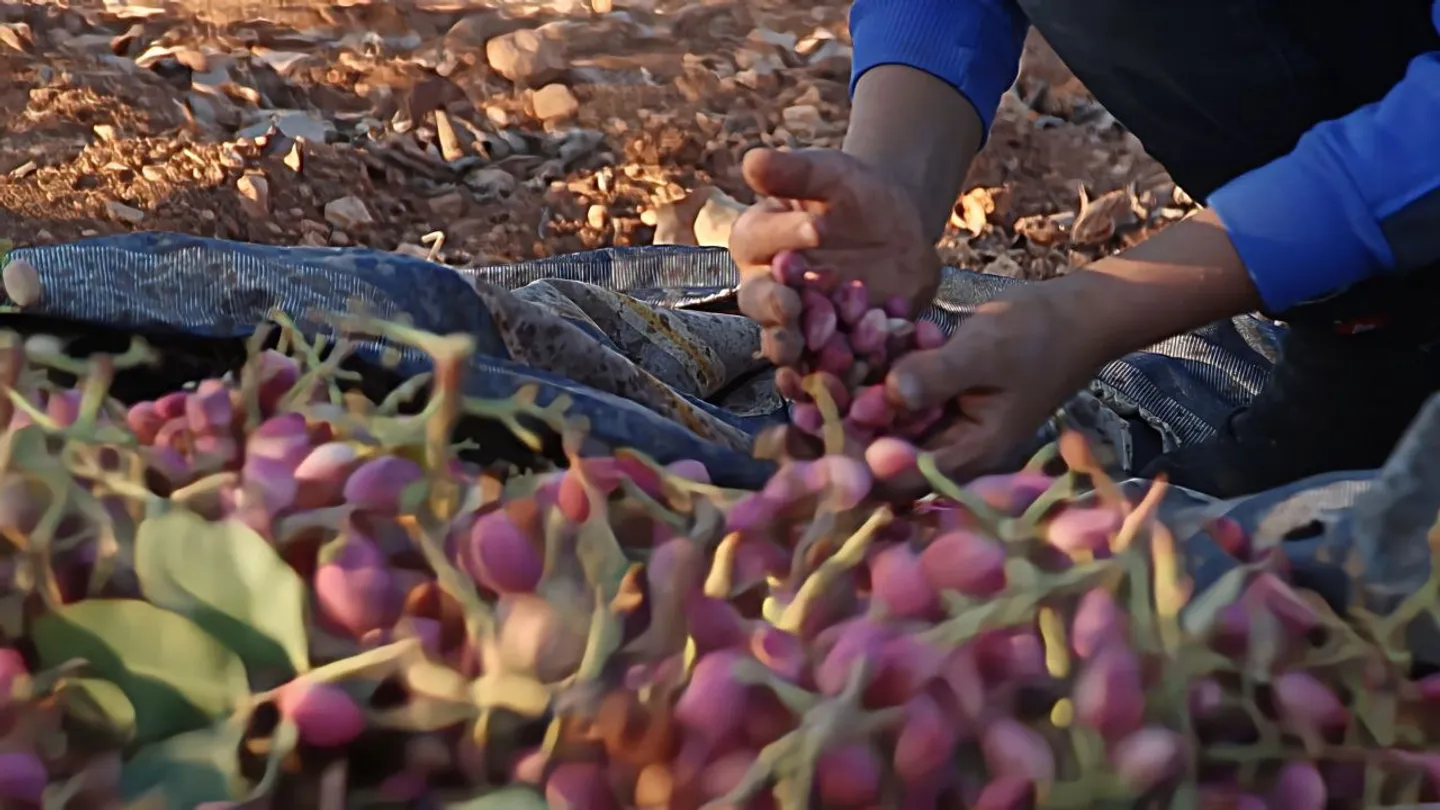
Morek, Syria - Abu Mohammed hesitates before stepping onto his land for the first time in a decade. The 67-year-old farmer worries that his pistachio trees might not recognise the hands that once carefully planted them, hands that had been forced to flee when the civil war that erupted between Bashar Al Assad’s regime and opposition in 2011 consumed northern Syria.
“I feared they had grown accustomed to strangers,” he tells TRT World, carefully touching the branches of his trees that bear the scars of neglect and fire that was caused deliberately by Syrian regime soldiers on the lands of people who opposed them and had to flee. “I left everything behind. There was no choice, stay amid the gunfire or leave, hoping to return someday”.
After fleeing his village, Abu Mohammed settled in Idlib governorate, then under the control of Hayat Tahrir al-Sham (HTS).
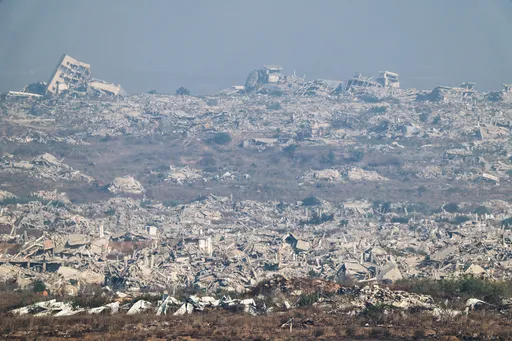
Abu Mohammed's story mirrors that of thousands of Syrian pistachio farmers who have begun returning to their orchards following the December 2024 fall of Bashar Al Assad's government. What they found were fields transformed by 14 years of conflict into burnt ash.
Before 2011, Syria ranked fourth globally in pistachio production, harvesting over 63,000 tons annually from 9 million trees across 59,000 hectares.
The crop, known locally as “red gold” was concentrated in the fertile regions stretching from northern Hama countryside to Idlib and Aleppo provinces. The town of Morek in central Hama earned the nickname "pistachio treasuries" for its central role in the trade.
Today, that production has fallen by more than half.
Government seizures and auction sales
The collapse began not just with the physical destruction of war, but with systematic Assad regime policies that stripped farmers of their livelihoods. As families fled the fighting, Syrian authorities classified their abandoned orchards as “investment opportunities” and sold them at public auctions to politically connected buyers.
Abdul Razzaq Mohammed, 62, returned to find that his land in Hama had been among thousands of acres auctioned off by local authorities in 2015.
“I felt more constricted than when I first left," he recalled. "Then, I lived in hope of return. At that moment, I realised I had lost my land for the first time."
The auctions represented a deliberate strategy by the Assad government to reward loyalists with valuable agricultural assets while punishing those who had fled opposition-held areas.
Estimates suggest that a quarter of Syria's pistachio-growing areas, approximately 170,000 acres, were damaged, neglected, or seized during the conflict, according to sources from the Syrian agriculture ministry.
Abu Hassan, 55, another returning farmer, described watching his trees burn before fleeing to Idlib province. His land was later auctioned in 2018, with revenues flowing to security agencies and politically connected entities in Hama, according to local accounts.
"My land in [the] Hama countryside was among the first hit by shelling and clashes," he says, falling silent briefly before continuing. "When I saw my trees burn for the first time, I cried and felt I would never return to them again. At that moment, my displacement journey toward Idlib began, and I didn't return here until after the regime's fall."
Visibly emotional, he pauses again before sharing that his land was falsely declared “abandoned” before security agencies of the old regime seized control of crops, with revenues going to various influential parties in Hama.
Abu Hassan continues recalling his experience with pure pain, as if mourning a loved one, “I now stand on my land, but I feel I'm still there in the displacement tent. The situation here is still difficult; the soil is tired and needs care, whose full costs I cannot bear. We need support and care from those concerned (in the new government) to rise again”.

It is within this fragile process of rebuilding that Syria’s new leadership has emerged. The country is now led by President Ahmed al-Sharaa, a former leader of Hayat Tahrir al-Sham who is now considered a visionary advocate for reconstruction and agricultural revival.
Economic reconstruction is at the top of the new government’s agenda, signing multibillion-dollar investment deals and memoranda aimed at reviving infrastructure, energy, and trade, a push the administration says will also support agriculture and exports.
Walking alongside his grandfather Abdul Razzaq, 12-year-old Ahmed moves eagerly through the orchard, determined to prove his place in the family harvest.
Born during the early years of conflict, Ahmed left Syria as an infant and spent most of his childhood hearing stories of the land he barely remembers.
“I want to spend my whole life here,” Ahmed says, though he added a child's honest fear: “But I worry the war might come back and we'll have to leave again”.
His presence represents both continuity and fragility, a generation inheriting not just agricultural knowledge, but trauma and uncertainty about Syria's future.
The economics of recovery
Agricultural engineer Abdul Aziz Othman estimates that 40 percent of pistachio trees suffered damage during the conflict, while the costs of fertilizers and pesticides have doubled, due to the economic sanctions, beyond most farmers’ reach. Irrigation networks lie in ruins after it was damaged by artillery fire during the war, and pests spread unchecked across neglected orchards.
“The farmer's return means the life cycle wasn't completely broken,” Othman says. “But without real government support and export incentives, pistachios will remain confined to narrow local markets, unable to regain their global position”.
In recent years, global demand for pistachios has surged, driven by trends such as the Dubai chocolate craze and the rise of pistachio-flavoured pastries, lattes, and gelato, giving renewed international relevance to Syria’s once-thriving crop. Beyond their economic value, pistachios are also deeply woven into Syrian culinary tradition — used as a garnish on desserts like muhallebi, layered in baklava, or blended into ice cream and puddings.
But in Morek's ancient market, trader Mustafa Al Settouf says he’s witnessed the transformation firsthand. The town that once pulsed with pistachio commerce became eerily quiet during the conflict years.
"Morek, which was the heart of the pistachio trade, became a silent city in the past few years, no export, no real sales," he says, distress still leading his words. "Farmers had to sell their crops at the cheapest prices, while now life is beginning to return bit by bit after the regime's fall, and with it small quantities have returned to be offered here again after opening local marketing channels."
The fate of Syria’s pistachio industry extends far beyond agricultural statistics. For families like Abu Mohammed's, the orchards represent generational memory, economic survival, and a tangible connection to a homeland fractured by war.
The trees themselves tell the story of Syria's conflict, some burned by war, others abandoned to thieves, many struggling to produce fruit after years without proper care. Yet they also embody the possibility of renewal, as farmers like Abu Mohammed carefully tend branches that show signs of new growth.
“This isn't just about pistachios,” said one returning farmer, declining to give his name. “It's about whether we can rebuild what war destroyed, whether the land will forgive our absence.”
As Syria enters the post-Assad era, the pistachio harvest has become a test case for reconstruction. The returnees face not only the physical challenge of restoring damaged orchards but the deeper question of whether Syrian society can heal the wounds of displacement, seizure, and loss.
For now, farmers like Abu Mohammed continue their daily work, coaxing life from scarred earth, hoping that this season's harvest will mark not just agricultural recovery, but the beginning of a more fundamental restoration of the bonds between people and the land they call home.
This piece was published in collaboration with Egab.