In February this year, a mob of around 200 people stormed a church service in the city of Bikarer in India’s Rajasthan, beating worshippers with iron rods.
The pastor’s family was threatened when mobs accused them of forced conversions. Instead of pursuing the attackers, the police chose to question the victims. Church members later said they feared retaliation and declined to file complaints.
Fear has become a daily companion for India’s Muslims, Christians and Kashmiris.
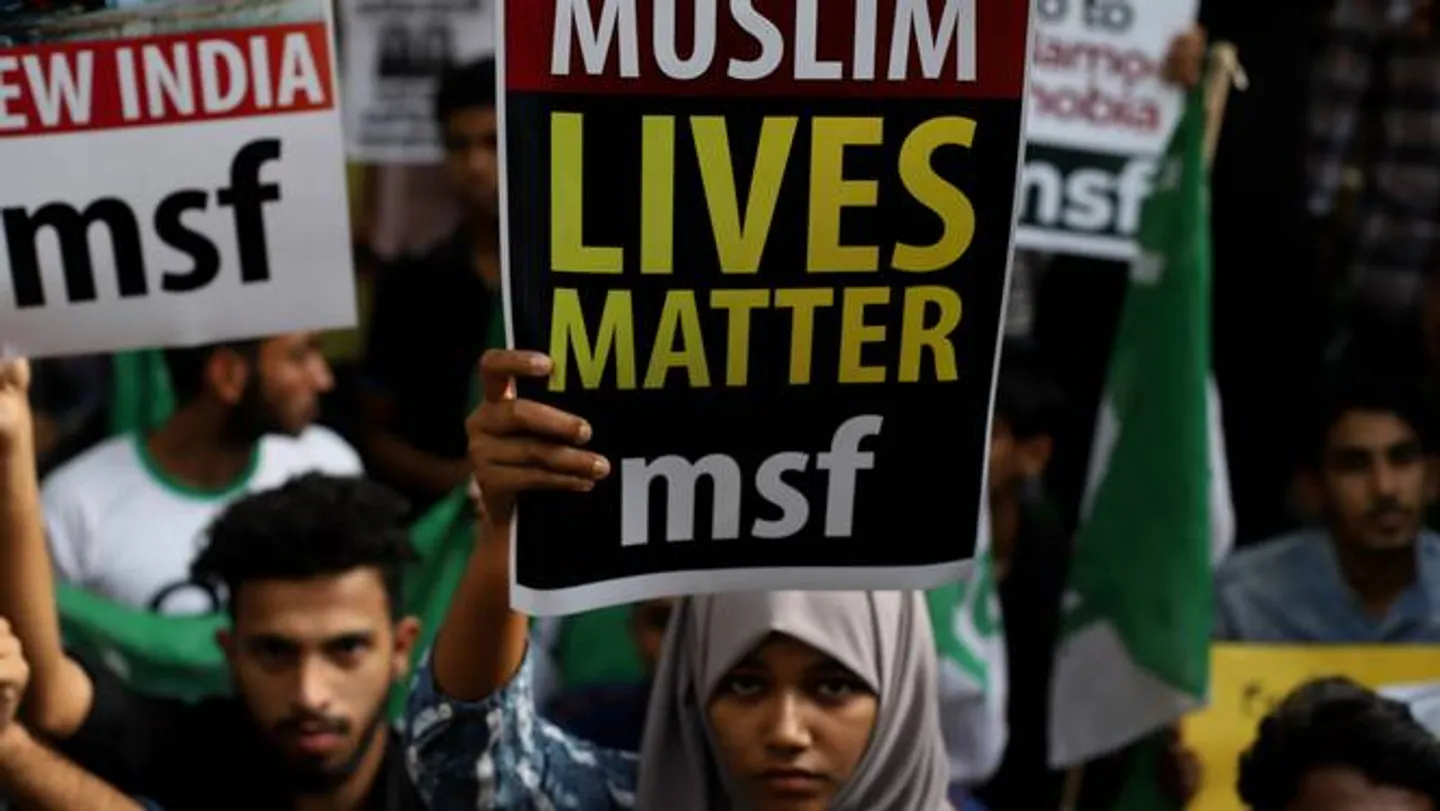
Muslim neighbourhoods in India have experienced demolitions, police raids, detentions, and rising harassment. Christian communities report attacks on churches and intimidation during prayer gatherings.
A combination of political consolidation of Hindu nationalism (also known as Hindutva), everyday normalisation of bigotry, and the expanding use of state machinery to enforce majoritarian dominance has, particularly in the last two years, produced a marked rise in extremism, public hatred and discriminatory state action.
A sense of siege has become ambient.
Hindus make up about 80 percent of India's 1.4 billion population. Muslims are the largest minority at 14 percent and Christians account for just over 2 percent, according to the last census held in 2011.
The ruling Hindu nationalist party BJP has been in power in India for over a decade now. But why are we witnessing an escalation in minority vulnerability right now, and what political and ideological forces are driving this?
Routine hatred and bigotry
Experts say the present surge in extremism is not a spike but a consolidation.
“What we are witnessing today is not an episodic spike in hate speech, but the full maturation of a long-running ecosystem that now operates with near-total impunity,” Raqib Naik, executive director of the Center for the Study of Organized Hate (CSOH), tells TRT World.
He describes today’s hate-speech environment in India as something qualitatively different from the past decade.
“Anti-Muslim hatred and bigotry have become part of the everyday fabric,” he says.
According to Washington-based research group India Hate Lab’s (IHL) tracking, 2023–25 saw sharp escalation in open calls for violence, coordinated digital campaigns targeting Muslims and Christians, senior political leaders using dehumanising language normalised by partisan media, and state-enabled punitive demolitions reinforcing majoritarian aggression.
Instances of hate speech against minorities in India increased 74 percent in 2024, with incidents ballooning around last year's national elections, as per one of IHL’s recent reports.
The alarming rise was "deeply intertwined with the ideological ambitions of the ruling Bharatiya Janata Party (BJP) and the broader Hindu nationalist movement," the report stated.
The group cited remarks by Narendra Modi at his rallies in which he referred to Muslims as "infiltrators" who have "more children." He claimed the main opposition Congress party would redistribute the nation's wealth to Muslims if it won.
Modi won a third successive term in office in June but was forced into a coalition government after a shock election setback. BJP didn't win an outright majority for the first time in a decade.
IHL said 80 percent of hate speech incidents last year occurred in states governed by the BJP and its allies like Uttar Pradesh, Maharashtra and Madhya Pradesh.
Climate of fear
The New Delhi-based United Christian Forum (UCF) rights watchdog recorded that more than two Christians are attacked each day in India; the group recorded a sharp rise in attacks in the past decade: 834 incidents were recorded in 2024, while 2014 saw only 127.
And these are just attacks that made it into official records. Many possibly never do.
Victims often stay silent for fear of retaliation in a climate of impunity and political protection for the perpetrators.
“If this trend is not stopped immediately, it will threaten the identity and existence of the Indian Christian community in its motherland,” said AC Michael, the UCF's national convenor.
He identified Uttar Pradesh in the north and Chhattisgarh in central India as “hot spots of viral hate, brutal mob violence and rampant social ostracisation."

Converts to Christianity from a Hindu background are often pressured to return to Hinduism, leading to physical assaults and violence.
Many low caste Hindus or Dalits, also known as Untouchables, try to escape their low social status afforded to them by Hinduism by converting to Christianity or, in some cases, Islam.
For instance, in September in Bilaspur, Chhattisgarh, a Christian prayer meeting at a private house was disrupted by a mob, which accused congregants of “forced conversions.” At least 13 people were injured, and multiple FIRs were filed under the state’s anti-conversion law.
The legal framework
Several of India’s 28 states, most of them ruled by the BJP, have enacted anti-conversion laws that Christians say are being weaponised by Hindu groups to target them. The laws stipulate that no one shall convert another person to a different religion from their ancestors’ by force, fraud or allurement.






Some of these laws mandate that individuals obtain permission from local authorities before converting to another religion. Hindu nationalist groups routinely file police complaints against Christians under these laws, with police often registering these complaints swiftly, even without prima facie evidence and leading to prompt arrests.

Simultaneously, other laws have targeted Muslims: One of them is the 2019 Citizenship Amendment Act (CAA), which fast-tracks citizenship for undocumented migrants from the Muslim-majority countries of Afghanistan, Bangladesh and Pakistan – except if they are Muslim.
The UN human rights office called it “fundamentally discriminatory” and its constitutionality is still being challenged in the Supreme Court.
Meanwhile, the 2019 abrogation of Article 370, which granted considerable autonomy to the contested Muslim-majority state of Jammu and Kashmir, and the ensuing political lockdown in the state that saw the detention of thousands and imposition of communication blackouts, represent the clearest example of a centralised reengineering of constitutional protections.
“The boundary between state policy, hateful bigotry, and vigilante violence has become almost indistinguishable,” Naik warns.
The Hindutva political moment
Political theorist Ajay Gudavarthy, who is an associate professor at Jawaharlal Nehru University, New Delhi, argues that 2024 marked a decisive turning point.
The BJP’s third consecutive term under Prime Minister Narendra Modi was expected to moderate majoritarian politics because the party returned with a reduced majority and now depends on coalition allies. Instead, Gudavarthy notes, something else happened:
“Mr. Modi is continuing his tirade against the opposition and his majoritarian mobilisation. This demonstrates that electoral outcomes are now disconnected from social consent for a majoritarian polity.”
In other words, Hindu nationalism is now structural, and discriminatory policies or targeted actions no longer rely on explicit electoral legitimacy.
“Majoritarian thinking has entered institutional life and their functioning,” Gudavarthy tells TRT World.
Bulldozer justice
Multiple experts argue that the most significant shift is institutional.
According to a 2025 review by South Asia Justice Campaign (SAJC), despite clear directions from Supreme Court of India to observe due process, several state and municipal authorities carried out demolitions, often referred to as “bulldozer justice”, in majority-Muslim areas, razing houses, shops, mosques, and graveyards in the name of “redevelopment” or “anti-encroachment.”
Between January and March of 2025 alone, more than 7,400 homes were reportedly demolished across India, rendering over 41,000 people homeless; about 37 percent of those demolitions targeted Muslims.
In Delhi’s Mehrauli district, the government last year demolished the 600-year-old Akhondji Mosque, along with an Islamic school that also housed orphan children.
In February this year, a 168‑year-old mosque on Delhi Road in Meerut, with historical records dating back to 1857, was razed late at night to make way for a rapid‑rail corridor, under police and municipal supervision. Locals say no alternate site was offered.
Administrative tools like demolition notices, zoning regulations, anti-conversion laws and surveillance powers are increasingly used in ways that disproportionately affect minority communities.
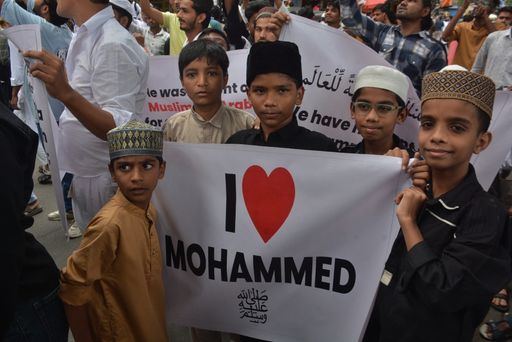
In several northern and central states, local administrations have also demolished small neighbourhood mosques and Sufi shrines as part of “land clearance” drives.
Lawyers working on these cases say structures are often razed within hours of a notice, leaving communities little time to respond.
Hate normalised
Reports from rights organisations also note a surge in vigilante-style violence by Hindu mobs targeting Muslims, sometimes on suspicion of beef consumption or cattle transport, while authorities often turn a blind eye, with selective application of anti-terror and sedition laws.
Lynching incidents tied to these cattle-related accusations continue to surface periodically, with videos of assaults circulating on social media before authorities intervene. Rights groups say the pattern reveals a climate where vigilantes operate confidently, often expecting political protection.
Mainstream news channels amplify political rhetoric, while digital hate campaigns fill the gaps, creating what Naik describes as an “integrated ecosystem of dehumanisation.”
What institutions now consider “common sense” carries Hindu nationalist assumptions.
Former Supreme Court judge RF Nariman recently reminded Indians that the Constitution is “obviously secular and socialist” — values embedded as structural guarantees, not political whims.
But India’s secular compact now appears to rest on fragile ground.
Naik sees the situation for India’s minorities as “extremely alarming” as state policy merges with Hindutva.
“I worry how this will translate into further real-world harms for already vulnerable communities,” he says.