 Baba Umar
Washington DC — US President Donald Trump has dispatched a "massive Armada" towards Iran, claiming it surpasses the scale of the one sent to Venezuela.
Israeli and Saudi defence officials are currently in the US to discuss renewed tensions.
And, Iran's neighbours, Türkiye and Qatar, have intensified diplomatic efforts to prevent a potential third Gulf War.
With both the US and Iran steadfast in their stated positions, analysts suggest that the powder keg in the volatile region is looking set to explode again.
"I can't say it is inevitable, but I think the likelihood of war has increased unless Tehran agrees to a deal with Donald Trump," Sina Azodi, Assistant Professor of Middle East Politics and Director of the Middle East Studies programme at George Washington University, tells TRT World.
Azodi suggests Tehran views any new conflict with Washington as a continuation of the June 2025 standoff, during which Washington sided with Israel and bombed three Iranian nuclear sites under the "Midnight Hammer" operation, prompting drone and missile strikes from Tehran on Israel before Washington announced a ceasefire.
"I think that Iran thinks that a second round of war with the US is not a new war but rather the continuation of the 12-day war in June which reached a stalemate and a temporary pause," says the Washington, DC-based analyst.
The region has been tense since the brief conflict, but tensions escalated further after Trump announced the deployment of a "massive armada" towards Iran and called for Tehran to "come to the table" for negotiations.
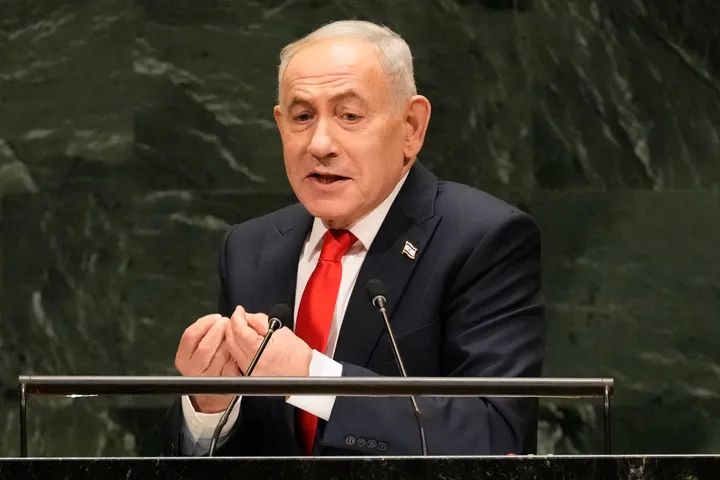
"A massive Armada is heading to Iran. It is moving quickly, with great power, enthusiasm, and purpose. It is a larger fleet, headed by the great Aircraft Carrier Abraham Lincoln, than that sent to Venezuela. Like with Venezuela, it is ready, willing, and able to rapidly fulfill its mission, with speed and violence, if necessary," Trump wrote in a social media post on Wednesday.
"Hopefully Iran will quickly 'Come to the Table' and negotiate a fair and equitable deal - NO NUCLEAR WEAPONS - one that is good for all parties. Time is running out, it is truly of the essence! As I told Iran once before, MAKE A DEAL! They didn’t, and there was 'Operation Midnight Hammer,' a major destruction of Iran. The next attack will be far worse!" Trump warned.
Trump has consistently asserted that Iran must cease its nuclear programme entirely and abandon any ambition to develop nuclear weapons. He is also seeking an end to Tehran's support for anti-Israel groups, like the Houthis and Hezbollah.
Beyond nuclear issues, Trump and his envoys have pushed for curbs on Iran's ballistic missile development as well as end to protest repression.
Iran's stance blends defiance with conditional diplomacy, setting firm boundaries, notably on its right to peaceful nuclear technology.
Tehran also states its ballistic missile programme and defence capabilities are "never" negotiable amid rivalry with Israel, a US ally, which neither confirms nor denies possessing nuclear weapons.
With Trump drawing parallels between Venezuela and Iran, Trita Parsi, co-founder and Executive Vice President of the Washington, DC-based think-tank, Quincy Institute, says the US might try to possibly change leadership of Iran but "the Venezuelan case and the Iranian case are very different."
"Caracas is right on the coast. The US is much closer to it. The military operation is far less complex than anything that the US would try with Iran," he tells TRT World.
Parsi notes a past US military intervention in the late 1970s to free American hostages held by Iranian students, which he says "ended up in a fiasco with the helicopters crashing in the desert because of the heat."
"So, I think Trump's military planners certainly know that this is a very different operation than anything that was done in Venezuela. Moreover, the Iranian capability of striking back is far superior to that of the Venezuelans."
US military buildup
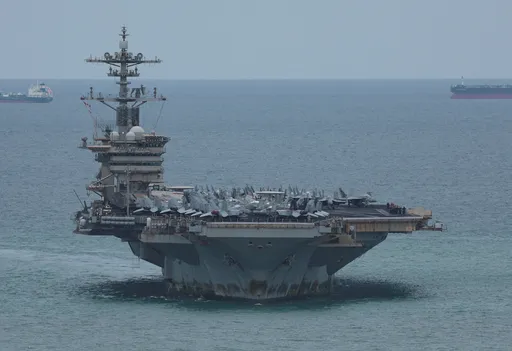
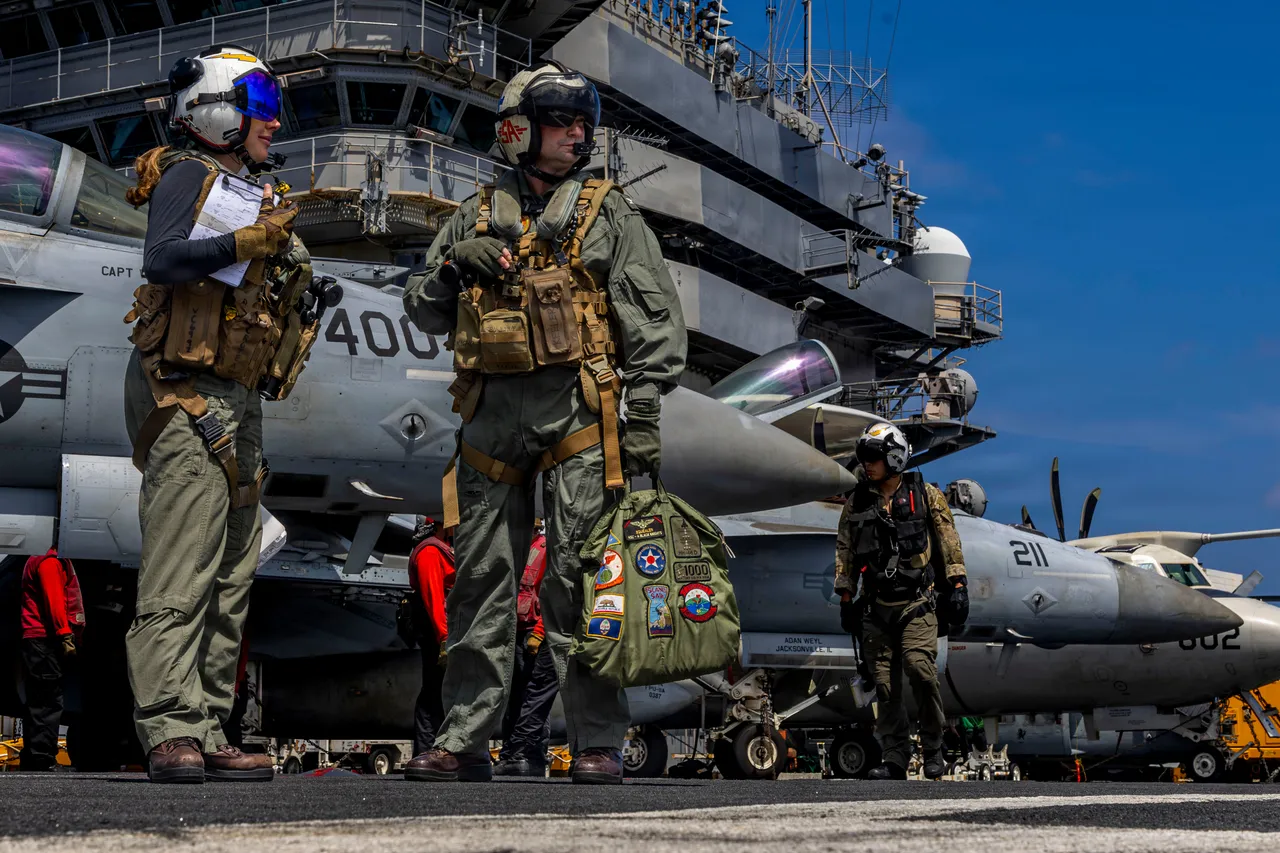
The centerpiece of the US military buildup is the USS Abraham Lincoln nuclear-powered aircraft carrier and its strike group, which arrived in the CENTCOM area of responsibility, including waters near the Gulf and Arabian Sea in recent days.
The strike group includes the Lincoln and guided missile destroyers USS Frank E. Petersen Jr., USS Spruance, and USS Michael Murphy. A new US naval destroyer, USS Delbert D. Black, reportedly docked at an Israeli port on Thursday.
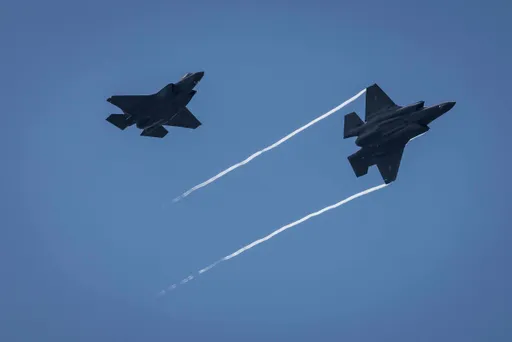
Aboard the Lincoln are squadrons of F/A-18E/F Super Hornets, EA-18G Growlers, F-35C fighter jets, and MH-60R/S helicopters.
The aircraft carrier, often called a "floating city of war", has a crew exceeding 5,630 sailors. In total the US has brought around 8-10 warships in the combustible region.
The US has also deployed or reinforced THAAD and Patriot missile defence batteries/systems to intercept Iranian missiles and drones, while readiness drills by US Air Forces Central Command (AFCENT) are ongoing across the region.
Recently, a US Air Force F-15E Strike Eagle assigned to the 494th Expeditionary Fighter Squadron landed at a base in the Middle East, American officials said. Reports indicate that 35 F-15Es arrived in Jordan, with 24 originating from RAF Lakenheath in the UK.
Recent statements from Iranian leaders and officials emphasise readiness for immediate and forceful retaliation if the US attacks.
Iran's Foreign Minister Seyed Abbas Araghchi has warned that Iran's armed forces are "prepared— with their fingers on the trigger — to immediately and powerfully respond to any aggression" against Iranian territory, land, air, or sea.
Araghchi suggested a 2025 brief war with Israel and the US has enabled Tehran to mount a stronger, quicker, and more impactful response.
A top adviser to Supreme Leader Ali Khamenei, Ali Shamkhani, has warned that even a limited US military would be considered as the "start of a war," vowing an "immediate, comprehensive, and unprecedented" retaliation targeting the US, "the heart of Tel Aviv", and "all who support the aggressor."
Iran's mission to the United Nations has also warned that the country would "respond like never before" if pushed.
"Last time the US blundered into wars in Afghanistan and Iraq, it squandered over $7 trillion and lost more than 7,000 American lives. Iran stands ready for dialogue based on mutual respect and interests — BUT IF PUSHED, IT WILL DEFEND ITSELF AND RESPOND LIKE NEVER BEFORE!" the mission’s statement read.



US bases in Iran crosshairs
Iran has cautioned regional neighbours that US bases in countries such as Qatar, the UAE, and Bahrain could be targeted if they support a US attack.
Saudi Arabia and the UAE have already declared that they will not allow their land or airspace to be used against Iran.
However, Azodi argues that this will not deter Iran from targeting US military facilities in neighbouring countries.
"I think Iran could directly attack them since Tehran views them as legitimate military targets. While Iran cannot direct the US mainland, it can easily reach the US bases in the region," he says.
Iran maintains capabilities for asymmetric retaliation, such as missile and drone strikes on US bases in the region, mobilising pro-Tehran militias in Iraq or Hezbollah in Lebanon, disrupting Gulf shipping, or undertaking economic actions affecting global oil supply.
Next week, it will be carrying out live-fire naval exercises in the Strait of Hormuz — a strategic waterway through which around 25 percent of the world’s crude oil supply passes.
The strait connects the biggest Gulf oil producers, such as Saudi Arabia, Iran, Iraq and the United Arab Emirates, with the Gulf of Oman and the Arabian Sea.
Iran has invested heavily in asymmetric naval warfare tools suited to this narrow waterway.
Tehran reportedly has 5,000–6,000 mines deployable quickly via submarines, fast boats, or dhows. Mining alone could make insurers and shippers halt traffic almost immediately due to risk, even without many actual detonations.
Shore-based cruise and ballistic missiles, plus mobile launcher, that can also target ships across the strait.
It can deploy speedboats, drones, and small attack craft for harassment, boarding, or kamikaze-style attacks.
Iran also holds thousands of ballistic missiles and tens of thousands of drones that can overwhelm defences through mass launches, targeting US troops and Israel.
On Friday, Iran's top diplomat Araghchi said Tehran's missile and defence capabilities would "never" be on the negotiating table.
He was responding to reports that indicated the US wants a deal with Tehran that would include a cap on its stockpile of long-range missiles, along with the removal of enriched uranium from the country and a ban on independent enrichment.
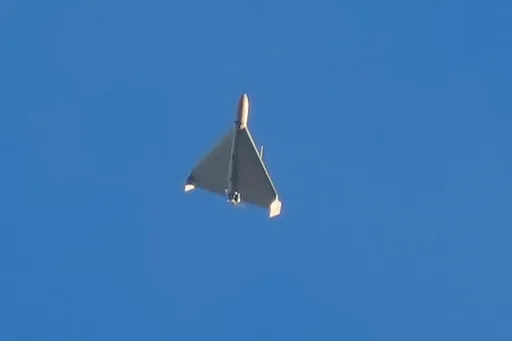
Tehran has, meanwhile, ordered the integration of 1,000 newly developed drones into the country's armed forces that are reportedly designed for strike, reconnaissance, and electronic warfare, target fixed and mobile objectives across maritime, aerial, and ground domains.
However, Iran's capacity to retaliate is limited by US and Israeli air defence systems.
During the 12-day war last year, Iran is said to have fired over 500 ballistic missiles and 1,000 drones at Israel following Israeli attacks on Iran. This resulted in 28–33 fatalities, over 3,500 injuries, and approximately $1.5 billion in damages.
But, interception rates reached around 90 percent, owing to systems such as Israel's Iron Dome, David's Sling, and Arrow, augmented by the US THAAD and Aegis.
Secretary of State Marco Rubio, testifying before a Senate panel on Capitol Hill on Wednesday, stated that approximately 40,000 US troops in the region, as well as Israel, remain under threat from Iranian drones and missiles.
"The baseline is this: we have 30 to 40,000 American troops stationed across eight or nine facilities in that region ... All are within the reach of an array of thousands of Iranian one-way [unmanned aerial vehicles] and Iranian short-range ballistic missiles that threaten our troop presence," he said.
Role of Russia and China
Russia and China, close strategic partners of Iran, have voiced concerns, but their intervention to prevent potential US attacks seems improbable.
Moscow, which has forged closer ties with Tehran since the start of its war in Ukraine and signed a 20-year strategic partnership treaty with Iran in January 2025, has warned that any use of force against Tehran would have dangerous consequences and cause chaos throughout the Middle East.
Having lost influence in Syria, Venezuela, and elsewhere, and remaining bogged down in the Ukraine war, Moscow is seeking a de-escalation of tensions through dialogue.
For its part China has cautioned against US military interventionism in Iran.
Referring to Iran as an "independent sovereign state", Fu Cong, China's envoy to the United Nations, told the UN Security Council on Wednesday that West Asia should not become "a wrestling ground for major power rivalry."
Despite Moscow signalling coordination with Beijing on Iran, experts suggest this holds little practical significance should the US attack Iran, even though Iran helped Moscow militarily in its war against Ukraine.
"I believe that while they (Russia and China) would certainly condemn the attacks and call for de-escalation they will not provide Iran with necessary weapon systems," argues DC-based Azodi.
"Neither helped Iran during the 12-day war in June 2025."
Parsi of the Quincy Institute echoes the same argument, stating, "Neither China nor Russia will risk a confrontation with the US by supporting Iran."
"Some indirect support will likely be provided, but not to the point of putting themselves on a collision course with Trump," says Parsi.